
Post-Activity Dry-Cycle: The A5 Glove Odor Prevention Habit Builder
The Post-Activity Dry-Cycle is an A5 glove odor-prevention habit builder that helps users reduce trapped moisture by anchoring a simple post-use drying routine around Anchor, Access, Airflow, Audit, and Adjust. It supports moisture control and odor-risk prevention, but it does not clean, disinfect, repair, decontaminate, or restore unsafe gloves. [OSHA] [CDC]
This article covers drying limits, replacement and disposal rules, glove-type handling, drying-station setup, habit anchors, 14-day tracking, dampness scoring, failure-pattern review, A5 refinement, and final dryness/safety validation before gloves are stored or reused.
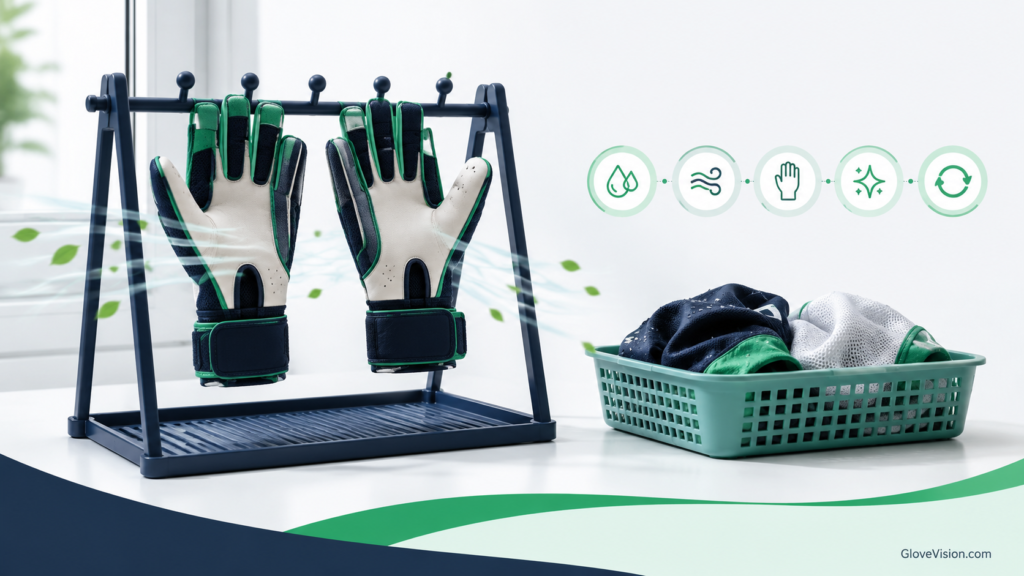
Figure 1: The A5 dry-cycle habit loop shows how Anchor, Access, Airflow, Audit, and Adjust turn glove drying into a repeatable post-use system.
How Does a Post-Activity Dry-Cycle Reduce Glove Odor and Moisture Buildup After Use?
A Post-Activity Dry-Cycle reduces glove odor and moisture buildup after use by removing gloves from sealed storage, opening glove interiors, separating wet gear, and placing gloves in safe airflow before dampness lingers.
Figure 2: The dry-cycle breaks sealed damp storage by opening gloves, separating wet gear, and moving gloves into safe airflow.
Why Should Damp Gloves Not Stay Sealed in a Gear Bag?
Damp gloves should not stay sealed in a gear bag because closed storage traps moisture around linings, padding, cuffs, and inner surfaces.
Why Does a Simple Dry-Cycle Work Better Than a Complex Cleaning Routine?
A simple dry-cycle works better because tired users are more likely to repeat a small post-use action than a long care process.
What Should the Post-Activity Dry-Cycle Not Promise?
The Post-Activity Dry-Cycle should not promise to clean, disinfect, remove mold, repair damage, restore lining structure, remove chemical contamination, or make disposable gloves reusable.
| Problem | Why It Matters | Dry-Cycle Benefit |
|---|---|---|
| Gloves stay sealed while damp | Moisture stays trapped inside the glove | Opens the glove to airflow |
| Wet wraps or liners touch gloves | Moisture transfers back into glove interiors | Separates wet accessories |
| Routine is too complex | Tired users skip it | Uses a small repeatable action |
When Should a Post-Activity Dry-Cycle Stop and Glove Replacement or Disposal Begin?
A Post-Activity Dry-Cycle should stop and glove replacement or disposal should begin when gloves are torn, moldy, contaminated, chemically exposed, structurally degraded, unsafe, or not allowed to be reused.
PPE must remain suitable for the work being performed, so drying cannot make damaged or unsuitable protective gloves safe again. [OSHA] [OSHA]
Do not dry unsafe gloves back into use.
Replace gloves with torn, cracked, degraded, or failed structures.
Follow site rules for disposable or contaminated gloves.
Which Gloves Should Not Be Saved With a Post-Activity Dry-Cycle?
Gloves should not be saved when they have torn linings, cracked padding, visible mold, persistent musty odor, chemical contamination, biological contamination, damaged protective layers, or rules against reuse.
| Condition | Dry-Cycle Allowed? | Action |
|---|---|---|
| Mild dampness after use | Yes | Use safe airflow |
| Visible mold | No | Replace or follow professional care guidance |
| Torn lining | No | Replace |
| Chemical contamination | No unless approved | Follow site safety procedure |
| Disposable glove after use | Usually no | Dispose according to rules |
Which Glove Types Need Special Post-Activity Dry-Cycle Handling?
Different glove types need special handling because athletic, work, leather, disposable, chemical-rated, and lined winter gloves have different drying limits and reuse rules.
Open as much as design allows and separate wet wraps.
Ventilate, inspect, and keep away from clean dry gear.
Use room-temperature airflow and avoid direct heat.
Usually follow disposal rules, not drying for reuse.
Follow manufacturer and site procedure only.
Open and ventilate fully to reduce trapped inner moisture.
How Do You Configure Your Environment for a Frictionless Post-Activity Dry-Cycle?
You configure a frictionless Post-Activity Dry-Cycle by placing a visible drying station near the normal transition point and equipping it with safe airflow, wet-gear separation, and easy glove access.
Friction Removal Environment Setup Checklist
Use this as a station audit. It checks whether the environment supports the habit instead of depending on motivation.
What Anchors and Triggers Initiate Your Post-Activity Dry-Cycle Habit Loop?
Post-Activity Dry-Cycle anchors initiate the habit loop by linking glove drying to an action the user already performs after training, work, or repeated activity.
| Existing Routine | Dry-Cycle Action | Behavioral Objective |
|---|---|---|
| After I finish training/work | I open my glove bag | Capture the transition window |
| After I remove wraps/liners | I place gloves in airflow | Separate wet gear quickly |
| After I reach home/office | I remove gloves from the bag | Prevent sealed damp storage |
How Do You Log Daily Progress With the 14-Day Post-Activity Dry-Cycle Tracker?
You log daily progress by recording completion, prompt unpacking, wet-gear separation, airflow use, dampness score, and habit notes after each use.
Tracker boundary: The 14-day tracker and 0–4 dampness score are habit-tracking tools only. They do not prove cleanliness, disinfection, contamination safety, structural integrity, or approval for reuse.
Fully dry
Store only if clean, intact, and reusable.
Slightly damp
Continue airflow.
Damp
Do not pack away.
Very damp
Use active safe airflow.
Wet or saturated
Extend drying and check damage.
Functional 14-Day Dry-Cycle Streak Tracker
| Day | Completed? | Opened Promptly? | Wet Gear Separated? | Airflow Used? | Dampness Score 0–4 | Notes |
|---|
Which Common Failure Patterns Break Down Your Post-Activity Dry-Cycle Routine?
Common failure patterns break down the Post-Activity Dry-Cycle when the cue is weak, airflow is poor, the routine is too complex, the station is cluttered, or drying alone cannot solve persistent odor.
| Observed Breakdown | Failure Pattern | Corrective Strategy |
|---|---|---|
| Forgot completely | Weak anchor | Add tag to bag zipper |
| Too tired | Task too complex | Use 3-step MVH |
| No drying space | Environment friction | Clear permanent area |
| Gloves stayed damp | Weak airflow | Use safe fan or approved dryer |
| Odor remains | Drying not enough | Clean per instructions or replace |
How Do You Optimize Your Next Habit Loop Using the Post-Activity Dry-Cycle Refinement Protocol?
You optimize the next habit loop by reviewing which A5 element failed—Anchor, Access, Airflow, Audit, or Adjust—and changing the smallest part before the next 14-day cycle.
A5 Refinement Selector
Select the weakest part of the dry-cycle. The tool gives the smallest next adjustment instead of adding unnecessary complexity.
How Does a Post-Activity Dry-Cycle Validate Dryness Without Ignoring Glove Damage or Contamination?
A Post-Activity Dry-Cycle validates dryness by checking that gloves are dry, allowed to be reused, structurally intact, free from unsafe contamination, and suitable for the next task before storage or reuse.
Protective gloves must still be appropriate for the actual hazard, and disposable gloves in healthcare or contamination-risk contexts must follow infection-control and disposal procedures. [OSHA] [CDC]
Dryness and Safety Validation Checklist
Frequently Asked Questions
What does the Post-Activity Dry-Cycle do?+
Does the Post-Activity Dry-Cycle clean or disinfect gloves?+
Can disposable gloves be dried for reuse?+
What airflow method is safest for drying gloves?+
When should gloves be replaced instead of dried?+
Conclusion
The Post-Activity Dry-Cycle gives glove users a simple way to reduce trapped moisture and odor risk by making safe airflow part of the post-use routine. It separates drying from cleaning, disinfection, decontamination, repair, disposal, and replacement while showing how glove type, station setup, habit anchors, tracking, dampness scoring, A5 refinement, and final validation fit together.
The best dry-cycle is the one that happens consistently without pretending that dryness can replace cleaning, safety inspection, disposal, or replacement.