
GloveVision Blog Hero Preview
GloveVision Blog

GloveVision Glove Intelligence Blog

Clearer glove decisions without the guesswork.

Independent glove reviews, material explainers, safety-aware guides, tool updates, and practical decision frameworks for users who want to compare glove types, materials, fit, comfort, durability, and protection limits before choosing a pair.

Why does cowhide stiffen after wetting and drying?

Cowhide gloves may stiffen after wetting and drying because moisture changes collagen spacing and mobility, while water loss can alter how leather fibers and bundles interact. The degree of stiffness

Where does cowhide performance weaken?

Cowhide work-glove performance can weaken at palms, fingertips, thumb–index webbing, finger-flexing regions, seams and reinforcement boundaries. Repeated friction, sharp-object contact, moisture changes, contamination and construction failure can affect protection or

What separates grain cowhide from split cowhide?

The main difference between grain and split cowhide is their position within the original cattle hide. Grain cowhide comes from the upper grain-bearing portion, while split cowhide comes from underlying

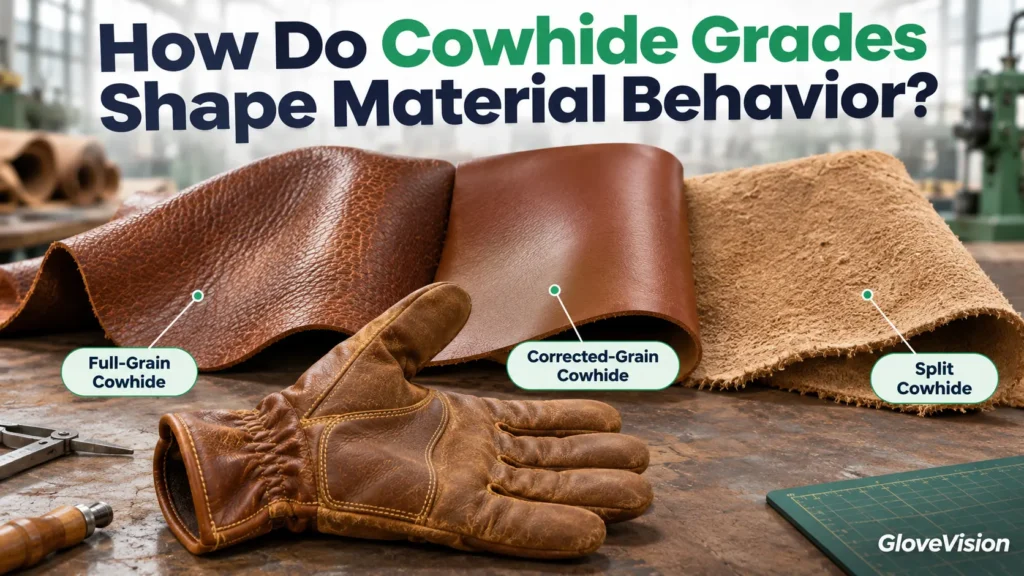
How do cowhide grades shape material behavior?

Cowhide leather grades describe differences in retained hide layers, grain-surface treatment and supplier-defined material quality. Full-grain, corrected-grain and split cowhide may differ in texture, flexibility and mechanical response, but these

How does leather trade chemical weakness for mechanical strength?

Leather work gloves may offer useful toughness, flexibility and resistance to selected mechanical stresses, but ordinary leather should not be relied upon as a barrier against hazardous liquid chemicals without

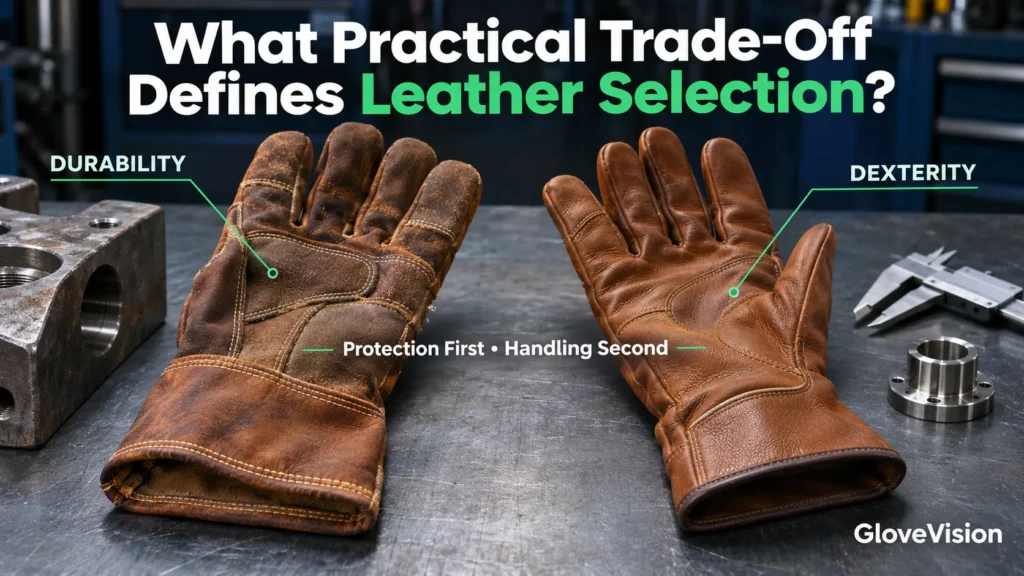
What practical trade-off defines leather selection?

The main leather glove selection trade-off is balancing suitable mechanical durability and tested protection with the dexterity, grip, flexibility and comfort needed for the work. Thicker leather or added reinforcement