
GloveVision Blog Hero Preview
GloveVision Blog

GloveVision Glove Intelligence Blog

Clearer glove decisions without the guesswork.

Independent glove reviews, material explainers, safety-aware guides, tool updates, and practical decision frameworks for users who want to compare glove types, materials, fit, comfort, durability, and protection limits before choosing a pair.

Why is leather unsafe with liquid chemicals?

Ordinary leather work gloves should not be relied upon for direct contact with hazardous liquid chemicals unless the exact finished glove has suitable chemical-protection evidence. Leather may absorb or retain

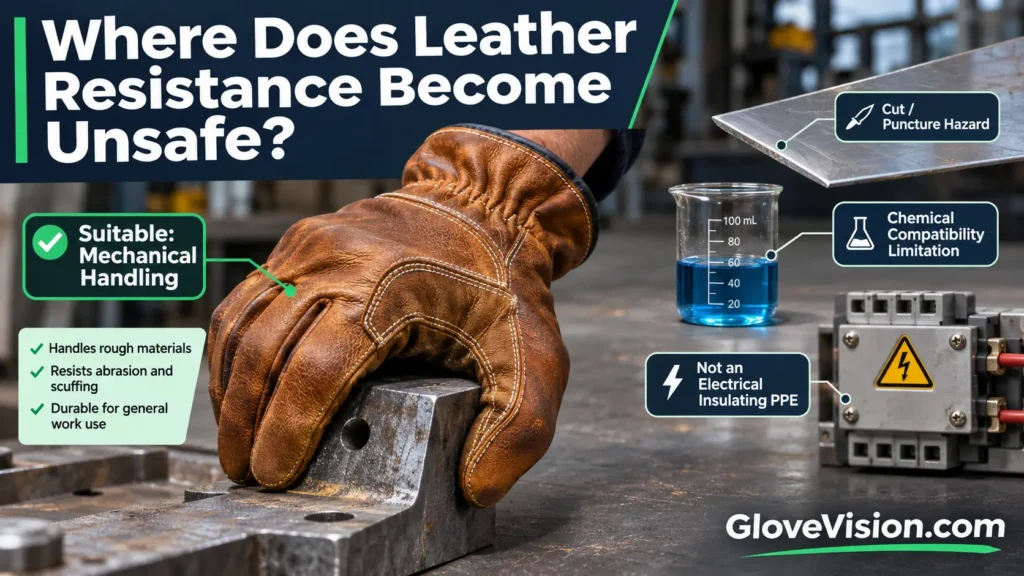
Where does leather resistance become unsafe?

Leather glove resistance becomes unsafe when workplace hazards exceed the verified protective capability of the finished glove, when damage or contamination compromises its function, or when glove use creates an

What makes leather effective in heavy mechanical work?

Leather work gloves can be effective in heavy mechanical work because appropriately selected leather offers a durable contact surface for handling rough materials while allowing useful hand movement. Their practical

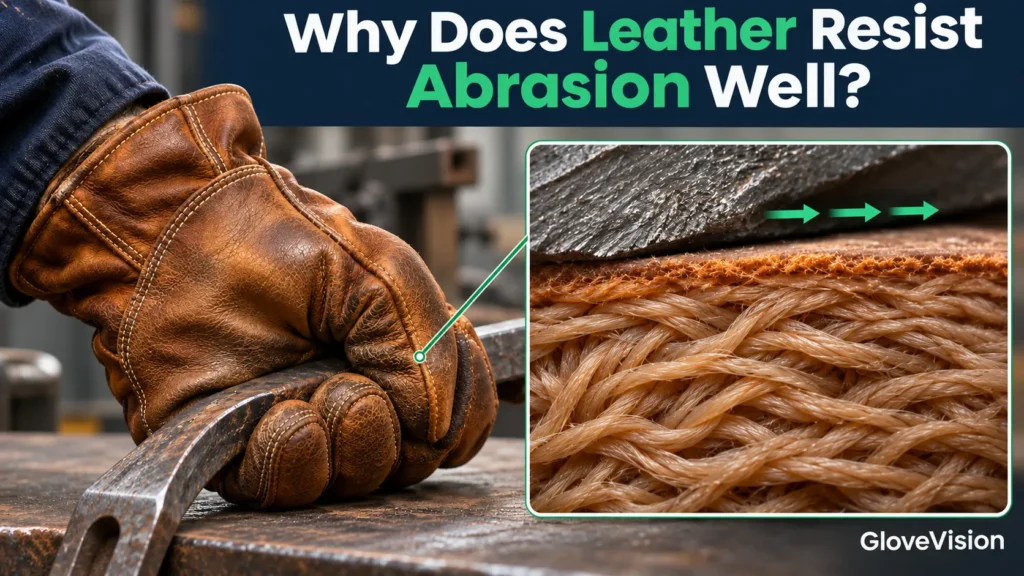
Why does leather resist abrasion well?

Leather can resist abrasion well because its interconnected collagen-fiber network, cohesive contact surface, material thickness, and finishes can delay progressive surface loss during repeated friction. However, abrasion resistance varies with

How does leather structure create mechanical durability?

Leather gains much of its mechanical durability from a three-dimensional network of interconnected collagen fibers and bundles. Their orientation, packing, and connections influence how the material carries tension, transfers mechanical

How does recyclability influence TPE preference over vinyl?

Recyclability can influence preference for TPE gloves over vinyl only when a specific TPE product has a verified collection and material-recovery pathway that the comparable vinyl product lacks or performs