
When Is PVA Highly Useful Only Within a Narrow Exposure Range?
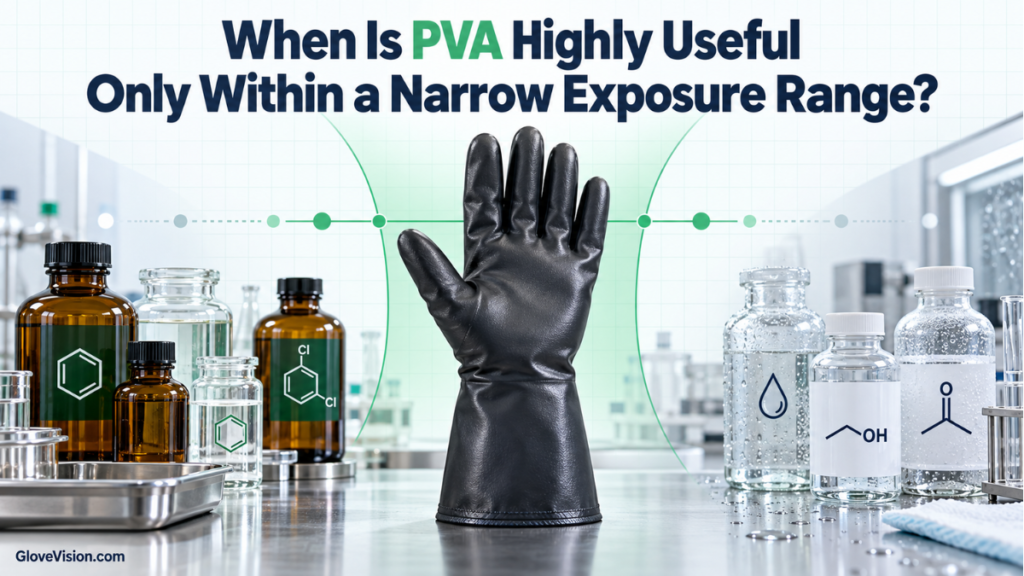
When Are PVA Gloves Most Useful Within a Narrow Range? When Is PVA Highly Useful Only Within a Narrow Exposure Range? PVA Gloves are most useful when a task involves a dry organic solvent that falls squarely within their specialist resistance profile, especially selected aromatic, chlorinated, aliphatic, ester, ether, and ketone exposures. Inside that narrow […]
How Does PE Structure Shape Its Basic Protection Profile?
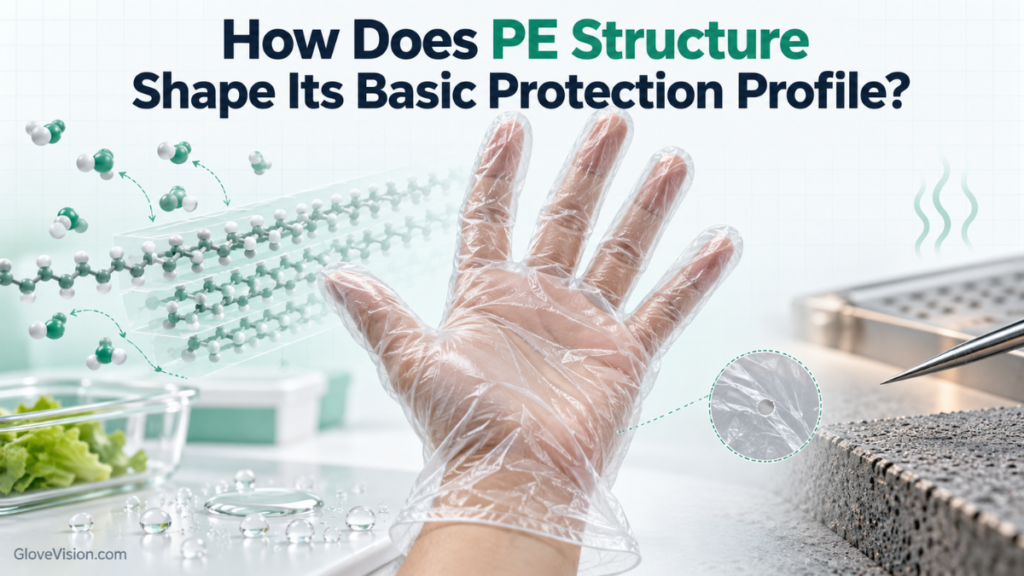
How PE Structure Shapes Its Basic Glove Protection Profile How Does PE Structure Shape Its Basic Protection Profile? PE Gloves derive their basic protection profile from polyethylene’s simple, largely nonpolar hydrocarbon structure. That chemistry gives the material low water affinity, very low moisture uptake, and useful stability in many basic aqueous-contact situations, while thermoplastic processing […]
What Practical Trade-Off Defines PVA Use?
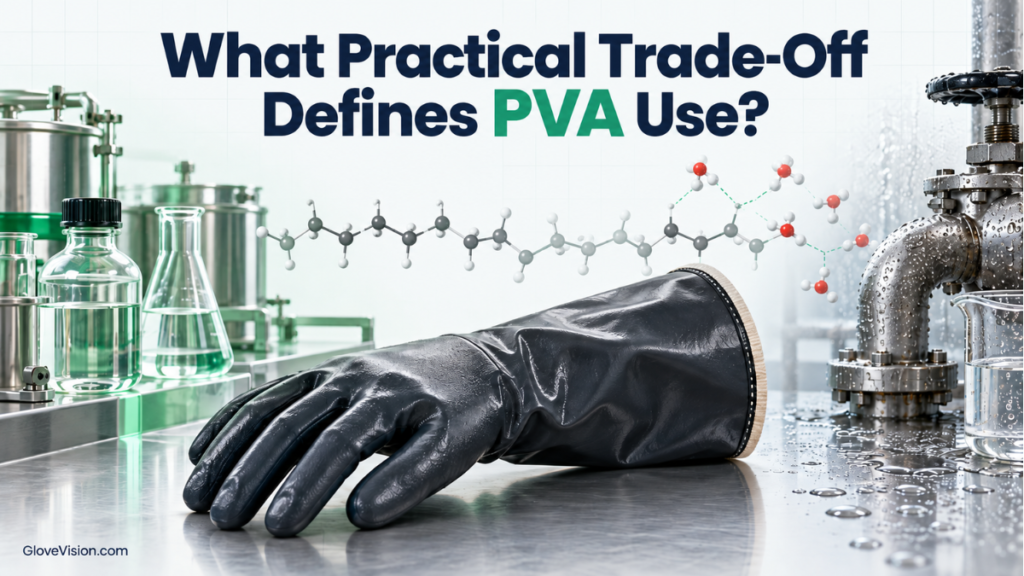
What Practical Trade-Off Defines PVA Gloves Use? What Practical Trade-Off Defines PVA Use? The defining trade-off of PVA Gloves is exceptional resistance to many difficult dry organic solvents in exchange for severe moisture sensitivity, weak performance in selected chemical zones such as light alcohols, higher cost, and narrower operational flexibility. PVA therefore makes the most […]
Why Are PVA Gloves Strictly Dry-Only Gloves?
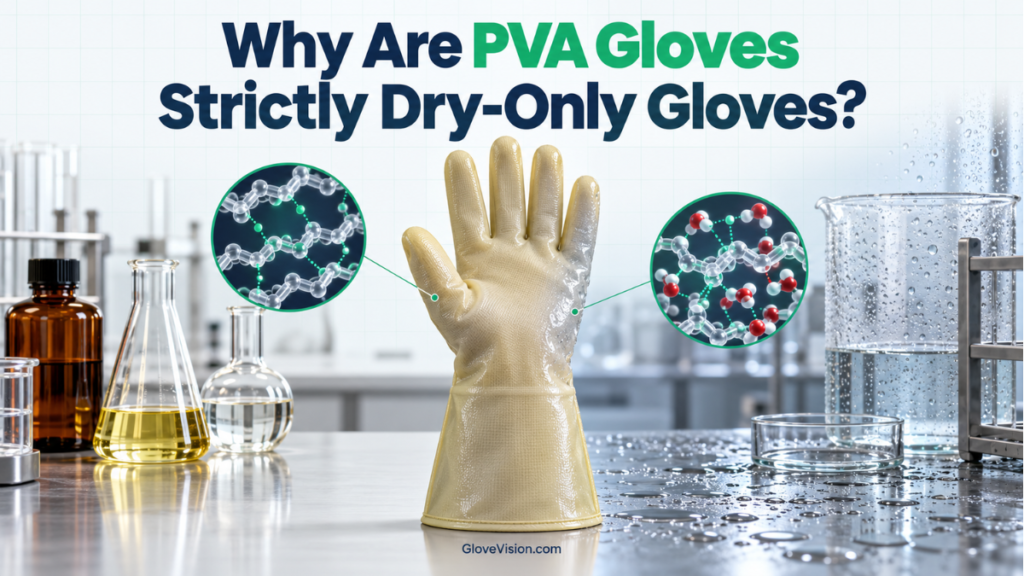
Why PVA Gloves Are Strictly Dry-Only Why Are PVA Gloves Strictly Dry-Only Gloves? PVA Gloves are treated as dry-only gloves because polyvinyl alcohol interacts strongly with water. The same hydroxyl-rich chemistry that helps create a cohesive barrier against many dry organic solvents also makes the polymer water-sensitive, so meaningful moisture can reduce the stability of […]
Where Does PVA Resistance Fail Sharply?
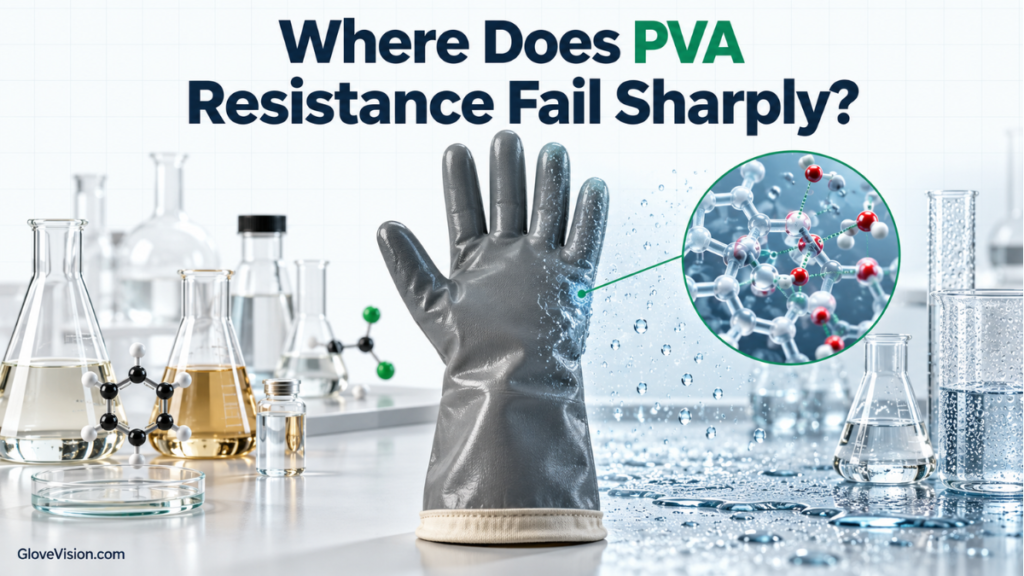
Where PVA Glove Resistance Fails Most Sharply Where Does PVA Resistance Fail Sharply? PVA Gloves fail most sharply when water or substantial moisture enters the exposure. Their hydroxyl-rich chemistry supports strong dry-organic-solvent specialization, but those same hydroxyl groups interact strongly with water, allowing hydration, plasticization, swelling, and loss of barrier stability under unfavorable conditions. Water […]
Why Does PVA Resist Chlorinated Solvents Effectively?
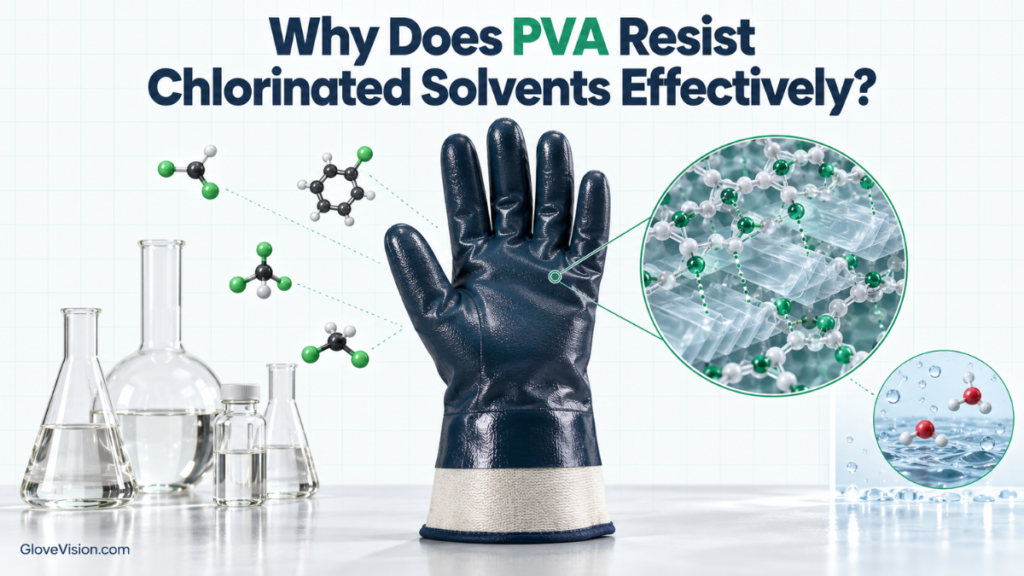
Why PVA Gloves Resist Chlorinated Solvents Effectively Why Does PVA Resist Chlorinated Solvents Effectively? PVA Gloves are specialty organic-solvent gloves that can be strong candidates for many chlorinated-solvent exposures. Their hydroxyl-rich, hydrogen-bonded, semicrystalline polymer structure helps explain why PVA can maintain useful barrier behavior against selected dry organic solvents. That specialization is not universal chlorinated-solvent […]