
Why is black nitrile common in tattoo and mechanic settings?
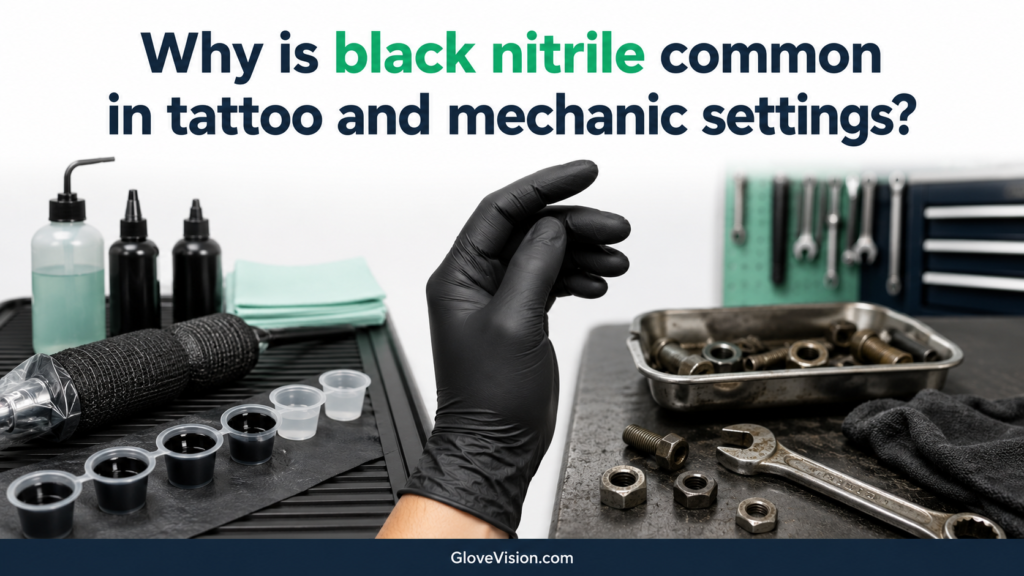
Why Black Nitrile Gloves Are Common in Tattoo and Mechanic Settings Why is black nitrile common in tattoo and mechanic settings? Black Nitrile Gloves are common in tattoo and mechanic settings because the dark color may reduce the visible appearance of black ink, grease, grime, oils, and shop residue while supporting a consistent professional look. […]
Where do disposable glove colors support task visibility?

Where Disposable Glove Colors Support Task Visibility Where do disposable glove colors support task visibility? Disposable Gloves colors support task visibility where contrast helps workers notice contamination, glove fragments, tears, wrong-zone use, and workflow transitions. Color alone does not prove safety, medical suitability, food-contact suitability, chemical compatibility, chemotherapy protection, puncture resistance, or sterile suitability. This […]
Why does thicker nitrile suit heavier short-use tasks?

Why Thicker Nitrile Gloves Suit Heavier Short-Use Tasks Why does thicker nitrile suit heavier short-use tasks? Thicker Nitrile Gloves may suit heavier short-use tasks because increased material thickness can support durability signals during gripping, abrasion, oily handling, light tool contact, and short-duration stress. However, thickness alone does not prove puncture resistance, chemical compatibility, medical suitability, […]
How does thin disposable thickness preserve tactile sensitivity?
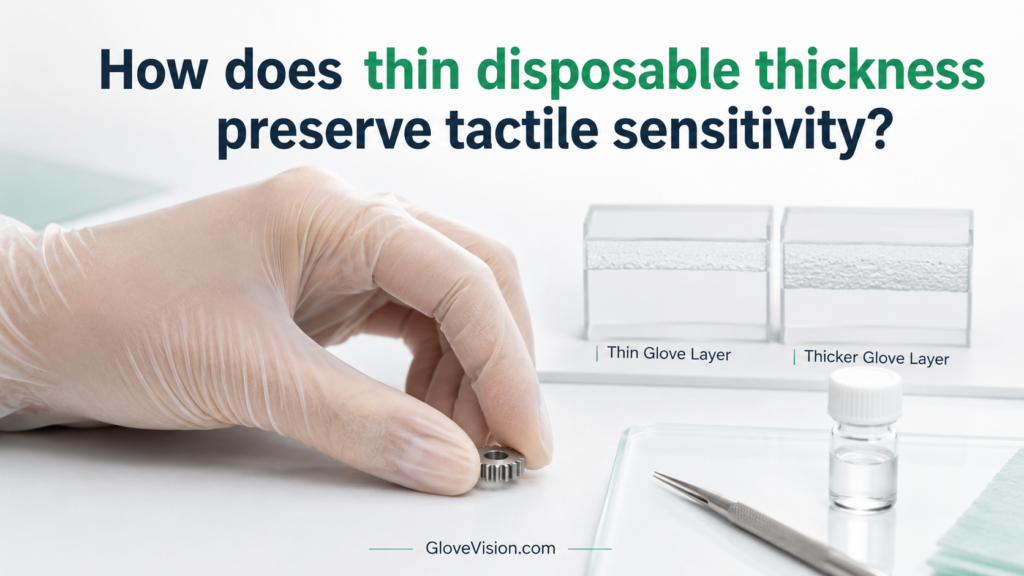
How Thin Disposable Gloves Preserve Tactile Sensitivity How does thin disposable thickness preserve tactile sensitivity? Thin disposable thickness may preserve tactile sensitivity by reducing the material layer between the hand and the work surface. Thinner Disposable Gloves may allow more fine pressure, texture, vibration, and surface cues to reach the skin, which can support fingertip […]
What does mil thickness signal about durability?
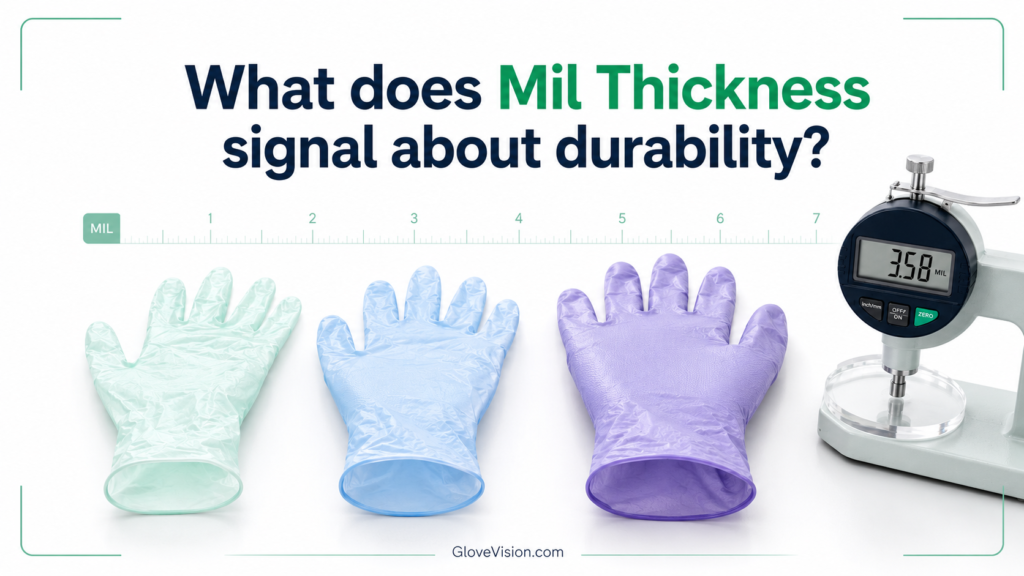
What Mil Thickness Signals About Disposable Glove Durability What does mil thickness signal about durability? Mil thickness signals how thick Disposable Gloves are at a measured location, but it does not prove durability or safety by itself. It can help users understand part of a glove’s durability profile, tactile feel, stiffness, and barrier expectations, while […]
Why does polyethylene offer weak puncture resistance?
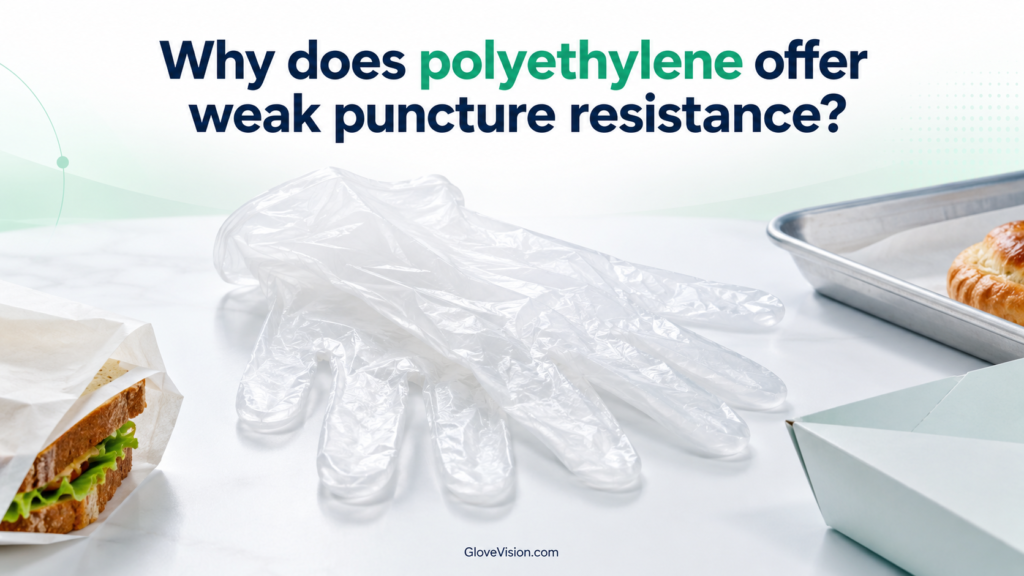
Why Polyethylene Gloves Offer Weak Puncture Resistance Why does polyethylene offer weak puncture resistance? Polyethylene often offers weak puncture resistance in disposable gloves because many Polyethylene Gloves are thin, loose-fitting, low-elasticity thermoplastic film products designed for short-contact, low-stress tasks. Polyethylene Gloves behave differently from elastomer gloves because thin film structure, low elasticity, loose fit, seam […]
How does disposable glove thickness change task performance?
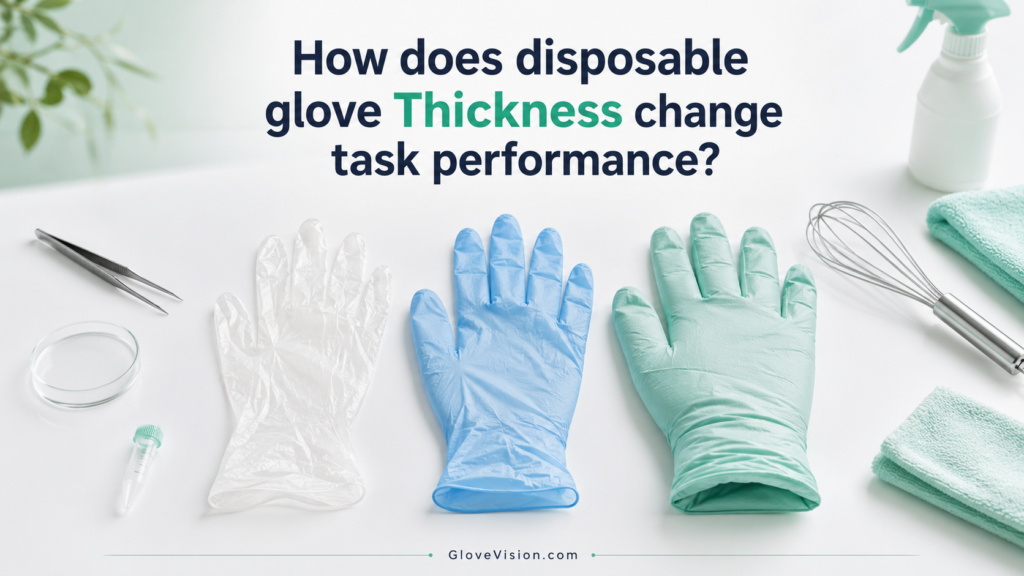
How Disposable Glove Thickness Changes Task Performance How does disposable glove thickness change task performance? Disposable glove thickness changes task performance by altering tactile feedback, finger dexterity, grip feel, hand effort, durability, and barrier feel. Thickness adds a physical layer between the hand and task, so it can affect tactile sensitivity, dexterity, grip control, fatigue, […]
How can vinyl composition affect food-contact suitability?

How Vinyl Composition Affects Food-Contact Glove Suitability How can vinyl composition affect food-contact suitability? Vinyl composition can affect food-contact suitability because PVC-based gloves often rely on plasticizers, and suitability depends on the finished formulation, food type, temperature, contact duration, and documentation. Vinyl Food-Contact Gloves should not be judged by the word “vinyl” alone, because PVC-based […]
Why Are Synthetic Disposable Gloves Replacing Latex in Many Settings?
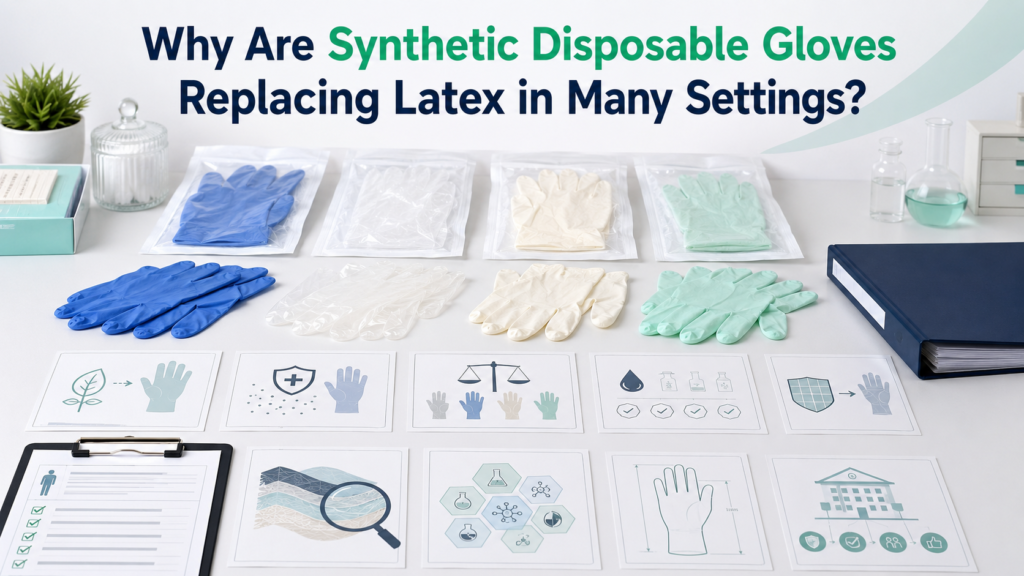
Why Synthetic Disposable Gloves Are Replacing Latex Why Are Synthetic Disposable Gloves Replacing Latex in Many Settings? Synthetic Disposable Gloves are replacing latex in many settings because properly labeled non-latex synthetic materials can reduce exposure to natural rubber latex proteins. These proteins are linked with Type I latex allergy concern, while nitrile, polychloroprene, vinyl, and […]
Why do nitrile gloves reduce latex allergy concern?

Why Nitrile Gloves Reduce Latex Allergy Concern Why do nitrile gloves reduce latex allergy concern? Nitrile Gloves reduce latex allergy concern because properly labeled latex-free Nitrile Gloves are made from synthetic acrylonitrile-butadiene rubber rather than natural rubber latex. This reduces concern about natural rubber latex protein exposure linked with Type I latex allergy, but Nitrile […]