
Why Is Nitrile Less Suitable for Methyl Ethyl Ketone?
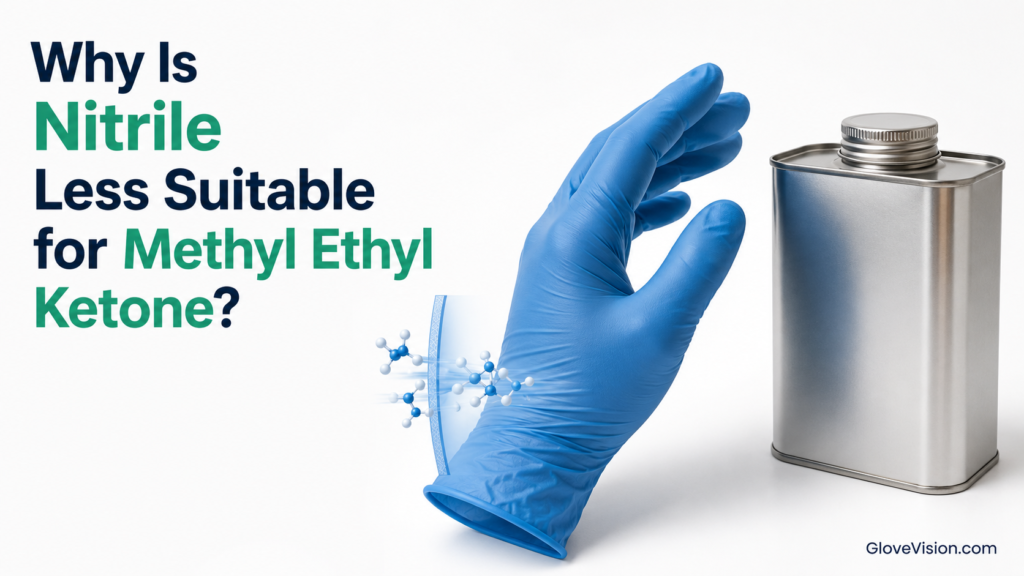
Why Nitrile Gloves Are Less Suitable for MEK Why Is Nitrile Less Suitable for Methyl Ethyl Ketone? Nitrile Gloves are frequently less suitable for methyl ethyl ketone because MEK can enter the NBR film, cause swelling or softening, and permeate the material comparatively quickly. Formulations and thicknesses differ, but no nitrile product should be accepted […]
Which Splash Exposures Suit Nitrile Gloves?
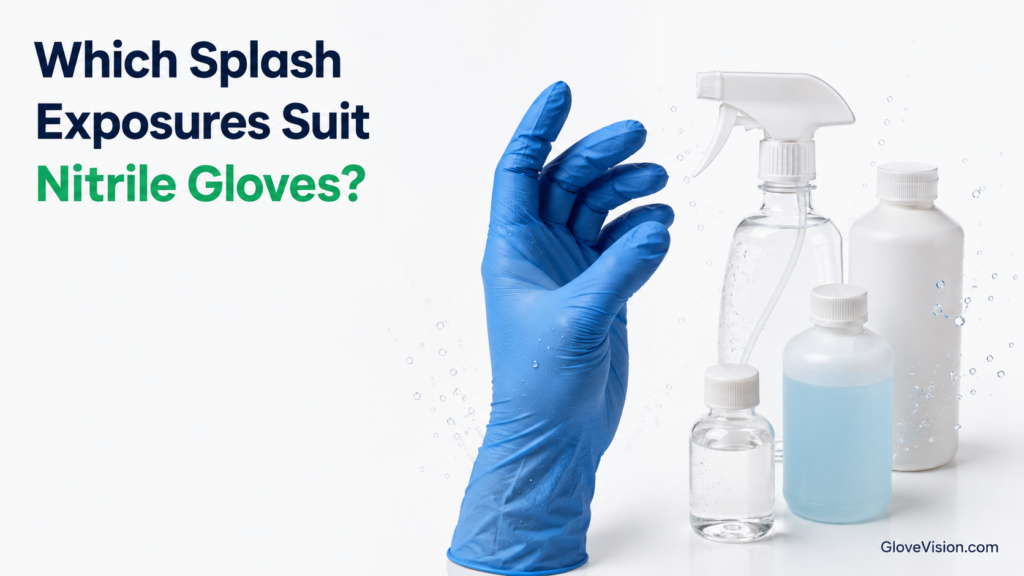
Which Chemical Splashes Suit Nitrile Gloves? Which Splash Exposures Suit Nitrile Gloves? Selected Nitrile Gloves may suit brief, controlled splashes of compatible oils, greases, alcohols, water-based products, dilute acids, dilute bases, and other chemicals documented for the exact finished glove. Repeated splashing, pooling, prolonged wetting, immersion, high pressure, highly toxic chemicals, corrosives, incompatible solvents, heat, […]
Where Does Nitrile Resistance Perform Well or Fall Short?
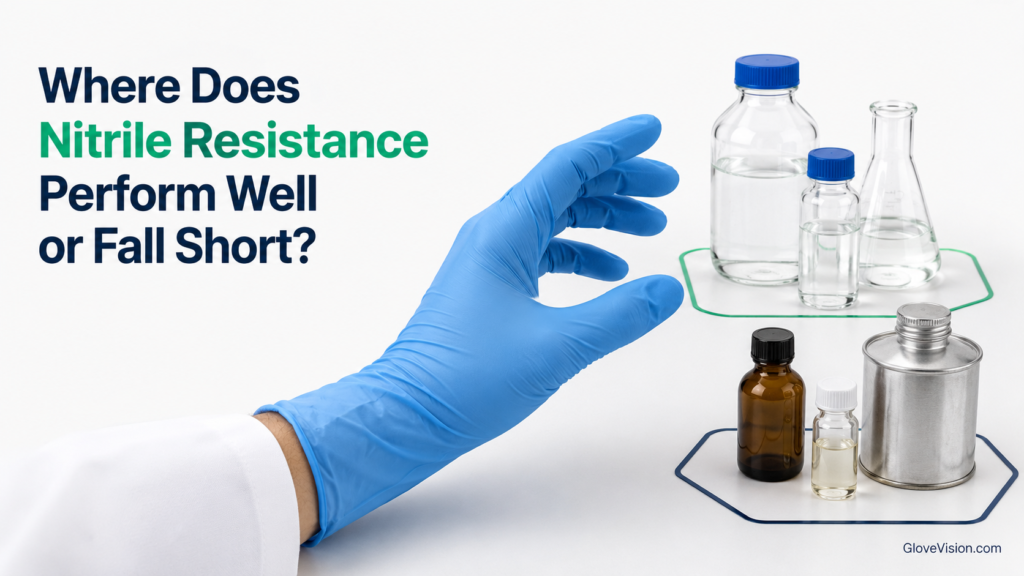
Where Nitrile Gloves Resist Chemicals—and Where They Fail Where Does Nitrile Resistance Perform Well or Fall Short? Nitrile Gloves commonly perform well against selected oils, greases, fuels, aliphatic hydrocarbons, alcohols, and some aqueous acids or bases because compatible NBR films can limit chemical uptake, swelling, and diffusion. Nitrile may fall short against ketones, esters, aromatic […]
When Does Higher Acrylonitrile Content Make Nitrile Stiffer?
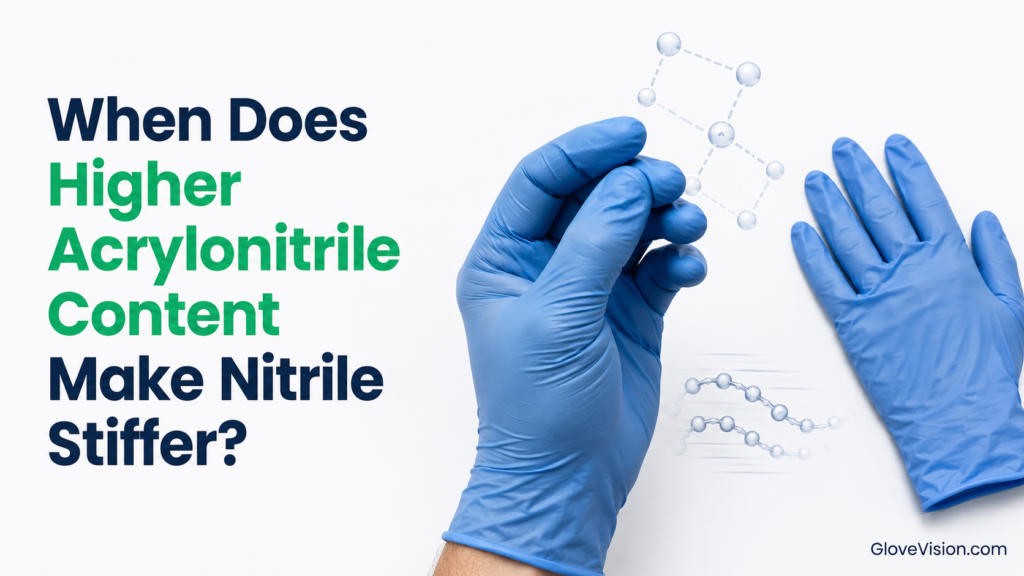
When Higher Acrylonitrile Makes Nitrile Gloves Stiffer When Does Higher Acrylonitrile Content Make Nitrile Stiffer? Higher acrylonitrile content can make Nitrile Gloves stiffer when polar acrylonitrile-derived units strengthen cohesive interactions within NBR and restrict polymer-chain movement. The effect may become more noticeable in cold conditions, thicker films, densely crosslinked networks, rapid movement, or aged products. […]
Why Does Higher Acrylonitrile Content Improve Solvent Resistance?
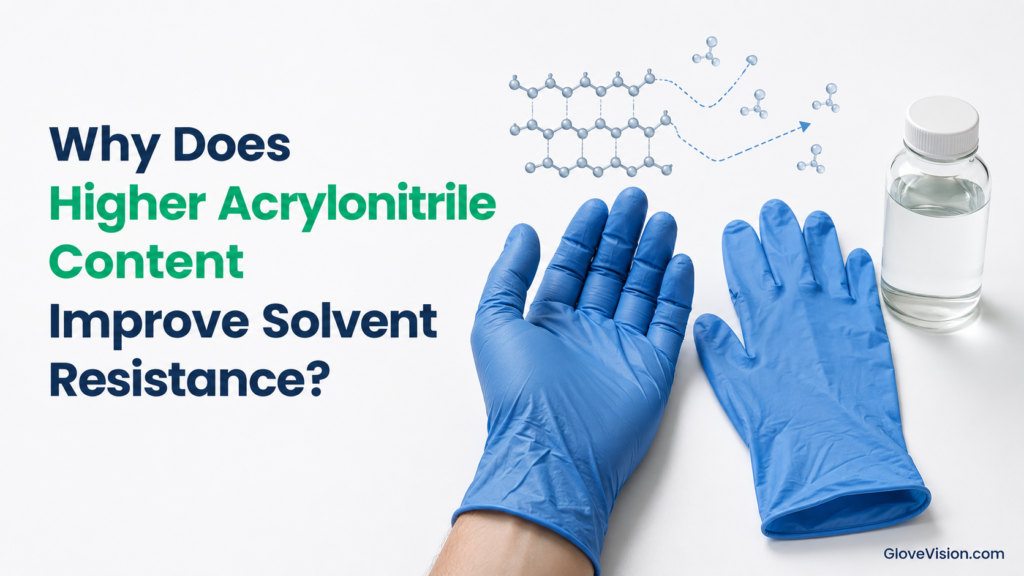
Why Higher Acrylonitrile Improves Nitrile Solvent Resistance Why Does Higher Acrylonitrile Content Improve Solvent Resistance? Increasing the acrylonitrile contribution makes NBR more polar and may strengthen cohesive interactions between polymer chains. Selected nonpolar oils, fuels, hydrocarbons, and solvents may enter, swell, or plasticize the film less readily, potentially slowing diffusion and improving stability. Higher acrylonitrile […]
How Does Nitrile Composition Shape Resistance and Stiffness?
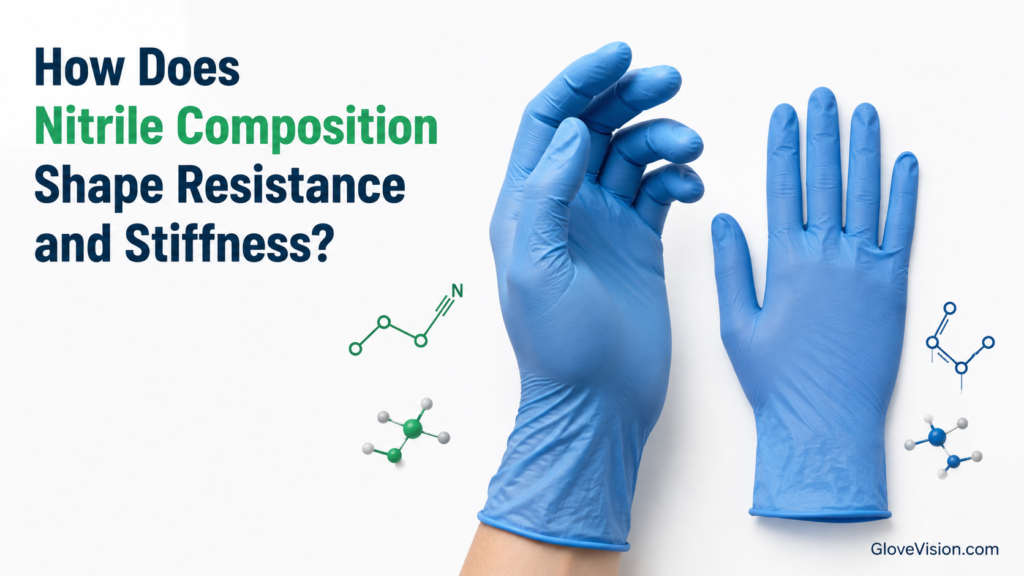
How Nitrile Composition Shapes Resistance and Stiffness Nitrile Gloves are made from an acrylonitrile–butadiene synthetic-rubber copolymer. Acrylonitrile-derived units generally contribute polarity and resistance to selected oils, fuels, hydrocarbons, and solvents, while butadiene-derived units generally support chain mobility and flexibility. The copolymer balance is only the starting point. Carboxylation, crosslinking, additives, curing, thickness, temperature, fit, aging, […]