
Which Oxidizer Exposures Suit Neoprene Gloves?
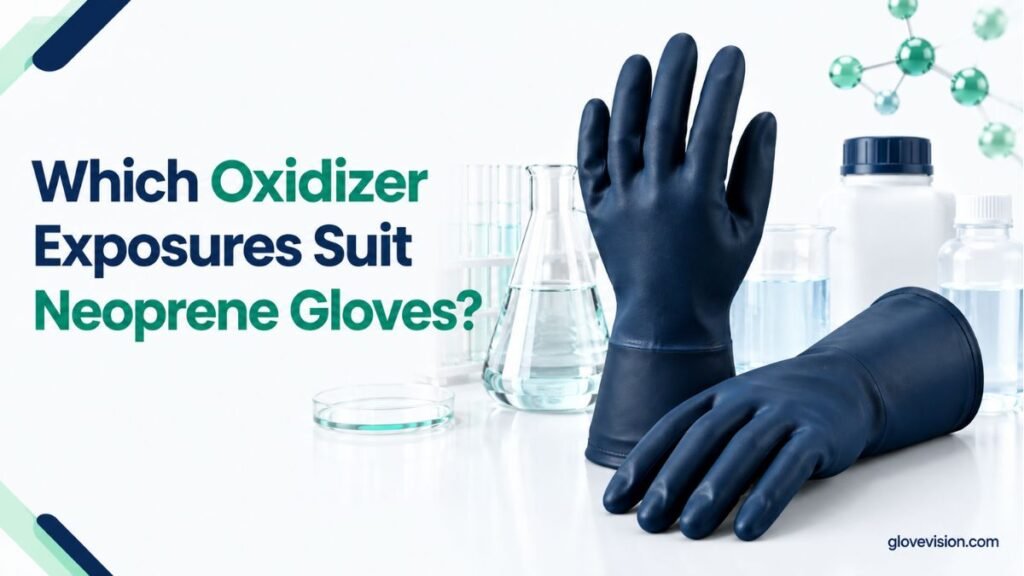
Which Oxidizers Suit Neoprene Gloves? Which Oxidizer Exposures Suit Neoprene Gloves? Selected Neoprene Gloves may suit certain aqueous oxidizer exposures, including specifically tested hydrogen peroxide or hypochlorite solutions, because particular polychloroprene constructions can maintain useful barrier performance under defined conditions. This performance cannot be generalized across concentrations, products, or oxidizer families. Concentrated oxidizing acids, peracetic […]
Does Neoprene Resist Ozone Aging Better Than Natural Rubber?
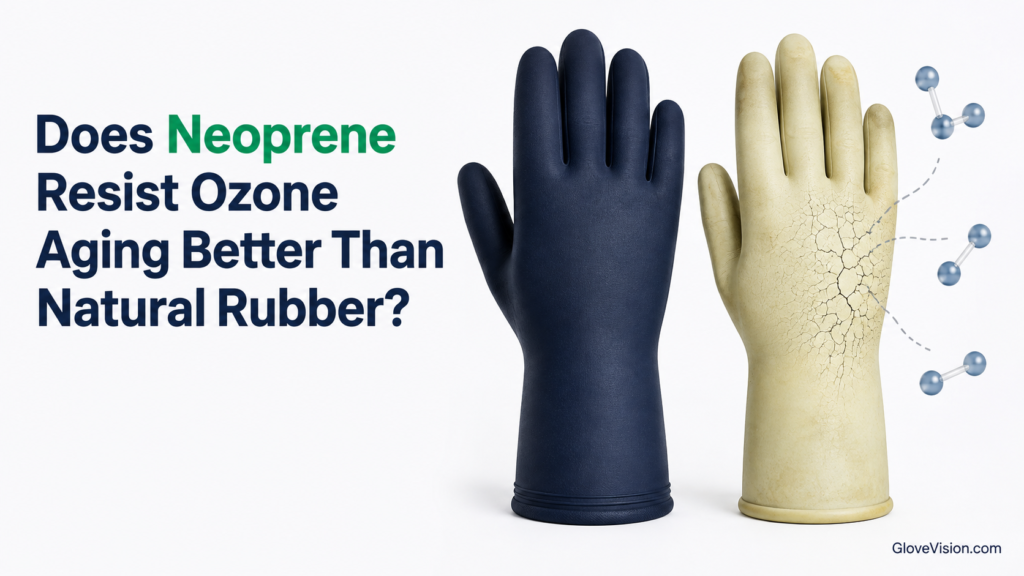
Does Neoprene Resist Ozone Better Than Natural Rubber? Does Neoprene Resist Ozone Aging Better Than Natural Rubber? Generally, yes. Polychloroprene used in Neoprene Gloves normally provides better inherent resistance to ozone-induced cracking than conventional unprotected natural rubber under comparable exposure and strain conditions. This is a material tendency, not a product guarantee. Formulation, additives, thickness, […]
How Do Stability and Broad Resistance Shape Neoprene Behavior?

How Stability Shapes Neoprene Gloves Resistance How Do Stability and Broad Resistance Shape Neoprene Behavior? Neoprene Gloves are polychloroprene hand protection valued for a balanced combination of flexibility, environmental stability, and resistance to selected chemical groups. Broad resistance is conditional: actual protection depends on the exact chemical, concentration, temperature, contact pattern, thickness, construction, condition, and […]
Which Accelerators Are Removed From Accelerator-Free Nitrile Gloves?
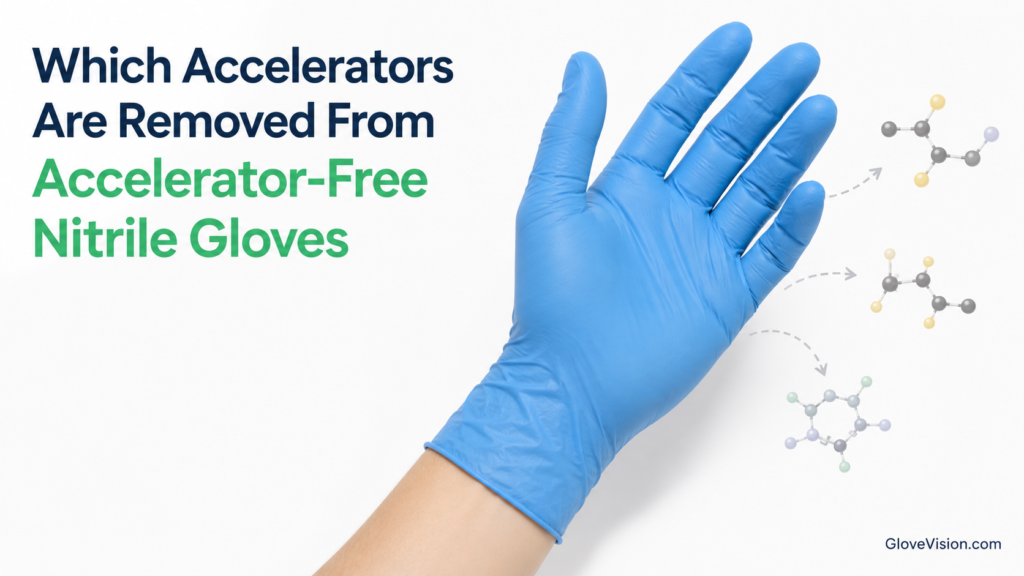
Which Accelerators Are Excluded From Nitrile Gloves? Which Accelerators Are Removed From Accelerator-Free Nitrile Gloves? Conventional nitrile production may use rubber accelerators to speed crosslinking and develop elasticity, strength, recovery, and film stability. Accelerator-Free Nitrile Gloves are designed to avoid specified accelerator systems, but exclusion lists vary and the claim does not eliminate every possible […]
What Makes Nitrile Useful for Latex Avoidance?

Why Nitrile Gloves Help With Latex Avoidance What Makes Nitrile Useful for Latex Avoidance? Nitrile Gloves are useful for latex avoidance because synthetic nitrile-butadiene rubber does not depend on the natural-rubber proteins responsible for classic Type I latex allergy. Nitrile can still contribute to irritation or delayed allergy through occlusion, friction, rubber accelerators, and other […]
How Do Wearability and Skin Sensitivity Shape Nitrile Trade-Offs?
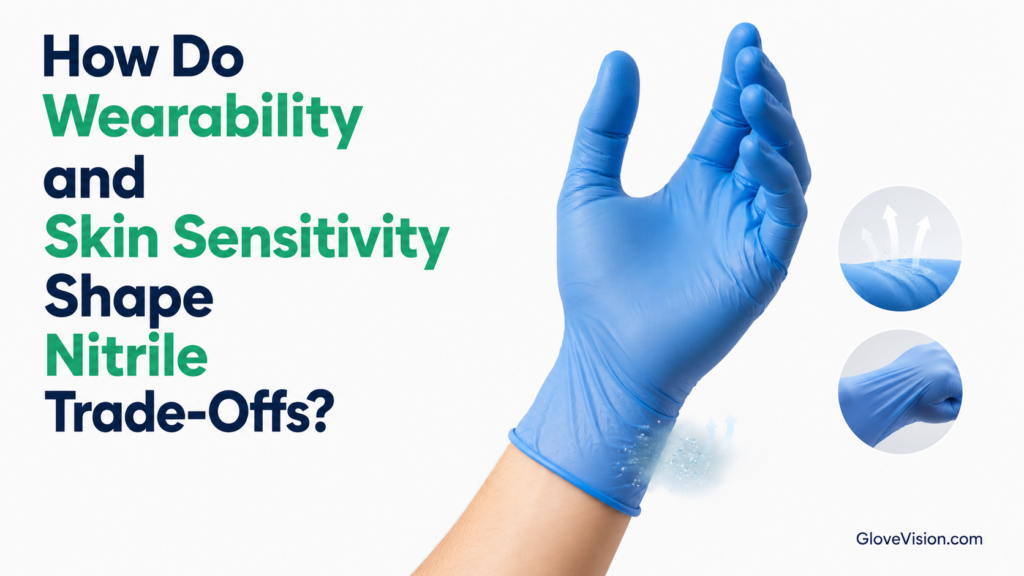
Nitrile Gloves: Wearability and Skin Sensitivity How Do Wearability and Skin Sensitivity Shape Nitrile Trade-Offs? Nitrile Gloves can provide useful barrier strength, puncture durability, close fit, and dexterity without natural-rubber latex proteins. Fit, stiffness, thickness, occlusion, perspiration, friction, hand hygiene, processing chemicals, rubber accelerators, wear duration, and individual skin condition can still cause discomfort, irritation, […]