
When Is Broad Chemical Coverage More Useful Than Maximum Specialization?
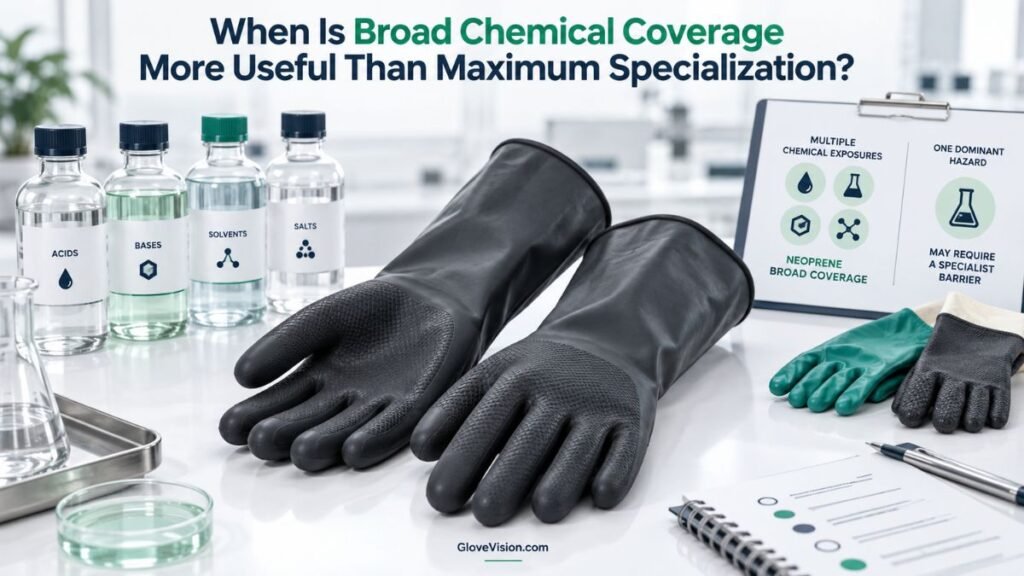
Neoprene Broad Coverage vs Specialist Chemical Gloves When Is Broad Chemical Coverage More Useful Than Maximum Specialization? Broad chemical coverage can be more useful when an exact Neoprene glove provides adequate verified protection across every chemical encountered in a workflow and its construction also supports the required grip, dexterity, mechanical durability, coverage, and task switching. […]
How Does Neoprene Behave in Cold Conditions?
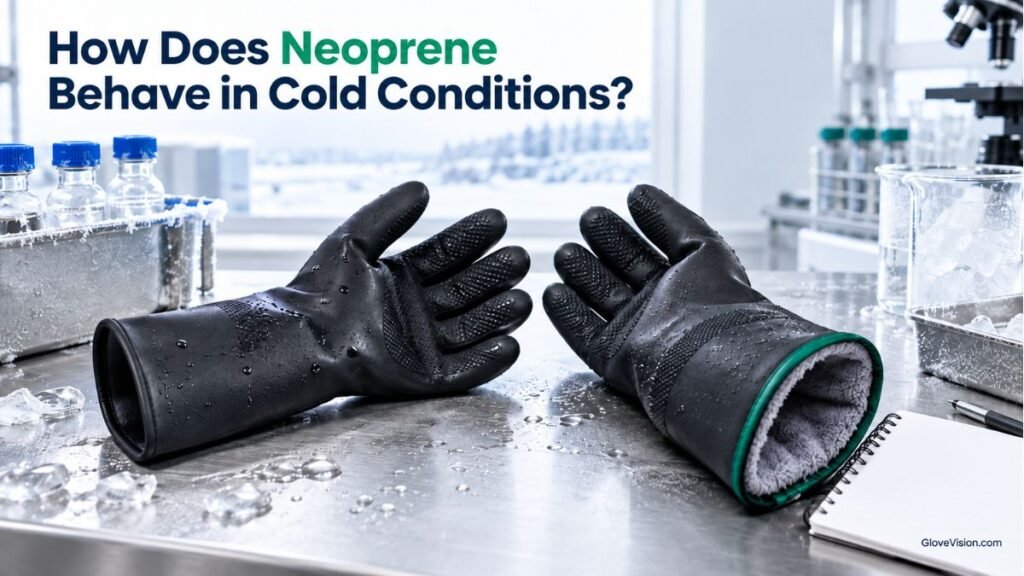
Neoprene in Cold Conditions: Flexibility, Stiffness & Limits How Does Neoprene Behave in Cold Conditions? Neoprene can retain useful flexibility in many cold conditions, but falling temperature reduces polymer mobility and can increase stiffness, while prolonged cold may also promote formulation-dependent crystallization. Polymer cold flexibility is only one part of glove performance. Actual suitability also […]
What Practical Trade-Off Separates Neoprene From Narrower Specialists?

Neoprene vs Specialist Glove Materials: The Practical Trade-Off What Practical Trade-Off Separates Neoprene From Narrower Specialists? Neoprene’s main practical trade-off is breadth and whole-task usability versus peak chemical specialization. An exact Neoprene glove may provide adequate chemical protection while also supporting the flexibility, construction, grip, coverage, and repeated handling needed across several compatible tasks, whereas […]
Which Solvent Exposures Exceed Neoprene Specialization?
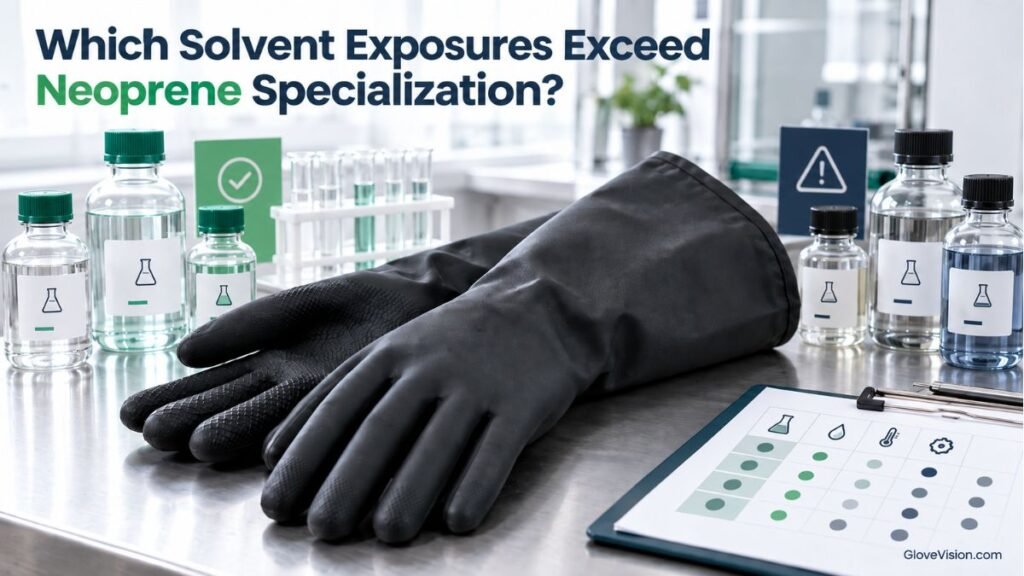
Neoprene Solvent Resistance: Limits & Better Barrier Choices Which Solvent Exposures Exceed Neoprene Specialization? Neoprene has useful but bounded solvent specialization. Certain tested polychloroprene gloves can perform well with specific alcohols, glycol ethers, and other solvent chemistries, while the same product may perform very poorly against particular aromatic, chlorinated, ketone, ester, or mixed-solvent exposures. “Solvent-resistant […]
Why Does Neoprene Suit Corrosive-Acid Exposure?
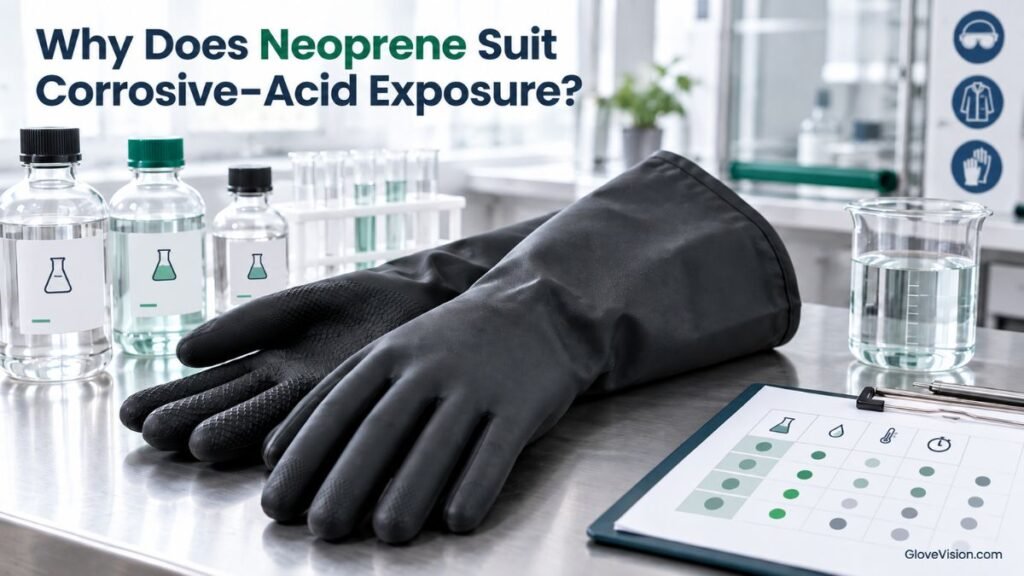
Neoprene Acid Resistance: Corrosive-Acid Limits & Selection Why Does Neoprene Suit Corrosive-Acid Exposure? Neoprene can suit selected corrosive-acid exposures because certain crosslinked polychloroprene glove constructions can slow chemical transport while retaining useful physical integrity and flexibility under compatible acid conditions. The benefit is conditional rather than universal. Acid identity, concentration, oxidizing character, water content, temperature, […]
Where Does Neoprene Fit Within Chemical-Resistance Boundaries?
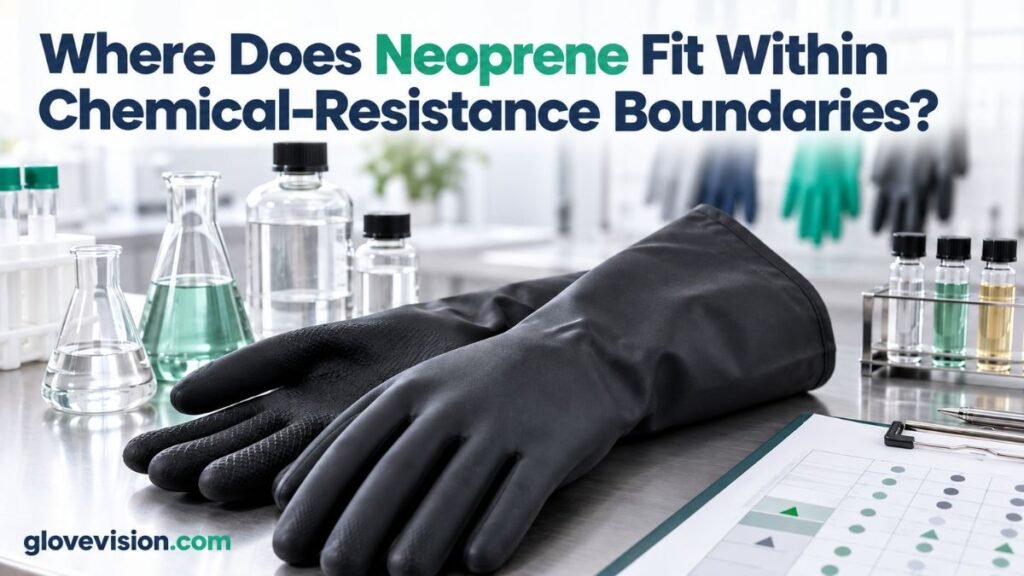
Neoprene Chemical Resistance: Limits & Glove Selection Where Does Neoprene Fit Within Chemical-Resistance Boundaries? Neoprene Chemical Resistance gives polychloroprene a broad but non-universal position among chemical glove materials. Properly constructed neoprene gloves can be credible candidates for many acids, bases and caustics, alcohols, oils, and selected aqueous or industrial chemicals, while specific solvents, mixtures, concentrations, […]