
What Defines Polyethylene Gloves Through Thin Film Structure, Basic Barrier Quality & Low-Cost Limits?
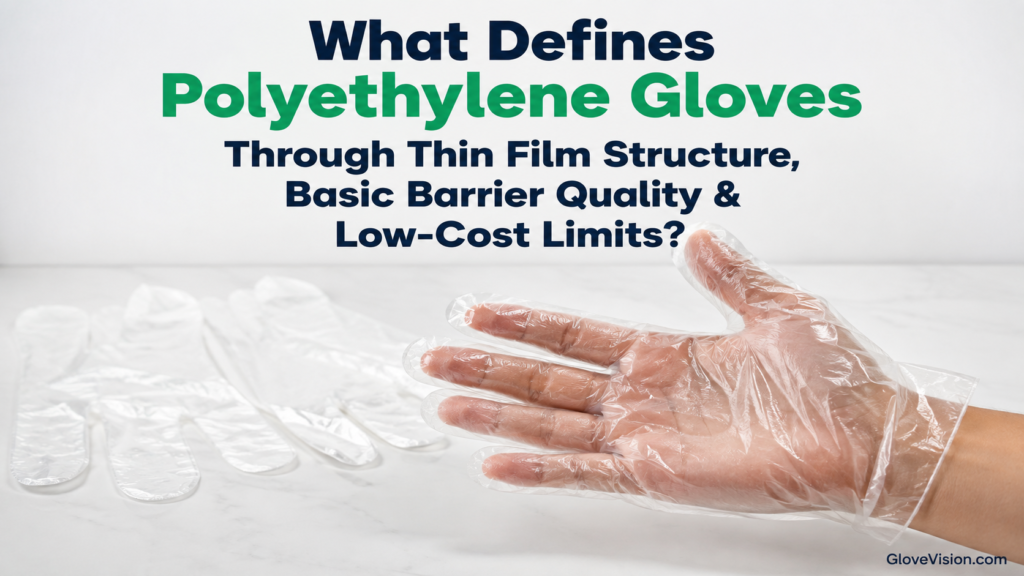
Polyethylene Gloves: Thin Film, Basic Barrier & Limits What Defines Polyethylene Gloves Through Thin Film Structure, Basic Barrier Quality & Low-Cost Limits? Polyethylene Gloves are economical thin-film hand coverings commonly used when short tasks need basic separation between hands and food, clean objects, or other limited-contact materials. Thin PE film, simplified shaping, sealed edges, fast […]
What Defines PVA Gloves Through Water-Soluble Chemistry, Solvent Strength & Dry-Only Limits?
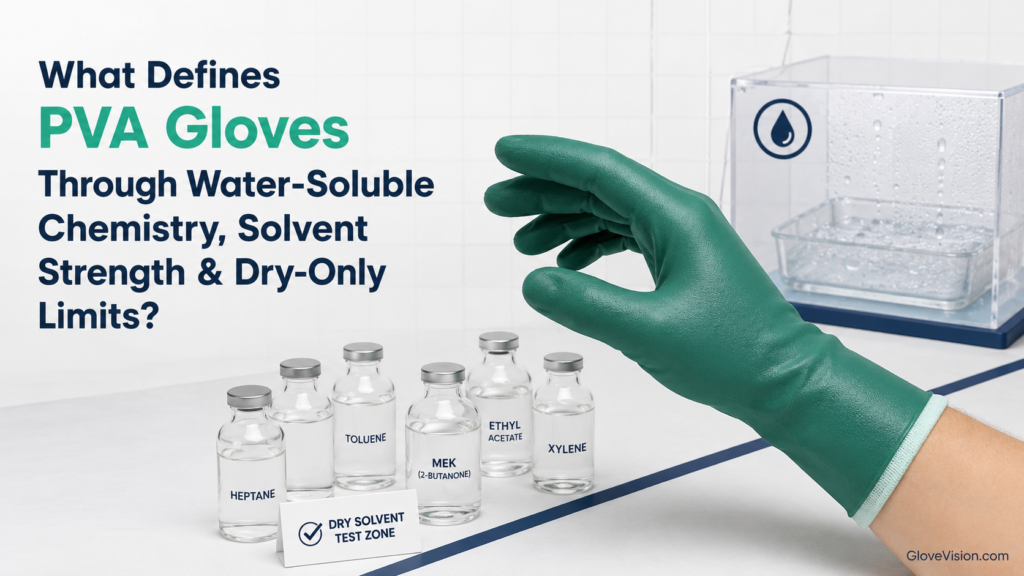
PVA Gloves: Solvent Strength, Water Limits & Safe Selection What Defines PVA Gloves Through Water-Soluble Chemistry, Solvent Strength & Dry-Only Limits? PVA Gloves use water-soluble polyvinyl alcohol chemistry, commonly applied as a barrier over a supporting liner, to provide strong product-specific resistance to selected nonaqueous aromatic, aliphatic, and chlorinated solvents. Their defining limit is moisture: […]
What Defines Vinyl PVC Gloves Through Plasticized Structure, Loose Barrier Quality & Low-Risk Limits?
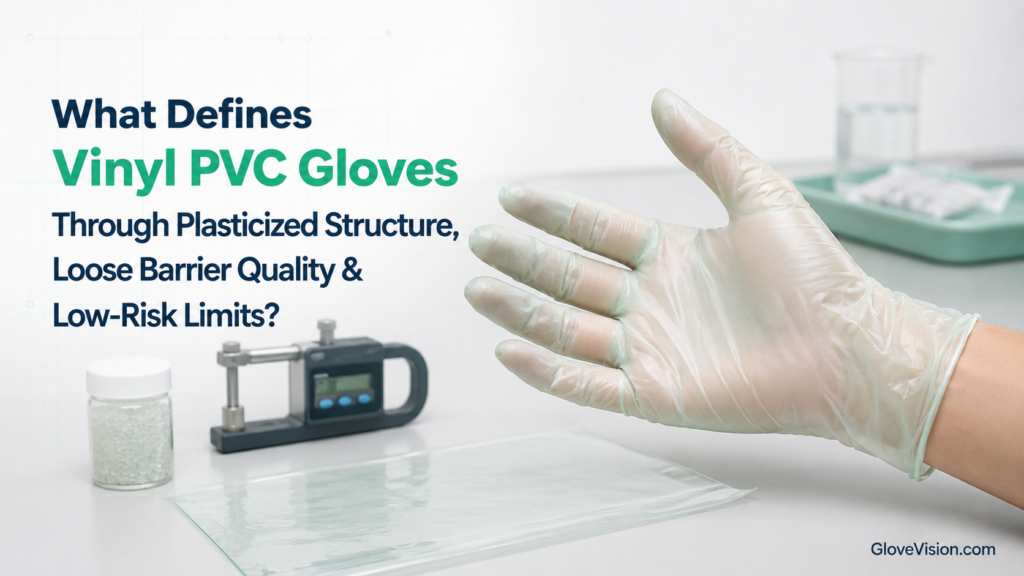
Vinyl/PVC Gloves: Fit, Barrier Limits & Task Selection What Defines Vinyl PVC Gloves Through Plasticized Structure, Loose Barrier Quality & Low-Risk Limits? Vinyl/PVC Gloves are made by adding flexibility-producing ingredients to polyvinyl chloride, creating economical disposable or reusable hand coverings that can support basic contamination separation and easy donning but have limited elastic recovery, construction-dependent […]
What Defines Fluoroelastomer Gloves Through Fluorinated Chemistry, Extreme Solvent Resistance & Flexibility Cost?

Fluoroelastomer Gloves: Solvent Resistance, Limits & Cost What Defines Fluoroelastomer Gloves Through Fluorinated Chemistry, Extreme Solvent Resistance & Flexibility Cost? Fluoroelastomer Gloves use fluorine-containing elastomer chemistry to provide strong resistance against selected hydrocarbons, aromatic solvents, chlorinated solvents, fuels, oils, and other aggressive chemicals. Their resistance is not universal: performance depends on the exact chemical or […]
What Defines Butyl Rubber Gloves Through Dense Barrier Structure, Gas Impermeability & Solvent-Specific Strength?
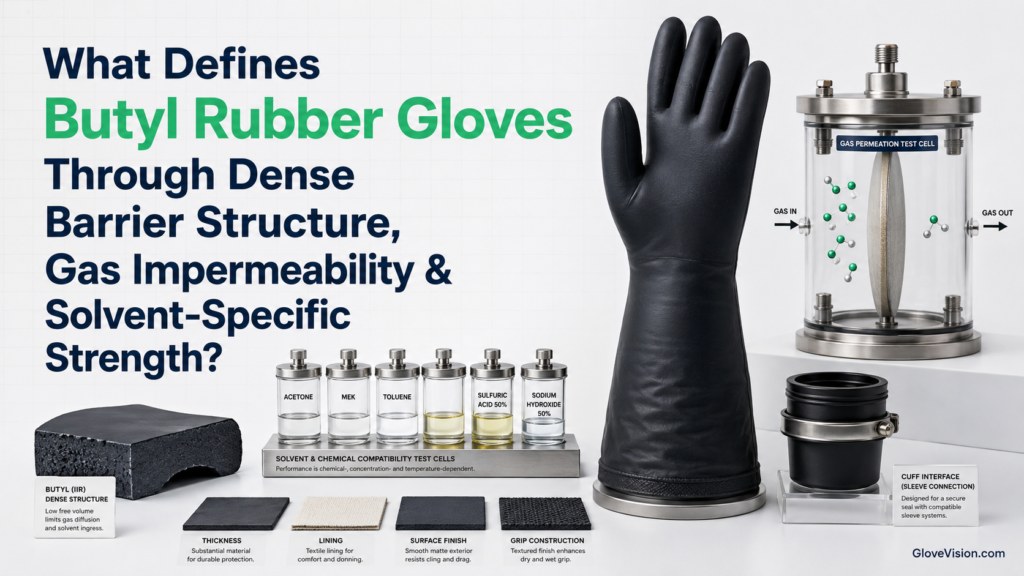
Butyl Rubber Gloves: Gas Barrier, Chemical Resistance & Limits What Defines Butyl Rubber Gloves Through Dense Barrier Structure, Gas Impermeability & Solvent-Specific Strength? Butyl Rubber Gloves are defined by a highly saturated isobutylene–isoprene rubber structure that restricts molecular diffusion, supports very low gas permeability, and provides strong resistance to selected polar solvents and corrosive chemicals. […]
What Defines Neoprene Gloves Through Chloroprene Stability, Broad Resistance & Environmental Durability?
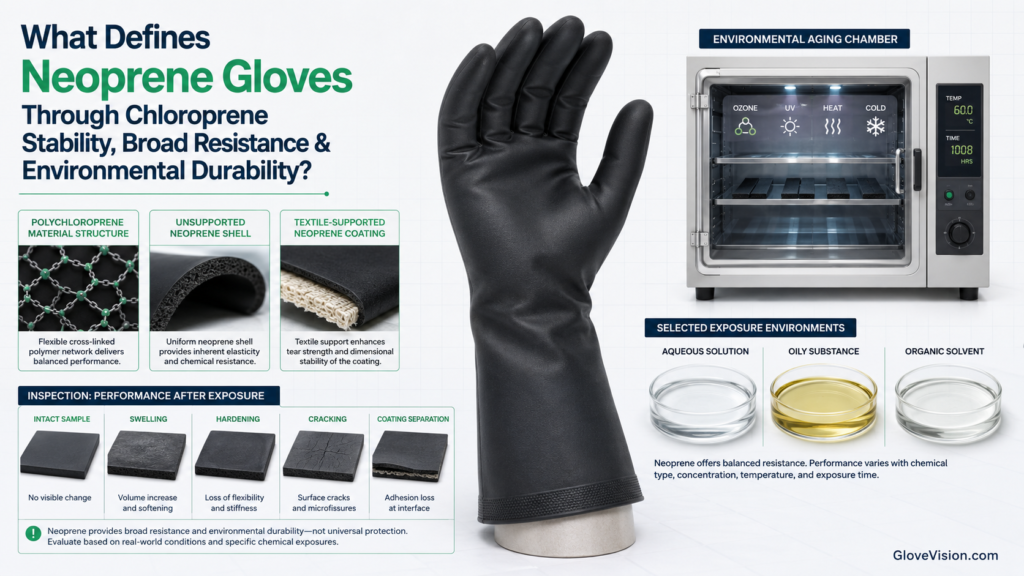
Neoprene Gloves: Chloroprene Stability & Resistance Limits What Defines Neoprene Gloves Through Chloroprene Stability, Broad Resistance & Environmental Durability? Neoprene Gloves are defined by a polychloroprene-based synthetic-rubber structure that can provide a balanced combination of flexibility, physical durability, weathering stability, and resistance across selected chemical exposures. Their resistance is broad only in a relative and […]