
When Is Vinyl Unreliable for High-Risk Exposure?
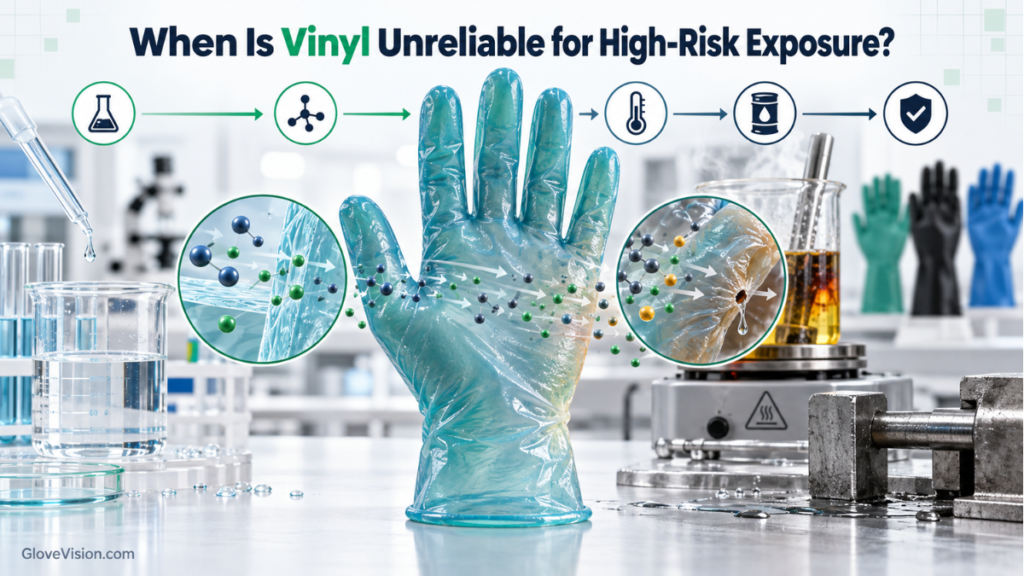
When Is Vinyl Unreliable for High-Risk Exposure? Vinyl/PVC Gloves become unreliable for high-risk exposure when the consequences of barrier failure are serious and the exact glove lacks sufficiently applicable evidence for the chemical, concentration, temperature, contact duration, mixture, and physical task. Generic PVC resistance is therefore not enough for a high-consequence decision. PVC remains useful […]
Where Does Vinyl Barrier Protection Become Limited?
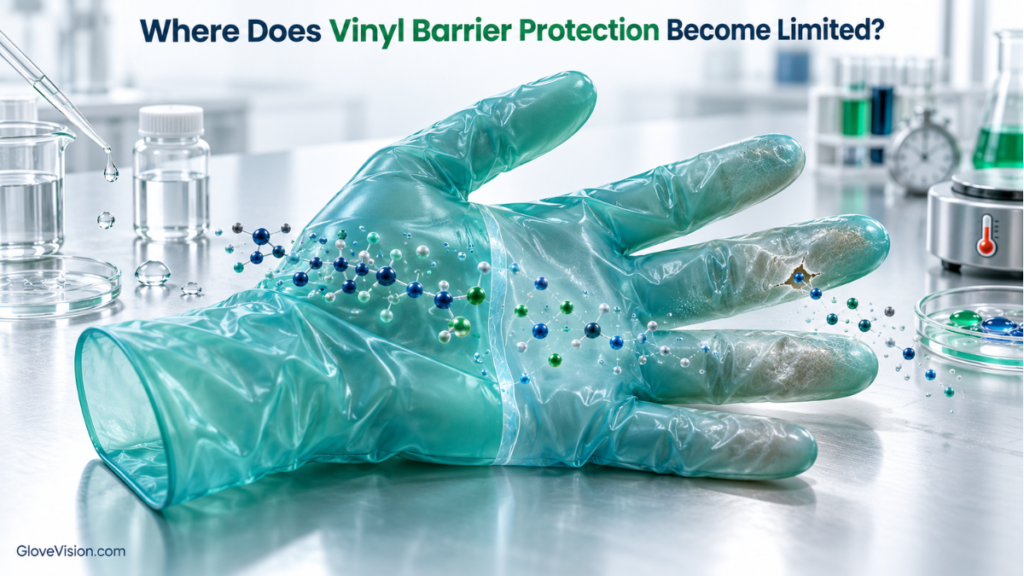
Where Does Vinyl Barrier Protection Become Limited? Vinyl/PVC Gloves become limited when the exact chemical, concentration, temperature, contact duration, mixture, or physical task exceeds the evidence available for the finished PVC glove. PVC is commonly useful as a candidate for selected aqueous acids, bases, salts, other water solutions, and alcohols, but its chemical resistance is […]
Are Vinyl and PVC Gloves Materially the Same Category?
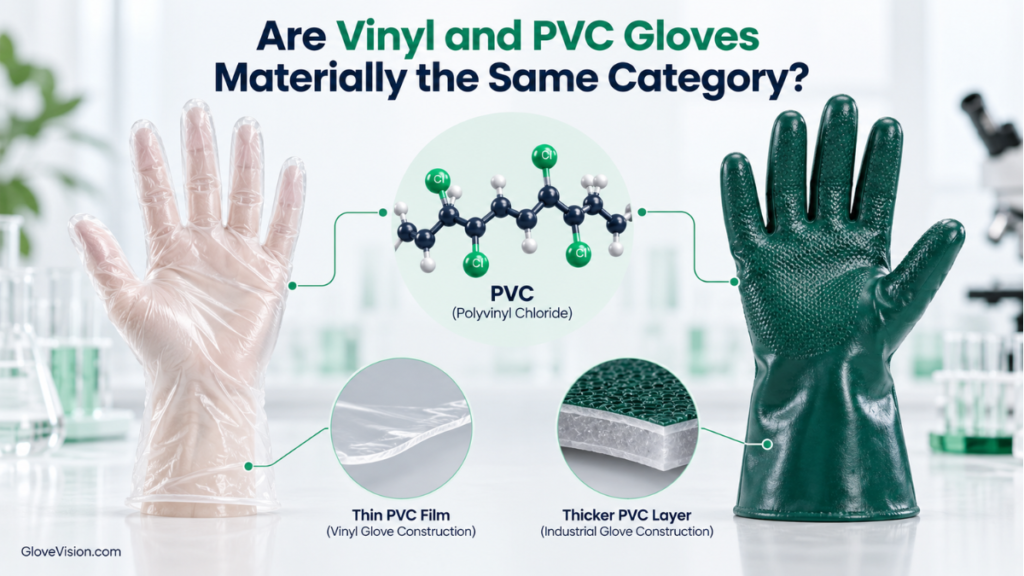
Are Vinyl and PVC Gloves the Same Material? Are Vinyl and PVC Gloves Materially the Same Category? Yes—at the base-material level, ordinary vinyl gloves are PVC gloves. “Vinyl” is the familiar commercial category name, while polyvinyl chloride, or PVC, is the chemically precise material designation. FDA defines a vinyl patient examination glove as a disposable […]
Why Does Lower Molecular Density Increase Pinhole Risk?
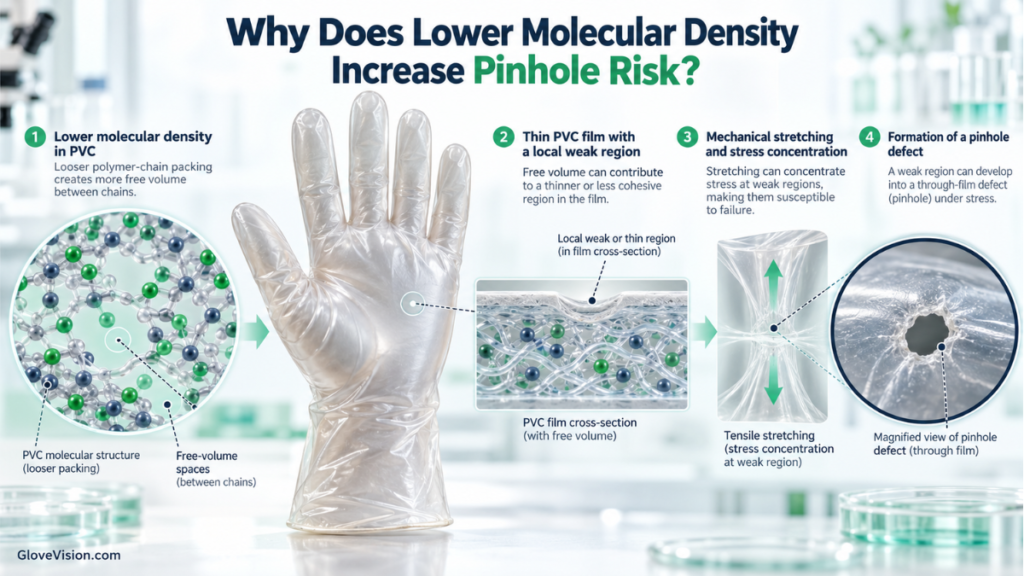
Why PVC Glove Films Become Vulnerable to Pinholes Why Does Lower Molecular Density Increase Pinhole Risk? Lower effective molecular packing can contribute indirectly to PVC Gloves vulnerability by changing polymer free volume and mechanical behavior, but it does not directly create a glove pinhole. A through-hole develops at the film scale when a thin, defective, […]
How Does PVC Structure Shape Vinyl Glove Behavior?
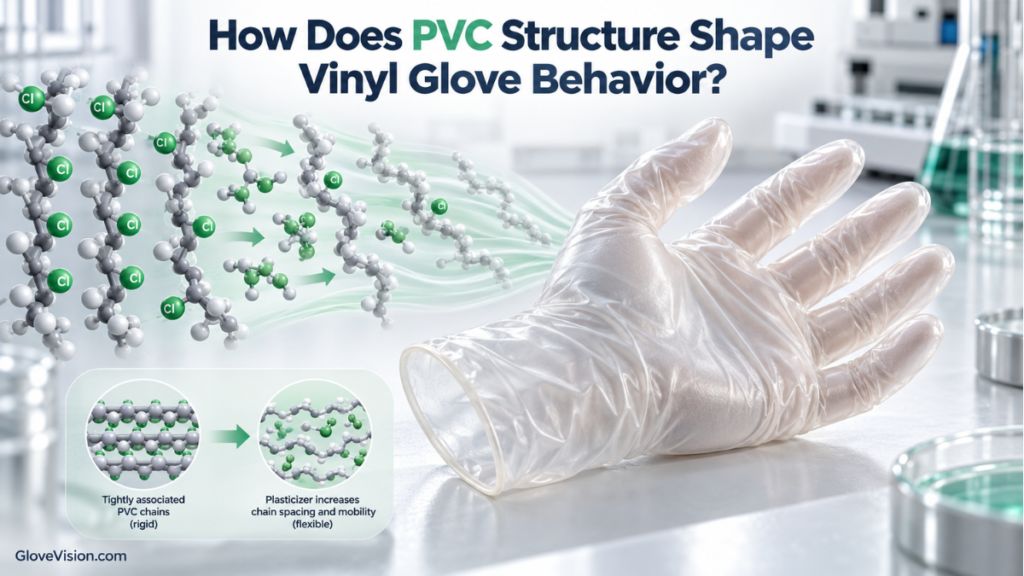
How PVC Structure Shapes Vinyl Glove Behavior How Does PVC Structure Shape Vinyl Glove Behavior? PVC structure shapes vinyl glove behavior by combining a relatively rigid chlorine-containing polymer with plasticizers that increase chain mobility and make flexible glove manufacture possible. The resulting compound can provide useful physical durability and chemical resistance for selected aqueous chemicals […]
How Does Reduced Flexibility Affect Fluoroelastomer Usability?
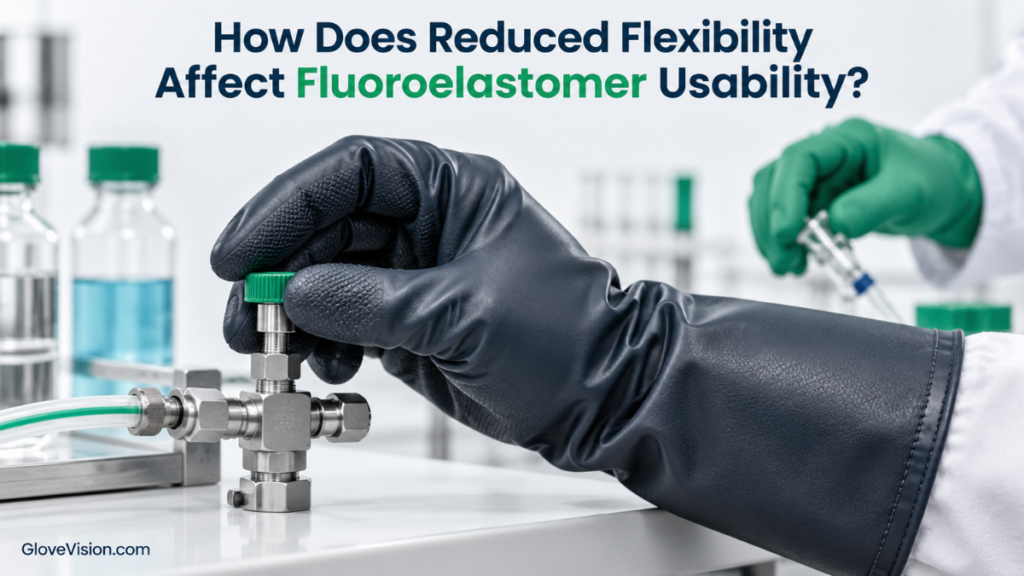
How Reduced Flexibility Affects Fluoroelastomer Gloves How Does Reduced Flexibility Affect Fluoroelastomer Usability? Reduced flexibility limits Fluoroelastomer Gloves when the finished construction creates enough resistance to finger, thumb, palm, or wrist movement to reduce task control, tactile feedback, grip efficiency, movement speed, or endurance. The limitation is product-specific rather than inherent to every Fluoroelastomer Glove. […]