
Why Is Viton Use Limited Despite Extreme Solvent Protection?
Why Viton Gloves Remain Limited Despite Solvent Resistance Why Is Viton Use Limited Despite Extreme Solvent Protection? Viton Gloves remain specialist products because their strongest advantage is useful resistance to selected demanding organic-solvent environments rather than universal chemical protection. This can make them valuable for particular solvent tasks while adding little value where another verified […]
Which Practical Trade-Off Limits Fluoroelastomer Adoption?
What Limits Wider Fluoroelastomer Gloves Adoption? Which Practical Trade-Off Limits Fluoroelastomer Adoption? Fluoroelastomer Gloves adoption is mainly limited by the trade-off between specialist chemical protection and complete-task efficiency. These gloves can provide valuable resistance in selected demanding solvent exposures, but that specialization is worthwhile only when it solves a protection problem that other verified products […]
What Makes Toluene and Xylene Strong Fluoroelastomer Targets?
Fluoroelastomer Gloves for Toluene & Xylene: Suitability What Makes Toluene and Xylene Strong Fluoroelastomer Targets? Toluene and xylene are important Fluoroelastomer Gloves candidates because selected finished fluoroelastomer constructions are specifically designed for aromatic-hydrocarbon handling. Current SHOWA 892 product information names both toluene and xylene as intended aromatic applications for its fluoroelastomer-over-Butyl construction. Candidate status is […]
Where Does Fluoroelastomer Resistance Justify Use?
When Does Fluoroelastomer Resistance Justify Use? Where Does Fluoroelastomer Resistance Justify Use? Fluoroelastomers justify use when an exact product provides the resistance needed for a defined chemical exposure and that capability matters to the task. Selected aromatic hydrocarbons, chlorinated solvents, oils, and fuels can create reasons to evaluate these specialist barriers. A generic material reputation […]
Which Chlorinated Solvents Suit Fluoroelastomer Gloves?
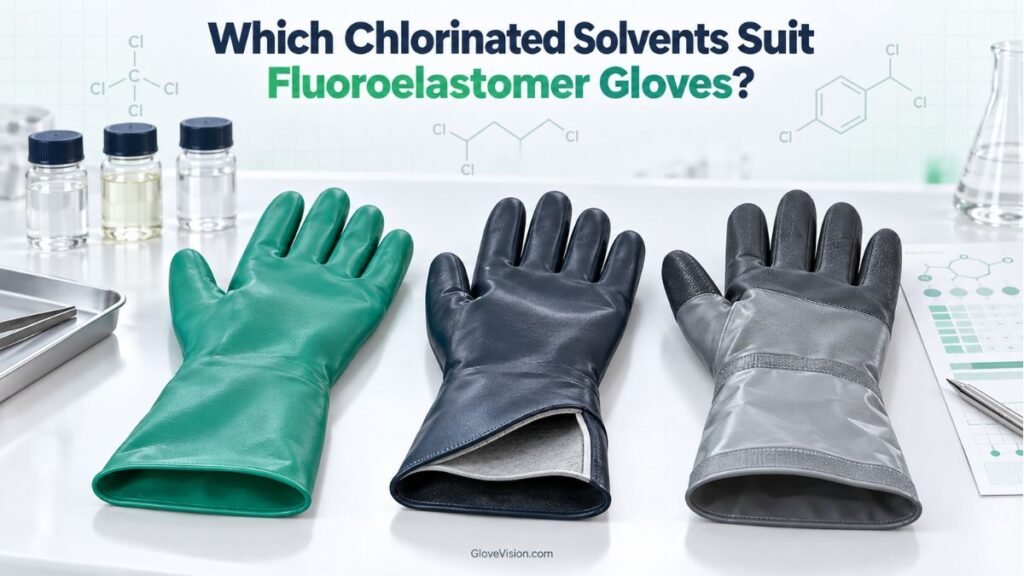
Fluoroelastomer Gloves for Chlorinated Solvents: Suitability & Limits Which Chlorinated Solvents Suit Fluoroelastomer Gloves? Fluoroelastomer Gloves can be candidates for selected chlorinated solvents when chemical-specific permeation, degradation, and integrity evidence supports the exact finished glove. Trichloroethylene and tetrachloroethylene warrant separate screening; dichloromethane, chloroform, and chlorobenzene each require their own product-specific assessment. Chlorinated solvents are not […]
How Does Fluorinated Chemistry Shape Fluoroelastomer Behavior?
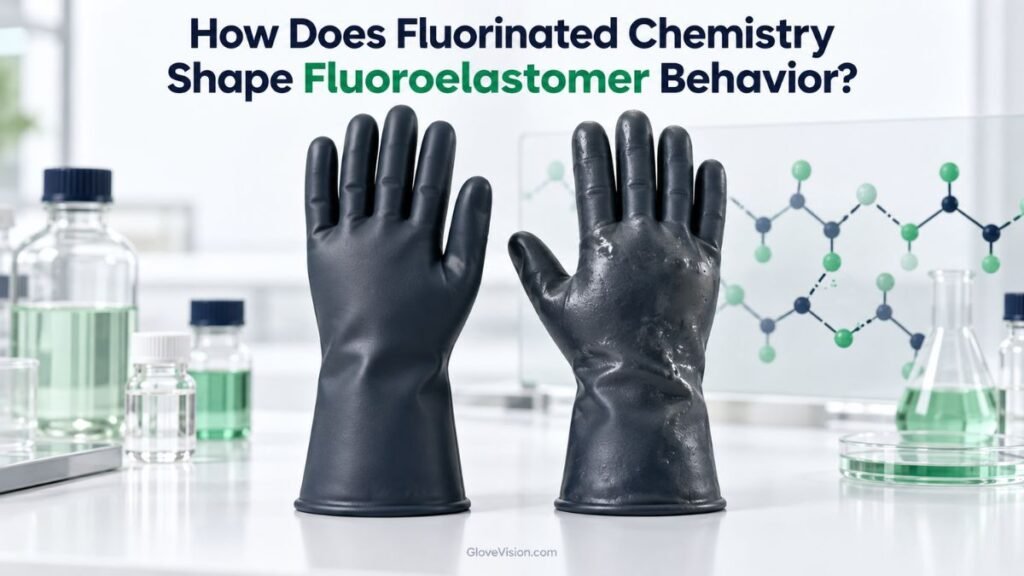
How Fluorinated Chemistry Shapes Fluoroelastomer Behavior How Does Fluorinated Chemistry Shape Fluoroelastomer Behavior? Fluorinated chemistry shapes Fluoroelastomers by influencing chemical stability, solvent uptake, swelling, diffusion, heat resistance, flexibility, and mechanical behavior. Carbon–fluorine bonds contribute to these tendencies, but the final property balance emerges from the complete polymer architecture and compound. No single structural feature improves […]