
Why Do Fluoroelastomers Resist Aggressive Aromatics?
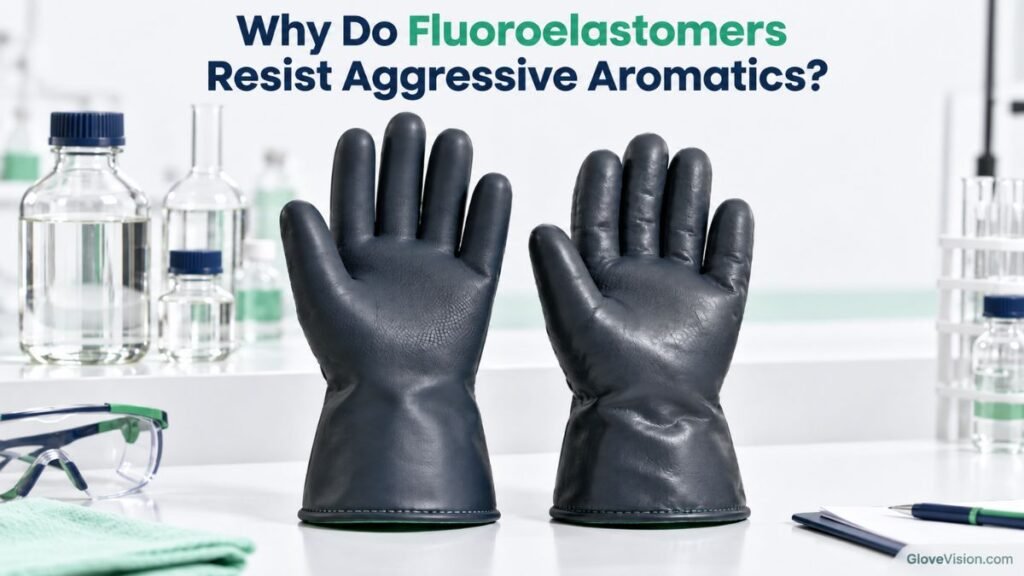
Why Do Fluoroelastomers Resist Aggressive Aromatics? Fluoroelastomers can resist selected aggressive aromatic hydrocarbons because fluorinated polymer composition supports chemical stability and can limit solvent uptake, swelling and molecular transport under compatible conditions. This is not a universal solvent approval: FKM grade, aromatic identity, mixture ingredients, temperature, thickness, contact time and finished-glove construction govern the actual […]
How Does Reduced Flexibility Limit Butyl Usability?
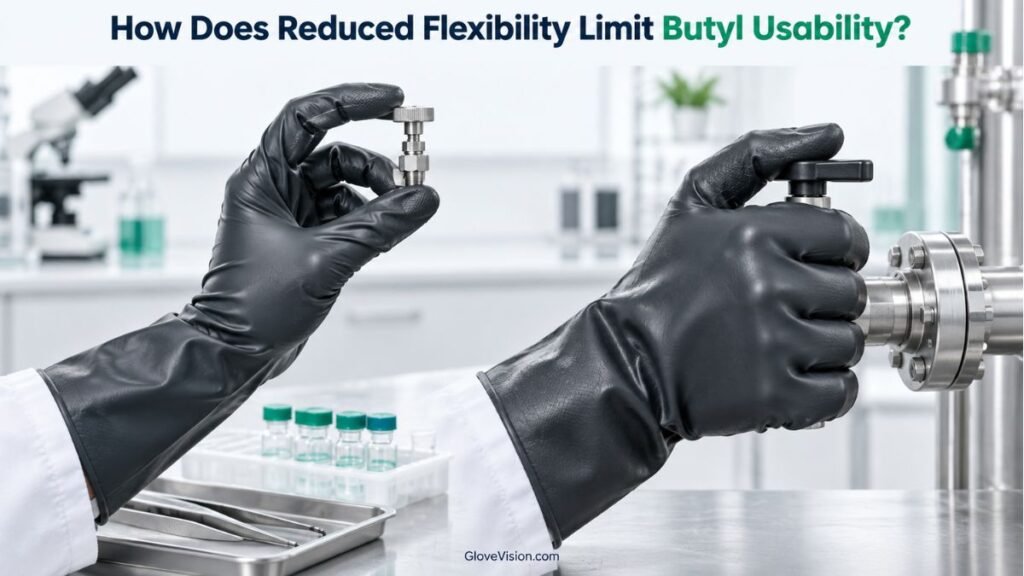
Butyl Rubber Flexibility: Dexterity, Grip & Task Limits How Does Reduced Flexibility Limit Butyl Usability? Reduced flexibility can limit Butyl Rubber glove usability when the complete construction resists finger, thumb, palm, or wrist movement enough to interfere with dexterity, tactile control, grip, precision, or repeated handling. This is not an inherent limitation of Butyl Rubber […]
When Is Butyl Preferred for Toxic-Vapor Protection?
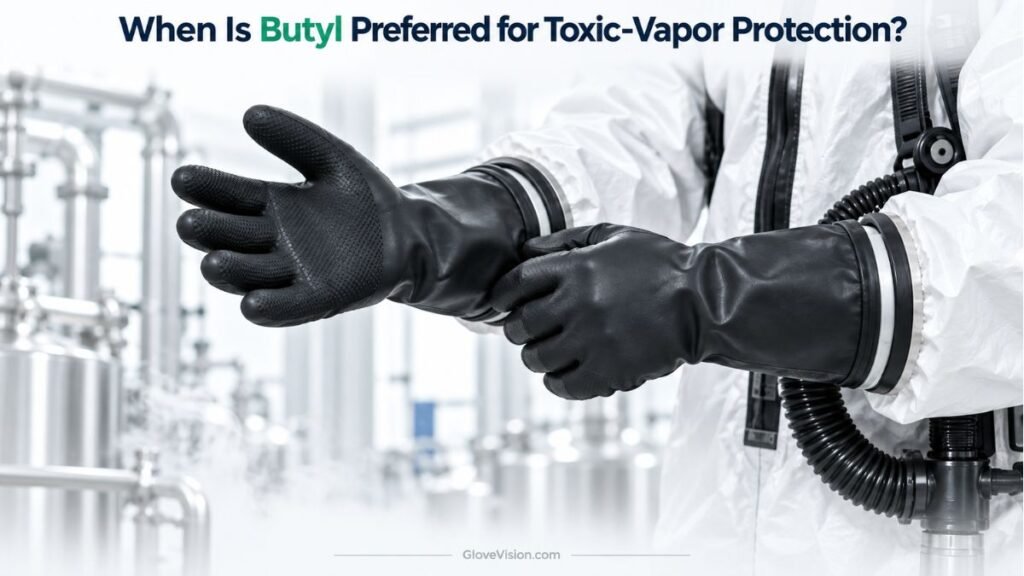
Butyl Rubber for Toxic Vapors: Barrier & PPE Limits When Is Butyl Preferred for Toxic-Vapor Protection? Butyl Rubber can be preferred when a toxic vapor creates a meaningful skin or skin-absorption hazard and exact testing shows that the selected Butyl glove, clothing material, or ensemble component provides adequate resistance to that specific agent. Butyl Rubber […]
What Practical Trade-Off Defines Butyl Selection?
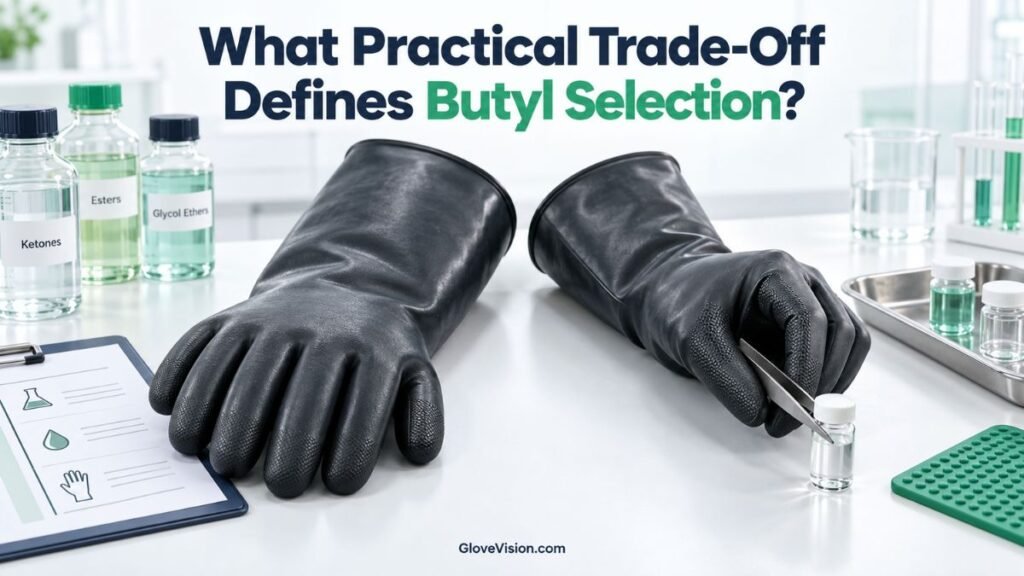
Butyl Rubber Selection Trade-Offs: Protection vs Task Fit What Practical Trade-Off Defines Butyl Selection? The main Butyl Rubber trade-off is specialist chemical protection versus complete-task versatility. Butyl can provide valuable protection against defined chemicals such as selected ketones, glycol ethers, esters, aldehydes, and aggressive acids, but its usefulness falls sharply when the controlling exposure lies […]
Why Do Ester Exposures Favor Butyl Rubber?
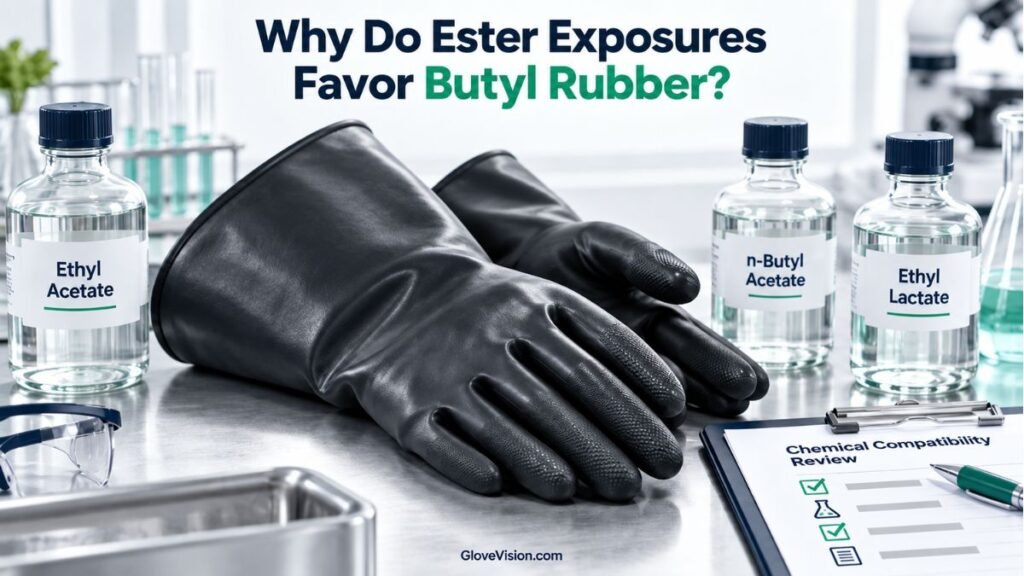
Butyl Rubber Ester Resistance: Strengths & Compatibility Limits Why Do Ester Exposures Favor Butyl Rubber? Ester exposures often make Butyl Rubber a strong candidate because Butyl is an established specialist barrier for selected polar organics and exact finished products can provide useful resistance to several solvent esters. Ester resistance is highly variable. Ethyl acetate, n-butyl […]
Which Ketones Are Well Matched With Butyl Gloves?
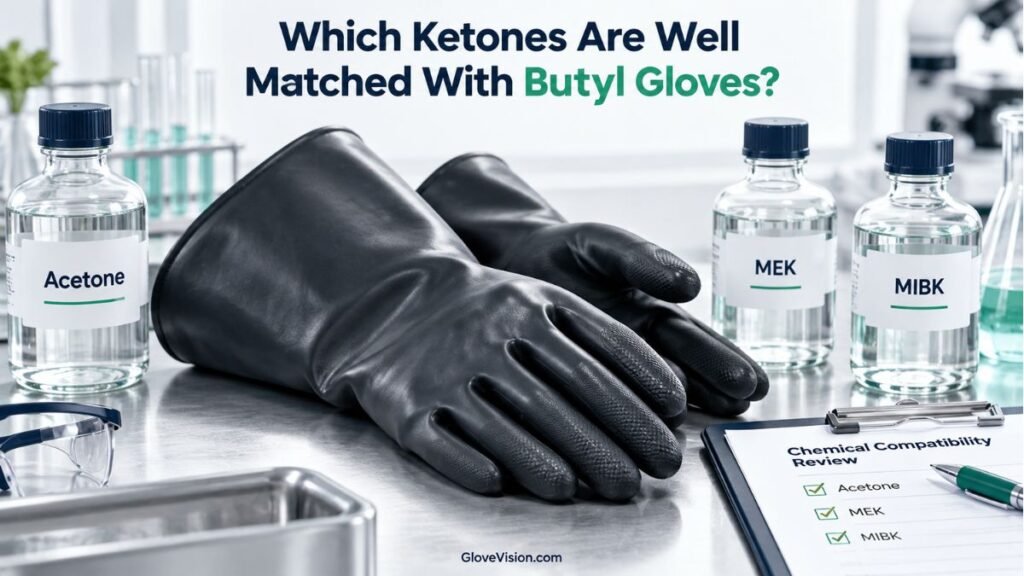
Butyl Gloves for Ketones: Acetone, MEK & Compatibility Limits Which Ketones Are Well Matched With Butyl Gloves? Acetone and MEK are among the best-established ketone candidates for Butyl Gloves, while MIBK and other ketones can also be compatible but require exact product-level verification because performance differs across individual chemicals and glove constructions. “Ketone resistant” is […]