
Where Does Butyl Resistance Perform Strongest?
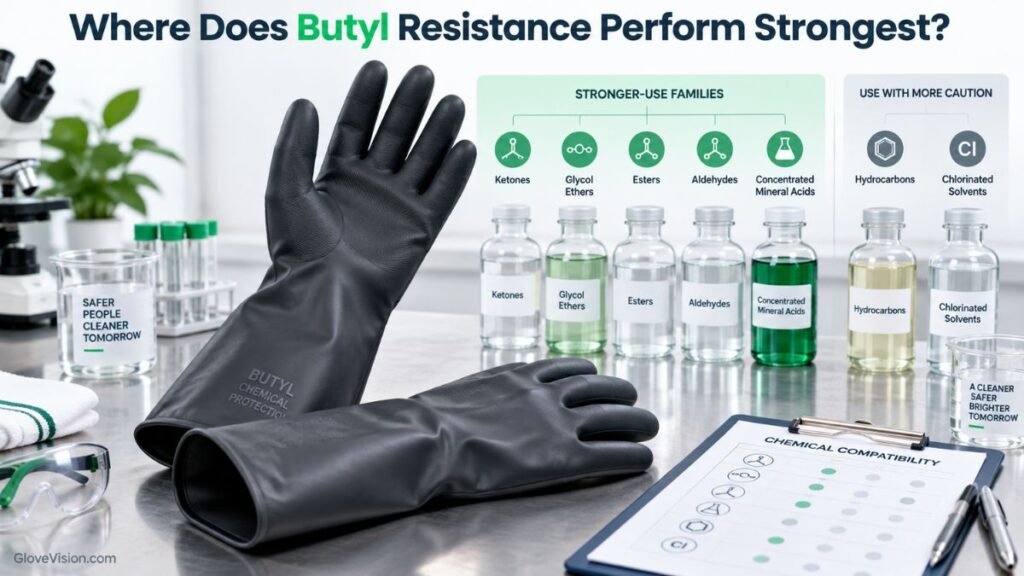
Butyl Rubber Resistance: Strongest Chemical Zones & Limits Where Does Butyl Resistance Perform Strongest? Butyl Rubber performs strongest as a specialist chemical barrier when exact finished-glove data support selected ketones, glycol ethers, esters, aldehydes, and certain concentrated mineral-acid exposures. These are strength zones, not automatic approvals. Performance changes with exact chemical identity, concentration, temperature, mixture […]
What Makes Butyl Rubber a Strong Gas Barrier?
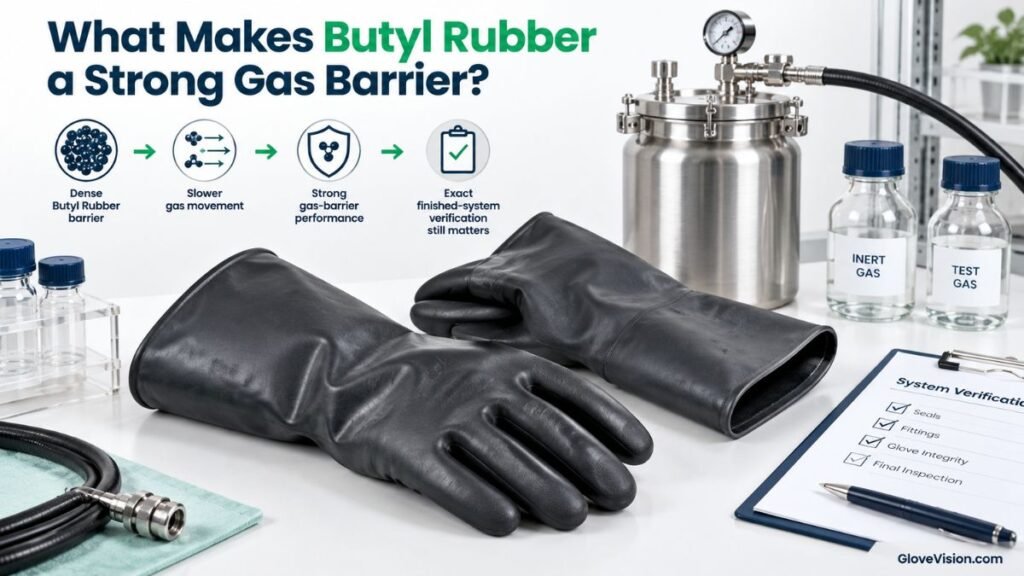
Butyl Rubber Gas Barrier: Why Permeability Is So Low What Makes Butyl Rubber a Strong Gas Barrier? Butyl Rubber is an unusually strong elastomeric gas barrier because its isobutylene-rich molecular architecture combines slow segmental dynamics with penetrant-specific reductions in gas sorption and diffusion, allowing many small gases to move through the polymer much more slowly […]
How Does Butyl Structure Create Low-Permeation Behavior?
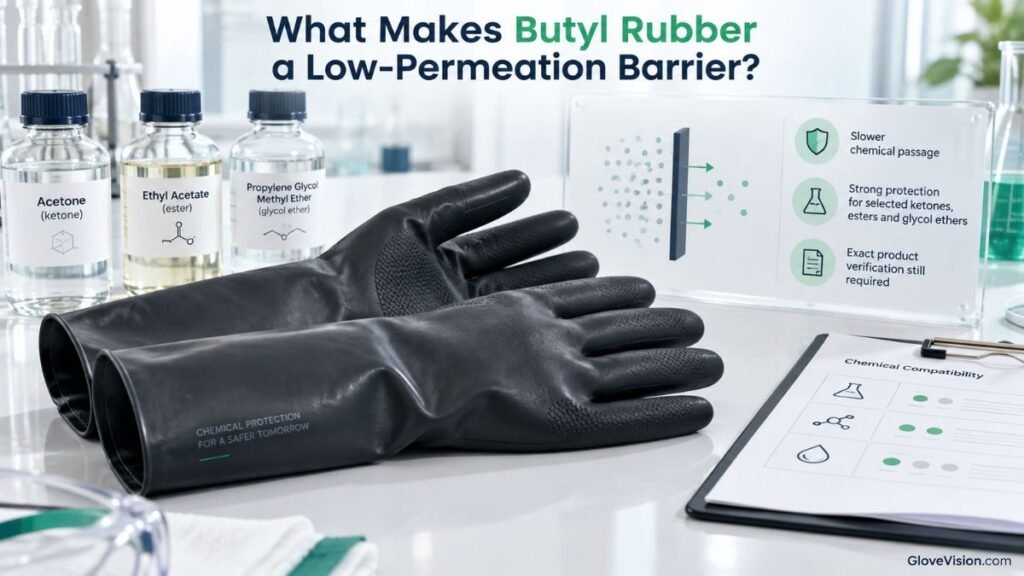
Butyl Rubber Structure: Why Permeation Stays Low How Does Butyl Structure Create Low-Permeation Behavior? Butyl Rubber creates unusually low molecular permeability primarily through its polyisobutylene-rich architecture. Restricted segmental motion and penetrant-specific sorption behavior can reduce molecular diffusion and uptake, producing exceptional gas-barrier performance and strong chemical-barrier potential for compatible substances. The same structure does not […]
When Is Broad Chemical Coverage More Useful Than Maximum Specialization?
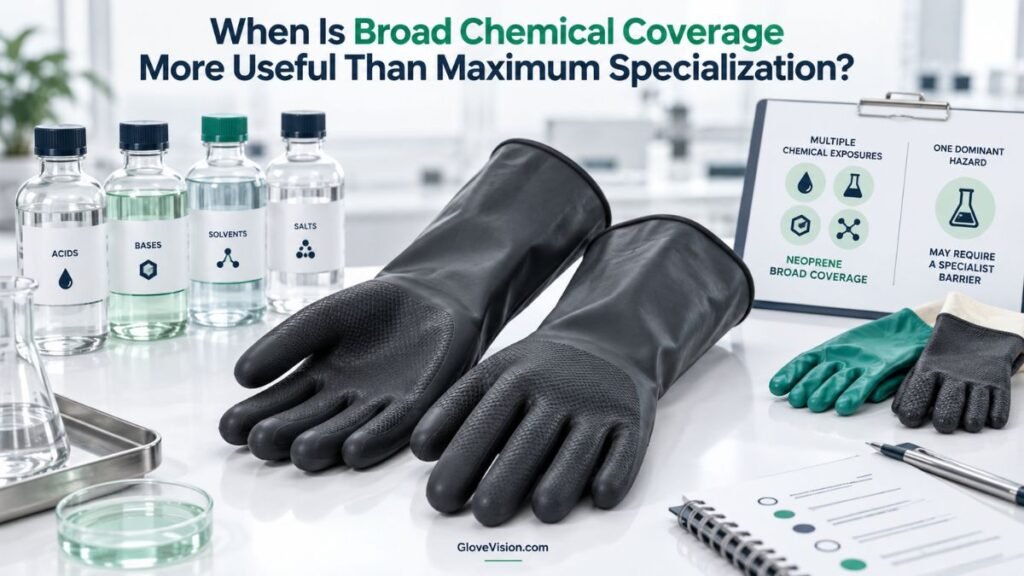
Neoprene Broad Coverage vs Specialist Chemical Gloves When Is Broad Chemical Coverage More Useful Than Maximum Specialization? Broad chemical coverage can be more useful when an exact Neoprene glove provides adequate verified protection across every chemical encountered in a workflow and its construction also supports the required grip, dexterity, mechanical durability, coverage, and task switching. […]
How Does Neoprene Behave in Cold Conditions?
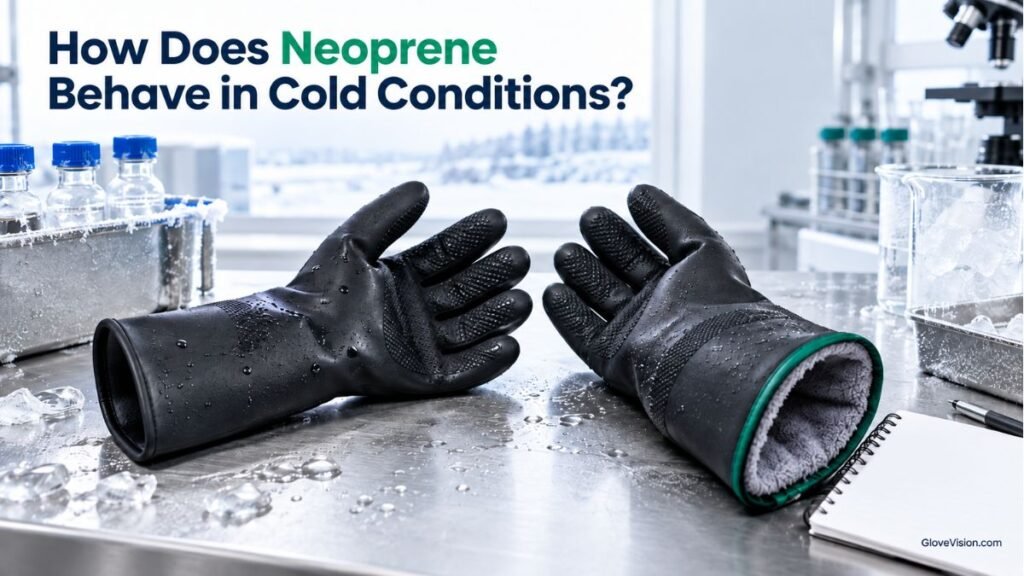
Neoprene in Cold Conditions: Flexibility, Stiffness & Limits How Does Neoprene Behave in Cold Conditions? Neoprene can retain useful flexibility in many cold conditions, but falling temperature reduces polymer mobility and can increase stiffness, while prolonged cold may also promote formulation-dependent crystallization. Polymer cold flexibility is only one part of glove performance. Actual suitability also […]
What Practical Trade-Off Separates Neoprene From Narrower Specialists?
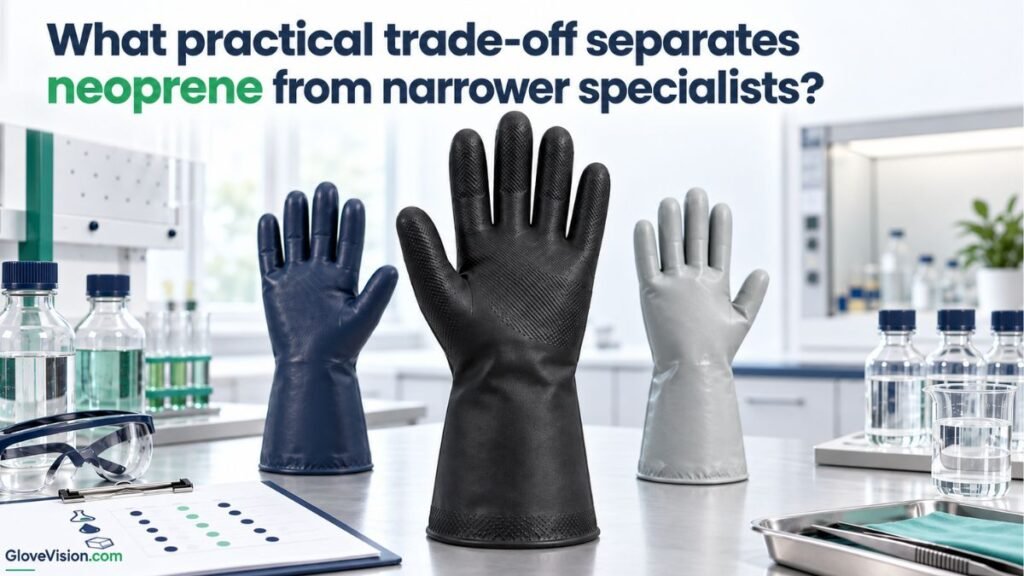
Neoprene vs Specialist Glove Materials: The Practical Trade-Off What Practical Trade-Off Separates Neoprene From Narrower Specialists? Neoprene’s main practical trade-off is breadth and whole-task usability versus peak chemical specialization. An exact Neoprene glove may provide adequate chemical protection while also supporting the flexibility, construction, grip, coverage, and repeated handling needed across several compatible tasks, whereas […]