
Which Solvent Exposures Exceed Neoprene Specialization?
Neoprene Solvent Resistance: Limits & Better Barrier Choices Which Solvent Exposures Exceed Neoprene Specialization? Neoprene has useful but bounded solvent specialization. Certain tested polychloroprene gloves can perform well with specific alcohols, glycol ethers, and other solvent chemistries, while the same product may perform very poorly against particular aromatic, chlorinated, ketone, ester, or mixed-solvent exposures. “Solvent-resistant […]
Why Does Neoprene Suit Corrosive-Acid Exposure?
Neoprene Acid Resistance: Corrosive-Acid Limits & Selection Why Does Neoprene Suit Corrosive-Acid Exposure? Neoprene can suit selected corrosive-acid exposures because certain crosslinked polychloroprene glove constructions can slow chemical transport while retaining useful physical integrity and flexibility under compatible acid conditions. The benefit is conditional rather than universal. Acid identity, concentration, oxidizing character, water content, temperature, […]
Where Does Neoprene Fit Within Chemical-Resistance Boundaries?
Neoprene Chemical Resistance: Limits & Glove Selection Where Does Neoprene Fit Within Chemical-Resistance Boundaries? Neoprene Chemical Resistance gives polychloroprene a broad but non-universal position among chemical glove materials. Properly constructed neoprene gloves can be credible candidates for many acids, bases and caustics, alcohols, oils, and selected aqueous or industrial chemicals, while specific solvents, mixtures, concentrations, […]
Which Oxidizer Exposures Suit Neoprene Gloves?
Which Oxidizers Suit Neoprene Gloves? Which Oxidizer Exposures Suit Neoprene Gloves? Selected Neoprene Gloves may suit certain aqueous oxidizer exposures, including specifically tested hydrogen peroxide or hypochlorite solutions, because particular polychloroprene constructions can maintain useful barrier performance under defined conditions. This performance cannot be generalized across concentrations, products, or oxidizer families. Concentrated oxidizing acids, peracetic […]
Does Neoprene Resist Ozone Aging Better Than Natural Rubber?
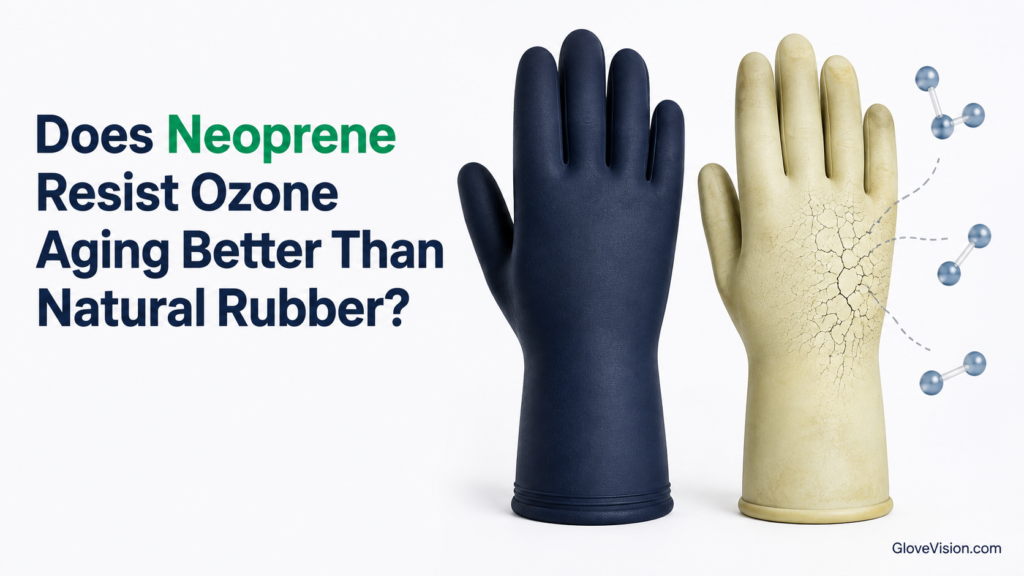
Does Neoprene Resist Ozone Better Than Natural Rubber? Does Neoprene Resist Ozone Aging Better Than Natural Rubber? Generally, yes. Polychloroprene used in Neoprene Gloves normally provides better inherent resistance to ozone-induced cracking than conventional unprotected natural rubber under comparable exposure and strain conditions. This is a material tendency, not a product guarantee. Formulation, additives, thickness, […]
How Do Stability and Broad Resistance Shape Neoprene Behavior?
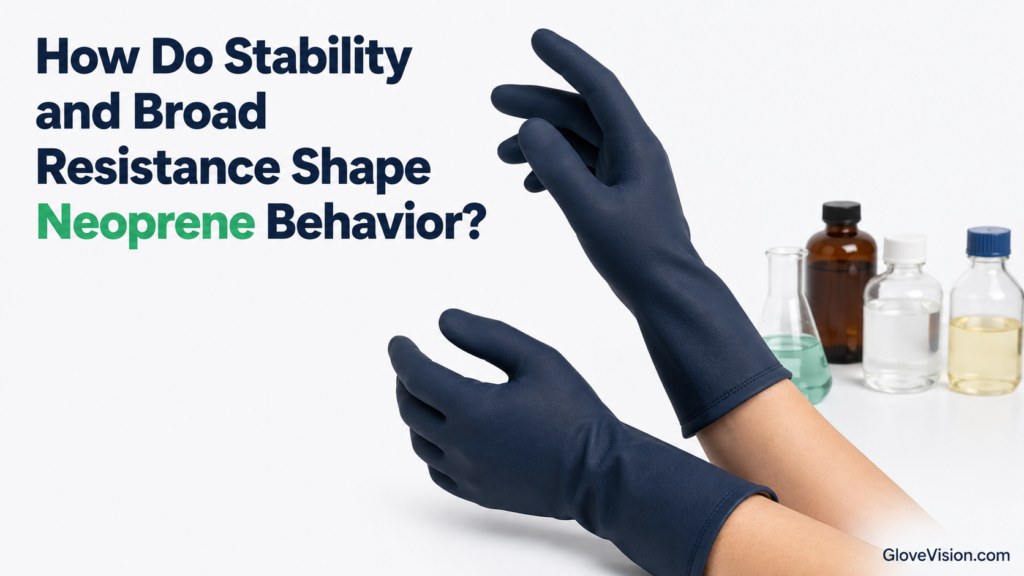
How Stability Shapes Neoprene Gloves Resistance How Do Stability and Broad Resistance Shape Neoprene Behavior? Neoprene Gloves are polychloroprene hand protection valued for a balanced combination of flexibility, environmental stability, and resistance to selected chemical groups. Broad resistance is conditional: actual protection depends on the exact chemical, concentration, temperature, contact pattern, thickness, construction, condition, and […]