
Which Accelerators Are Removed From Accelerator-Free Nitrile Gloves?

Which Accelerators Are Excluded From Nitrile Gloves? Which Accelerators Are Removed From Accelerator-Free Nitrile Gloves? Conventional nitrile production may use rubber accelerators to speed crosslinking and develop elasticity, strength, recovery, and film stability. Accelerator-Free Nitrile Gloves are designed to avoid specified accelerator systems, but exclusion lists vary and the claim does not eliminate every possible […]
What Makes Nitrile Useful for Latex Avoidance?

Why Nitrile Gloves Help With Latex Avoidance What Makes Nitrile Useful for Latex Avoidance? Nitrile Gloves are useful for latex avoidance because synthetic nitrile-butadiene rubber does not depend on the natural-rubber proteins responsible for classic Type I latex allergy. Nitrile can still contribute to irritation or delayed allergy through occlusion, friction, rubber accelerators, and other […]
How Do Wearability and Skin Sensitivity Shape Nitrile Trade-Offs?
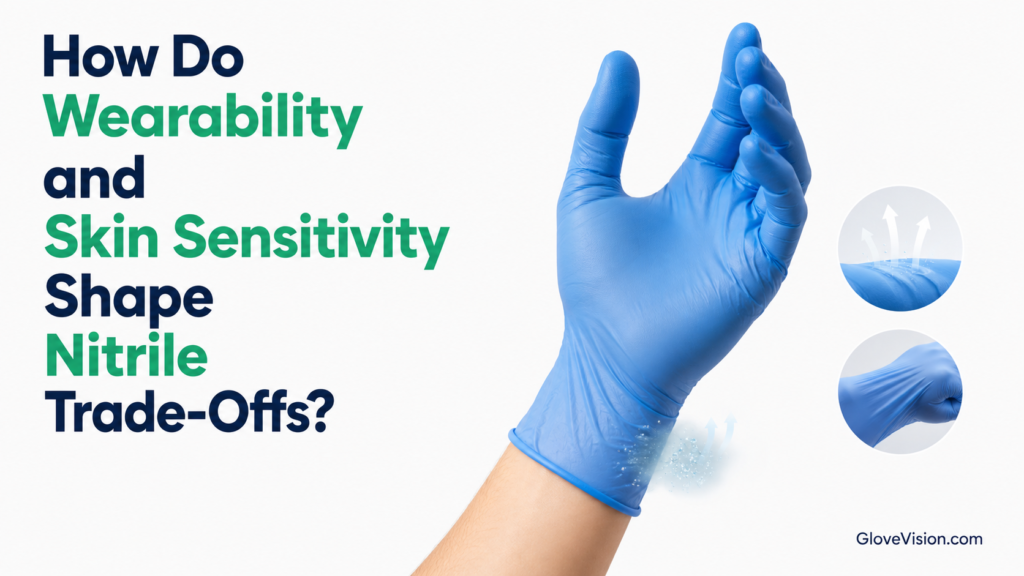
Nitrile Gloves: Wearability and Skin Sensitivity How Do Wearability and Skin Sensitivity Shape Nitrile Trade-Offs? Nitrile Gloves can provide useful barrier strength, puncture durability, close fit, and dexterity without natural-rubber latex proteins. Fit, stiffness, thickness, occlusion, perspiration, friction, hand hygiene, processing chemicals, rubber accelerators, wear duration, and individual skin condition can still cause discomfort, irritation, […]
Why Is Nitrile Less Suitable for Methyl Ethyl Ketone?
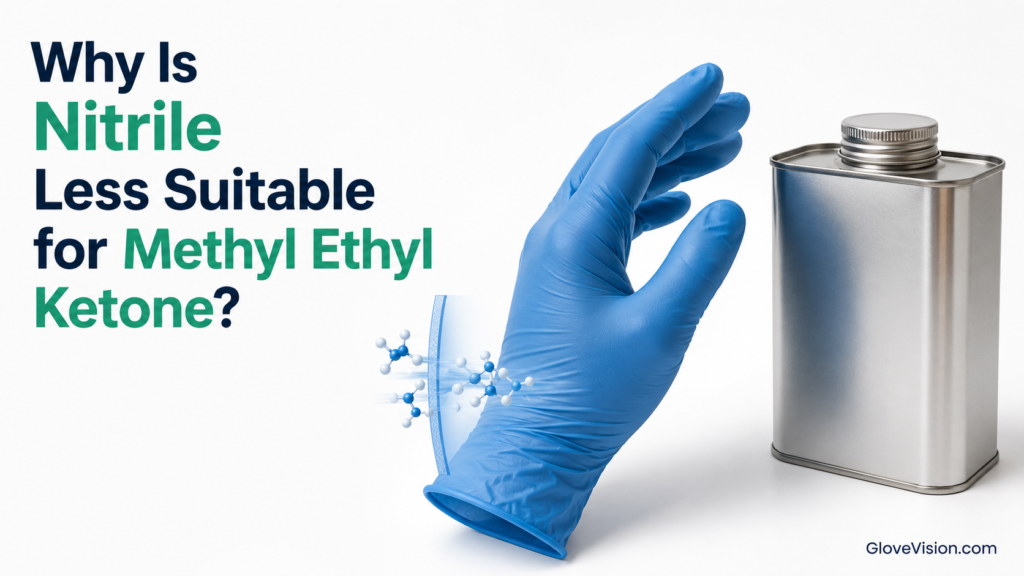
Why Nitrile Gloves Are Less Suitable for MEK Why Is Nitrile Less Suitable for Methyl Ethyl Ketone? Nitrile Gloves are frequently less suitable for methyl ethyl ketone because MEK can enter the NBR film, cause swelling or softening, and permeate the material comparatively quickly. Formulations and thicknesses differ, but no nitrile product should be accepted […]
Which Splash Exposures Suit Nitrile Gloves?
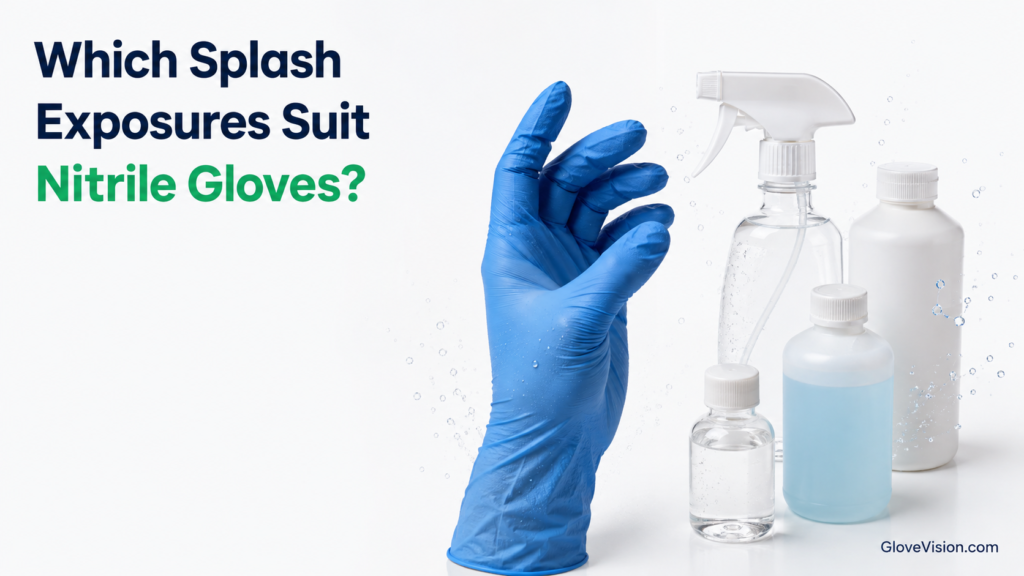
Which Chemical Splashes Suit Nitrile Gloves? Which Splash Exposures Suit Nitrile Gloves? Selected Nitrile Gloves may suit brief, controlled splashes of compatible oils, greases, alcohols, water-based products, dilute acids, dilute bases, and other chemicals documented for the exact finished glove. Repeated splashing, pooling, prolonged wetting, immersion, high pressure, highly toxic chemicals, corrosives, incompatible solvents, heat, […]
Where Does Nitrile Resistance Perform Well or Fall Short?
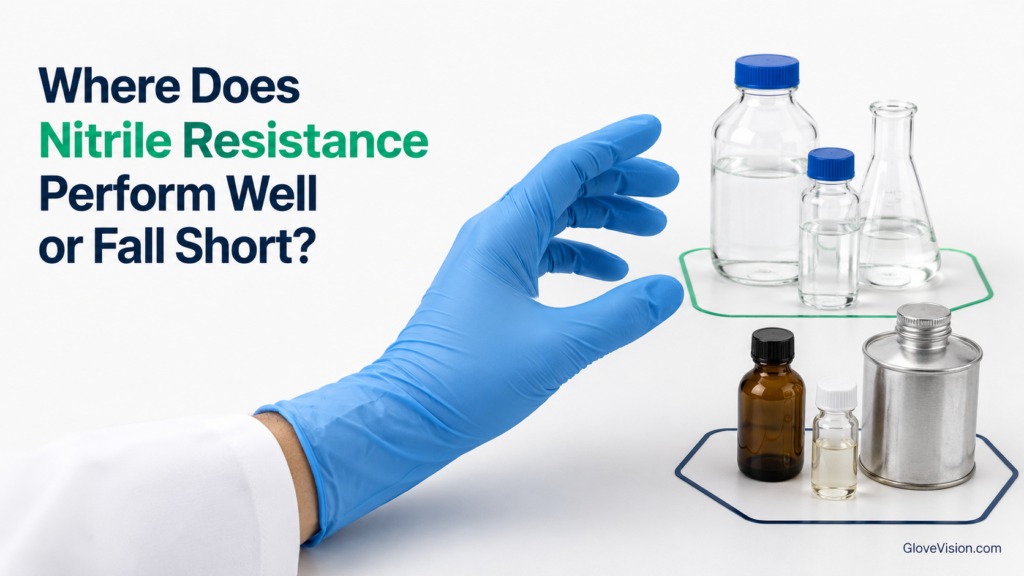
Where Nitrile Gloves Resist Chemicals—and Where They Fail Where Does Nitrile Resistance Perform Well or Fall Short? Nitrile Gloves commonly perform well against selected oils, greases, fuels, aliphatic hydrocarbons, alcohols, and some aqueous acids or bases because compatible NBR films can limit chemical uptake, swelling, and diffusion. Nitrile may fall short against ketones, esters, aromatic […]