
Why do household chemicals require reusable barrier materials?
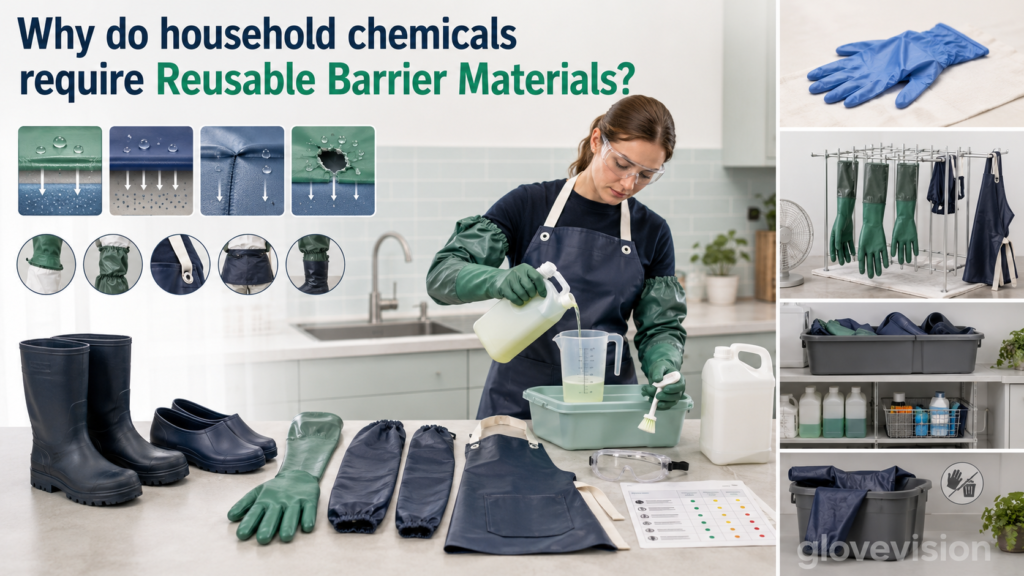
Reusable Barrier Materials for Household Chemicals Why do household chemicals require reusable barrier materials? Certain Household chemicals require Reusable barrier materials when their labels or expected exposure conditions call for repeated skin protection. The exact item must match the chemical, concentration, temperature, contact type, duration, exposed body area, and physical demands—and it must remain safe […]
How Does Glove Lining Affect Cleaning-Glove Comfort?
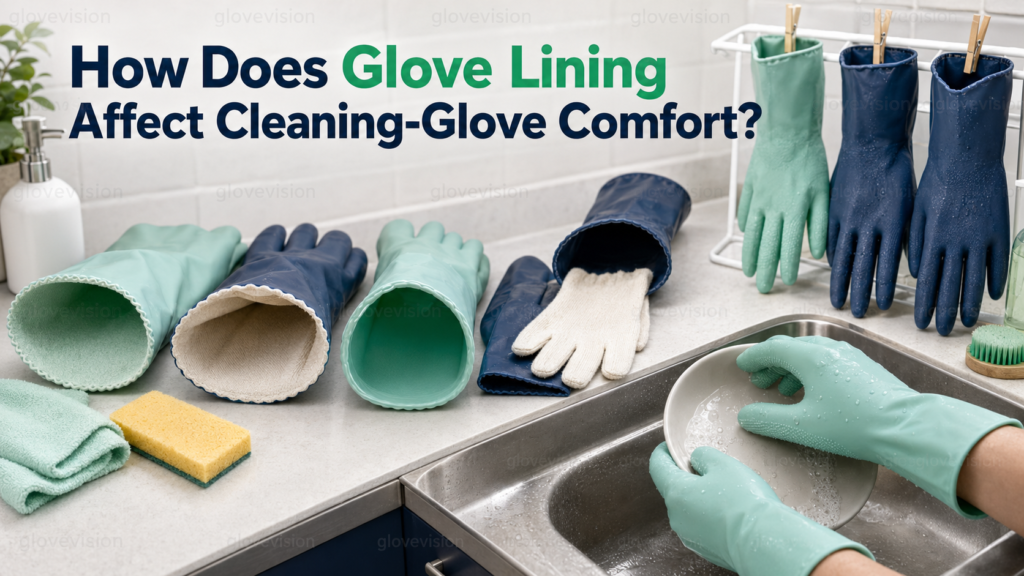
Glove Lining and Cleaning-Glove Comfort: Practical Guide How Does Glove Lining Affect Cleaning-Glove Comfort? Glove lining can affect cleaning-glove comfort by changing how the interior manages perspiration, feels against the skin, retains warmth, and supports donning and removal. Its effect depends on the complete glove product, fit, household task, cleaner, water temperature, wear duration, wet […]
Which cleaning-glove builds tolerate repeated wet reuse?
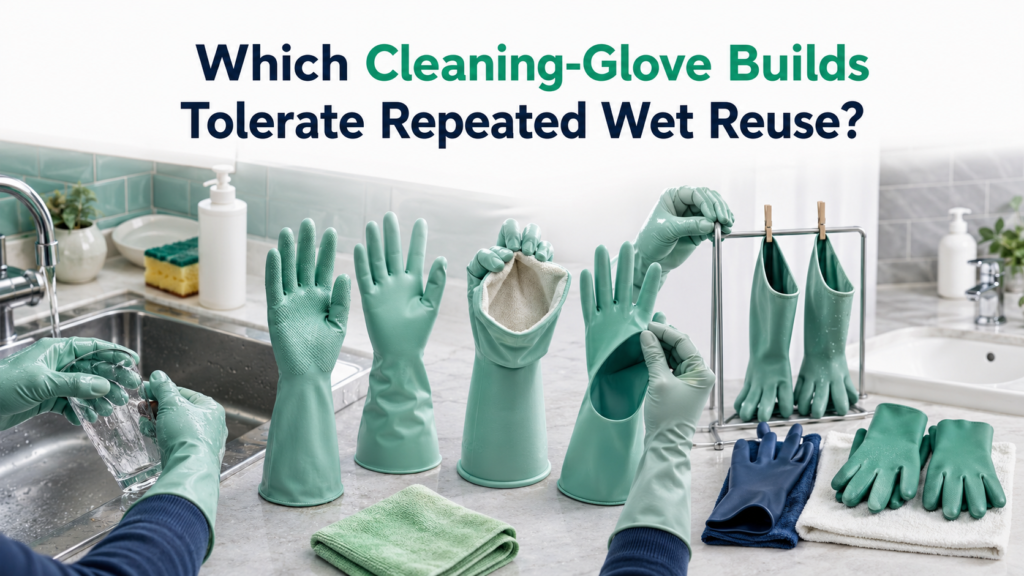
Cleaning-Glove Builds for Repeated Wet Reuse: Guide Which cleaning-glove builds tolerate repeated wet reuse? Cleaning-glove builds tolerate repeated wet reuse when the exact product is designed for reuse and remains suitable for the task, cleaner, and next use. Reuse readiness depends on complete construction, exposure history, care, household-zone assignment, structural condition, hygiene, function, dryness, and […]
How Do Cleaning Gloves Handle Wet Household Exposure?
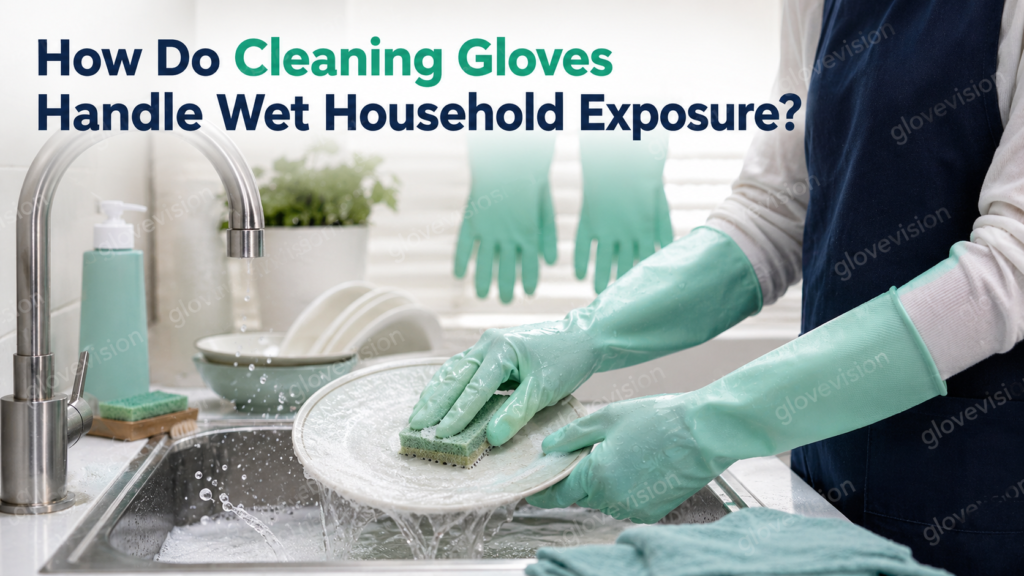
Cleaning Gloves for Wet Household Exposure: Use Guide How Do Cleaning Gloves Handle Wet Household Exposure? Cleaning Gloves handle wet household exposure well when the exact product remains intact, excludes external water, provides safe wet grip, fits the task, and matches the detergent or cleaner. Wet-use performance is not determined by material or thickness alone. […]
Why Are Lab Gloves Restricted Around Shared Devices?
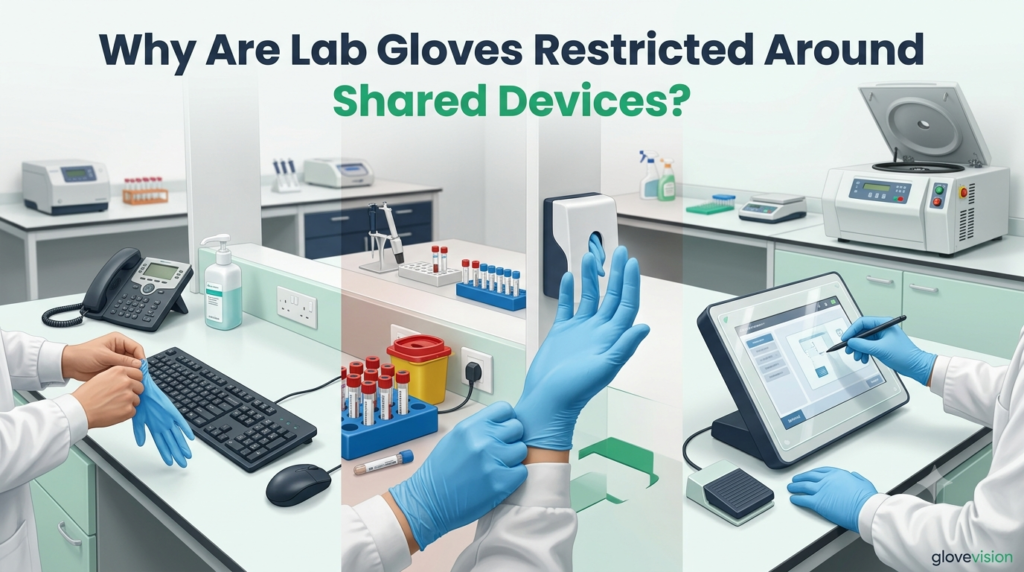
Lab Gloves Around Shared Devices: Restriction Guide Why Are Lab Gloves Restricted Around Shared Devices? Lab Gloves are restricted around shared devices when their current contamination state could expose later users, clean samples, products, or other laboratory tasks. The restriction is not universal: dedicated, protected, hands-free, or glove-compatible devices may permit controlled gloved use under […]
Where Do Lab Gloves Become Surface-Transfer Risks?
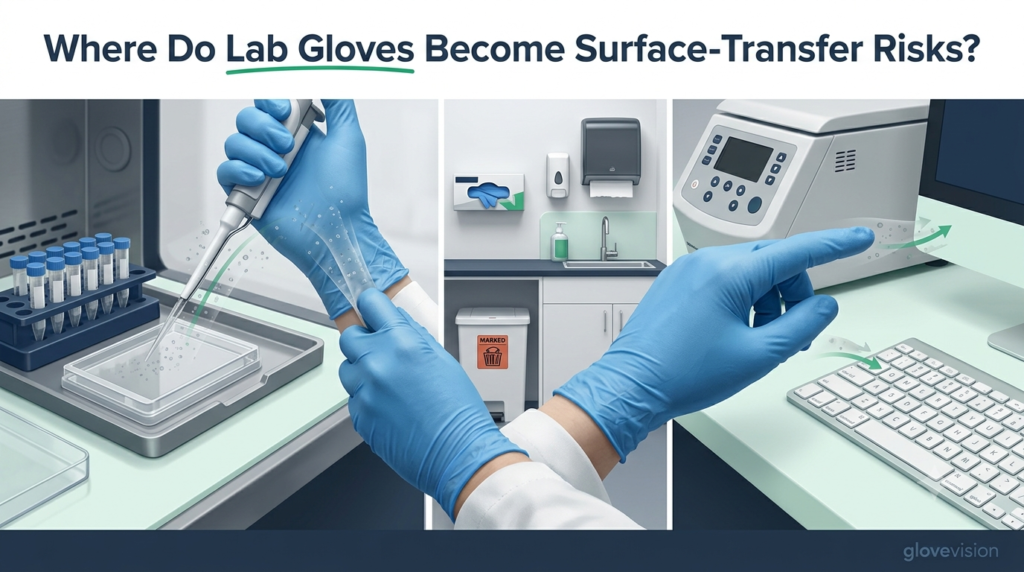
Lab Gloves and Surface-Transfer Risks: Control Guide Where Do Lab Gloves Become Surface-Transfer Risks? Lab Gloves become surface-transfer risks when their exterior contacts a contaminated or uncertain source and later touches another surface, person, sample, product, or clean task without the required interruption. Each contact creates an opportunity for pickup or release, but it does […]