
What Defines Aramid Fiber Gloves Through Heat-Stable Chemistry, Dual Hazard Resistance & UV Vulnerability?
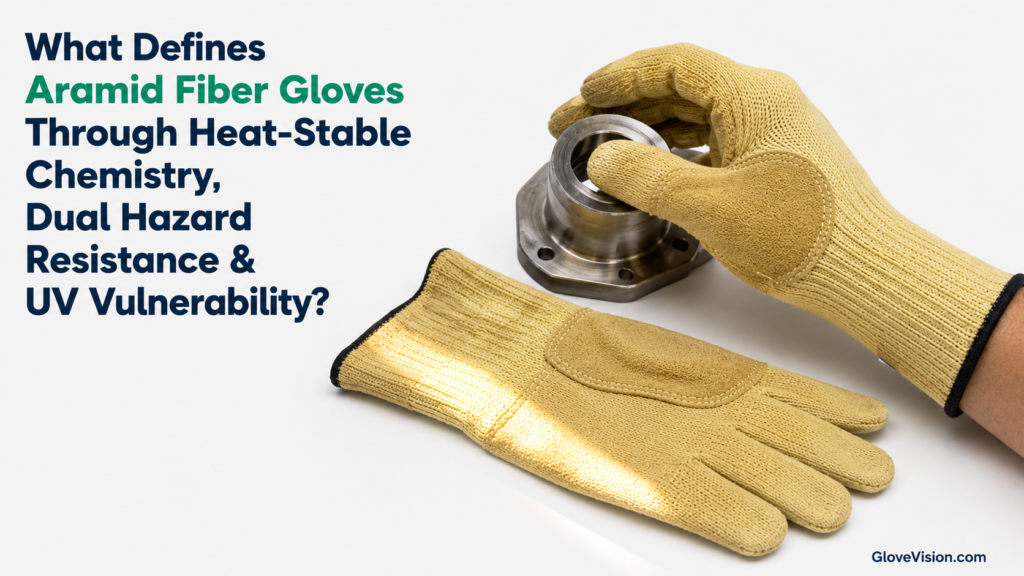
Aramid Fiber Gloves: Heat, Cut & UV Limits What Defines Aramid Fiber Gloves Through Heat-Stable Chemistry, Dual Hazard Resistance & UV Vulnerability? Aramid Fiber Gloves use heat-stable aromatic polyamide fibers with rigid molecular structures, strong intermolecular bonding, and engineered yarns. In suitable knit or composite constructions, these features can support thermal stability and selected mechanical […]
What Defines Spandex Elastane Gloves Through Elastic Recovery, Mobility Support & Low-Protection Role?
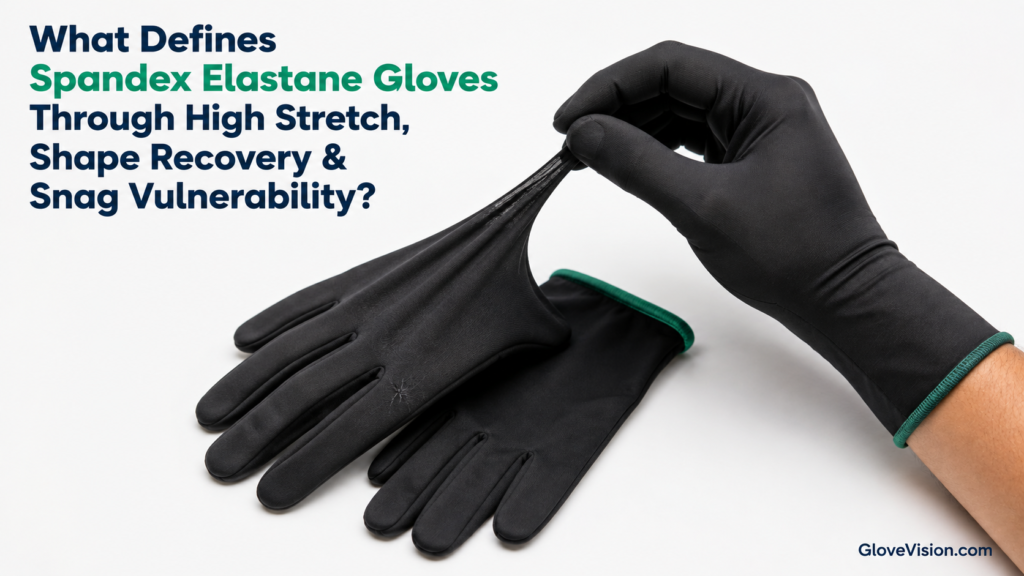
Spandex Elastane Gloves: Stretch, Fit & Protection Limits Spandex Elastane Gloves are blended textile handwear using segmented-polyurethane elastic fibers, reversible stretch, strategic yarn placement, stretch panels, and elastic cuffs to help the glove conform and move with the hand. Actual performance varies with elastane chemistry, blend percentage, carrier fiber, yarn construction, stretch direction, knit structure, […]
What Defines Polyester Gloves Through Synthetic Stability, Moisture Wicking & Heat-Exposure Limits?
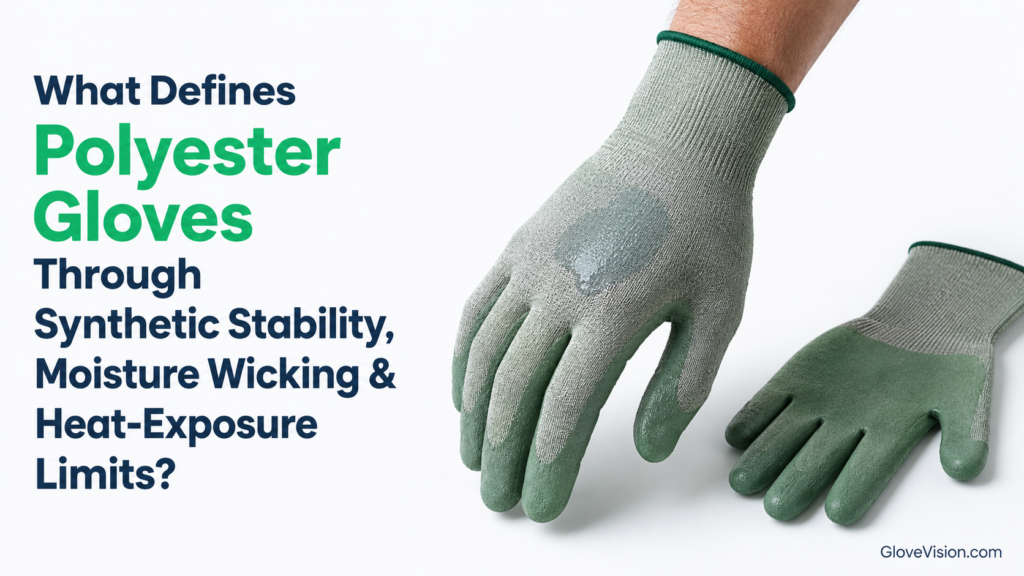
Polyester Gloves: Wicking, Stability & Heat Limits Polyester Gloves use synthetic filaments or spun yarn, stable textile construction, fine-gauge knitting, low-absorbency fibers, engineered capillary pathways, and optional coatings. These variables may support shape retention, dexterity, grip, and construction-dependent moisture transport. Actual performance varies with polyester type, fiber geometry, yarn and knit structure, thickness, coating and […]
What Defines Nylon Gloves Through Synthetic Strength, Thin Dexterity & Heat-Sensitive Limits?
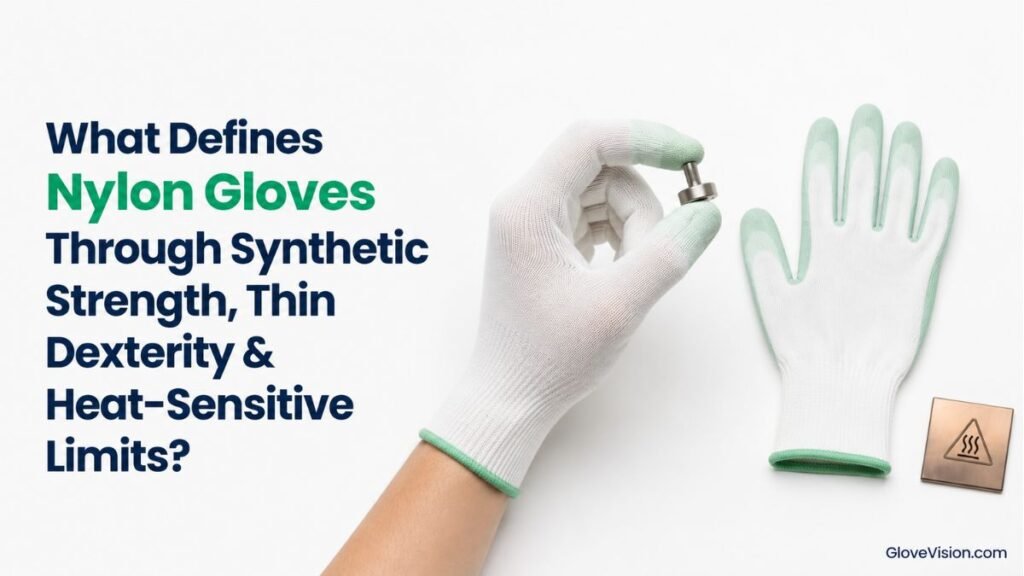
Nylon Gloves are synthetic-polyamide handwear built from strong fine fibers, lightweight yarns, flexible knitted structures, close-fitting forms, and sometimes surface coatings. Together, these features may support dexterity, tactile control, light mechanical handling, and controlled grip. Actual performance varies with nylon formulation, filament and yarn design, knit gauge, thickness, coating type and coverage, reinforcement, fit, heat, […]
What Defines Wool Gloves Through Natural Fiber Crimp, Wet Insulation & Skin-Comfort Variability?
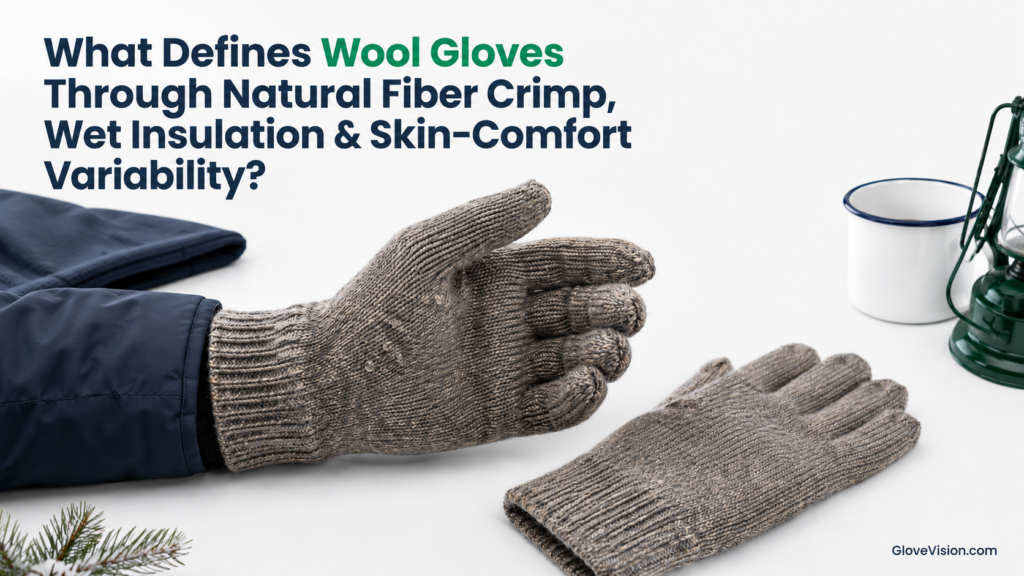
What Defines Wool Gloves Through Natural Fiber Crimp, Wet Insulation & Skin-Comfort Variability? Wool Gloves are natural-fiber handwear made from crimped keratin fibers that can create fabric loft, trap insulating air, absorb moisture vapor, and retain useful thermal performance during some damp conditions. They are not waterproof and do not remain equally warm when saturated. […]
What Defines Cotton Gloves Through Natural Fiber Softness, Moisture Absorption & Contamination Limits?
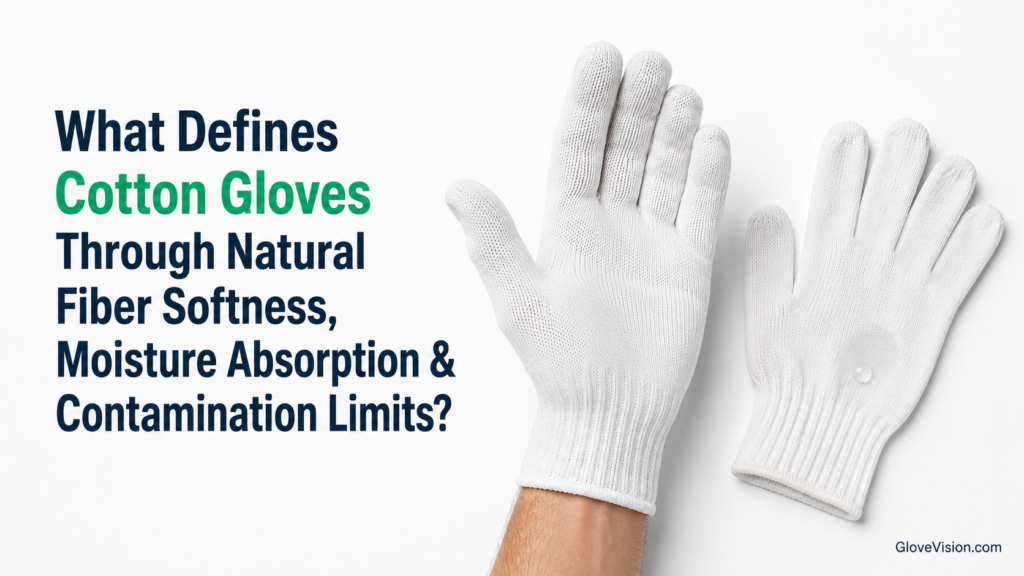
What Defines Cotton Gloves Through Natural Fiber Softness, Moisture Absorption & Contamination Limits? Cotton Gloves are cellulose-based fabric handwear commonly used for a soft hand interface, moisture absorption, suitable light handling, minor friction reduction and glove-liner applications. The same absorbent structure can become saturated, retain or transfer contaminants, lose comfort and reduce handling stability. Cotton […]