
How Does Latex Preserve Tactile Sensitivity?

Latex Glove Tactile Sensitivity: Fit, Film & Feedback Latex Gloves can preserve useful tactile feedback by placing a thin, flexible, close-contact film with relatively low bending resistance between an object and fingertip skin, allowing object-induced pressure and texture changes to deform the film and stimulate skin mechanoreceptors. Actual performance depends on fingertip thickness, fit, surface […]
What Gives Natural Rubber Latex Its Close Hand Conformity?

Latex Glove Conformity: Fit, Geometry & Elastic Tension Latex Gloves combine flexible polyisoprene chains, vulcanized crosslinks, thin-film construction, low-force stretching, and elastic recovery to follow detailed hand contours and maintain close surface contact. Useful conformity still depends on size, former geometry, finger length, palm width, thumb position, thickness, modulus, surface friction, sweat, wear duration, and […]
How Do Latex Structure and Elasticity Shape Glove Behavior?

Latex Gloves: Structure, Elasticity & Fit Behavior Latex Gloves translate natural rubber latex, flexible cis-1,4-polyisoprene chains, and vulcanized crosslinks into reversible stretching, close hand conformity, mobility, and tactile response. Their actual behavior depends on formulation, crosslink density, thickness, geometry, size, temperature, chemical exposure, repeated strain, aging, manufacturing quality, and condition; elasticity alone does not establish […]
What Defines Silicone Gloves Through Heat-Stable Polymer Structure, Grip Behavior & Specialized Use Limits?
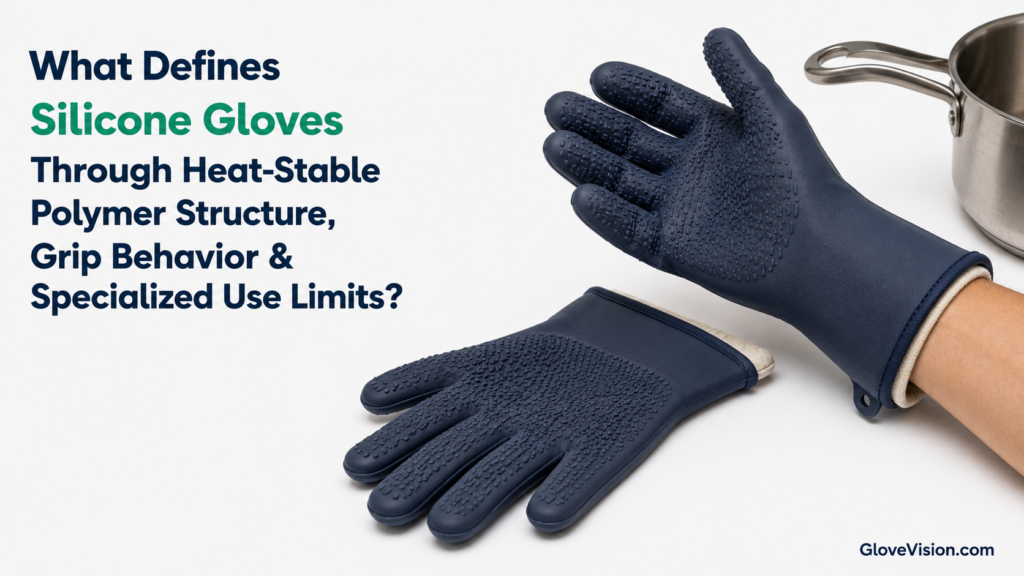
Silicone Gloves: Heat, Grip & Use Limits What Defines Silicone Gloves Through Heat-Stable Polymer Structure, Grip Behavior & Specialized Use Limits? Silicone Gloves are molded, coated, grip-printed, or lined handwear that uses crosslinked polysiloxane elastomers to provide flexible construction, conforming contact, textured grip, and selected thermal performance. Actual performance varies with silicone thickness and coverage, […]
What Defines Metal Mesh Gloves Through Interlinked Steel Structure, Extreme Cut Resistance & Blade-Specific Limits?
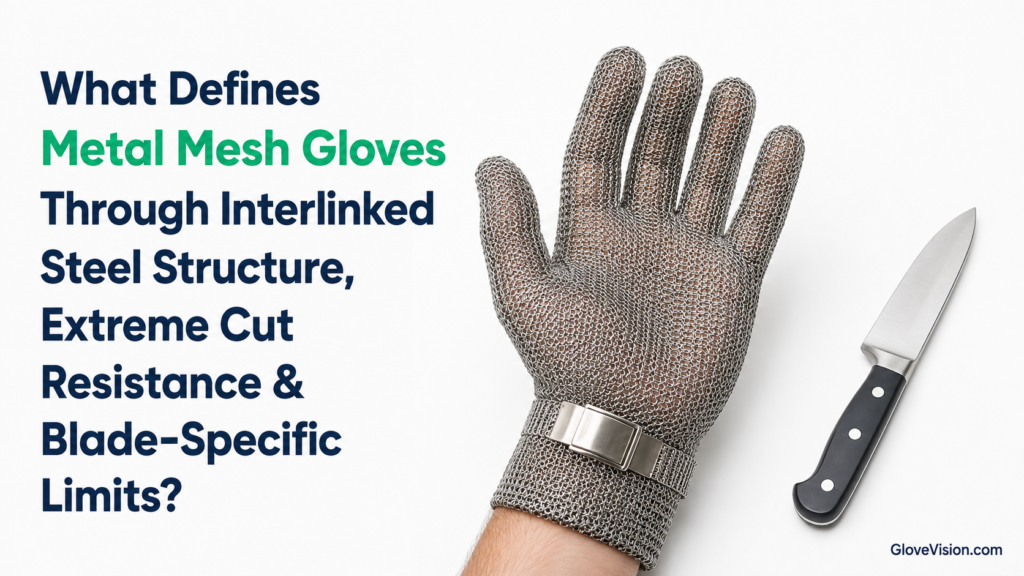
Metal Mesh Gloves: Cut Resistance & Blade Limits Metal Mesh Gloves are protective gloves formed from interlinked metal rings—usually stainless steel—with secure joints, shaped finger sections, closures, and optional cuffs. When the complete model is tested for its intended manual-knife hazard, the flexible mesh can deflect a blade and distribute force across neighboring rings. Their […]
What Defines HPPE UHMWPE Gloves Through Thermoplastic Strength, Cool Feel & Heat-Melt Limits?
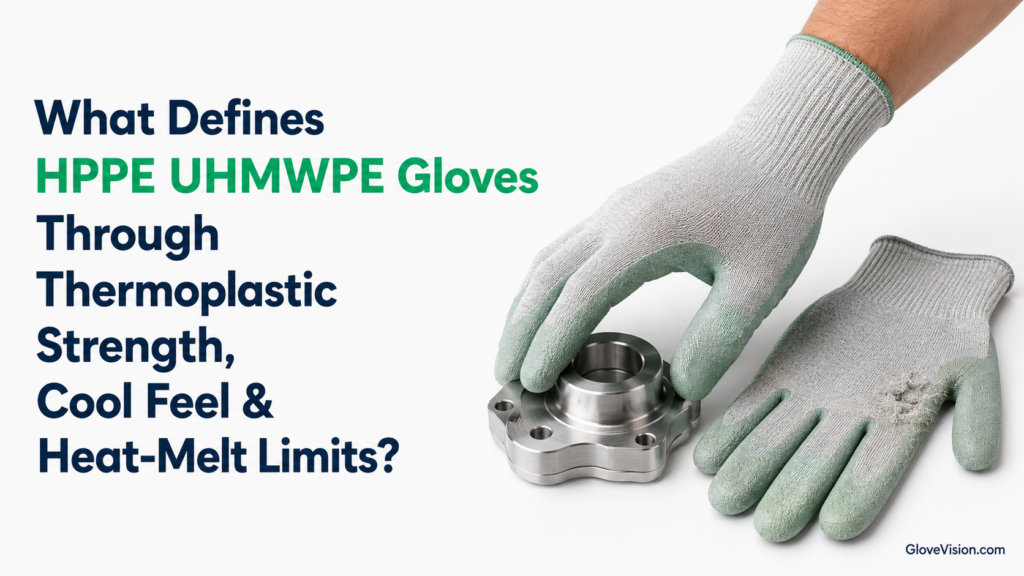
HPPE UHMWPE Gloves: Strength, Cool Feel & Heat Limits What Defines HPPE UHMWPE Gloves Through Thermoplastic Strength, Cool Feel & Heat-Melt Limits? HPPE UHMWPE Gloves use highly oriented, ultra-high-molecular-weight polyethylene fibers or engineered HPPE yarn systems to provide high strength at low weight. Fine-gauge knits, composite reinforcements, elastic fibers, and palm coatings can turn that […]