
How Do Laboratory Gloves Define Clean-Area Boundaries?
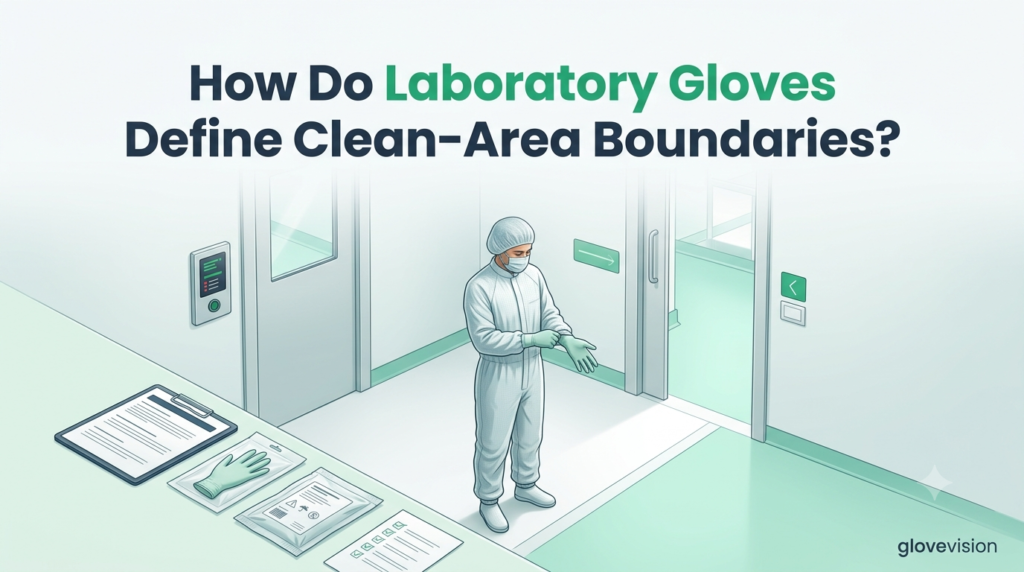
Laboratory Gloves at Clean-Area Boundaries: Control Guide How Do Laboratory Gloves Define Clean-Area Boundaries? Laboratory gloves at clean-area boundaries support facility controls but do not independently define the boundary. A clean-area boundary is created by the facility’s zoning, access controls, gowning procedures, material flow, monitoring, and approved operating instructions. There is no single glove sequence […]
Why Is Norfoil Chosen for Highly Toxic Chemicals?
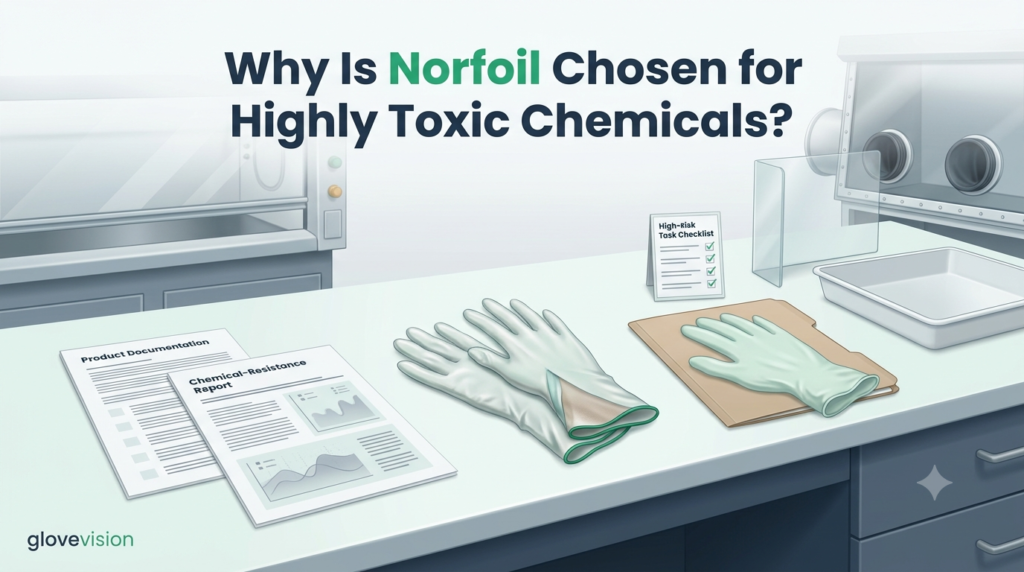
Norfoil Gloves for Highly Toxic Chemicals: Selection Limits Why Is Norfoil Chosen for Highly Toxic Chemicals? Norfoil gloves for highly toxic chemicals are evaluated only when an exact laminate product has relevant evidence for the chemical and task. They are not selected automatically because a chemical is toxic, carcinogenic, reproductive-toxic, corrosive, sensitizing, or readily absorbed […]
When Are PVA Gloves Chosen for Chemical Handling?
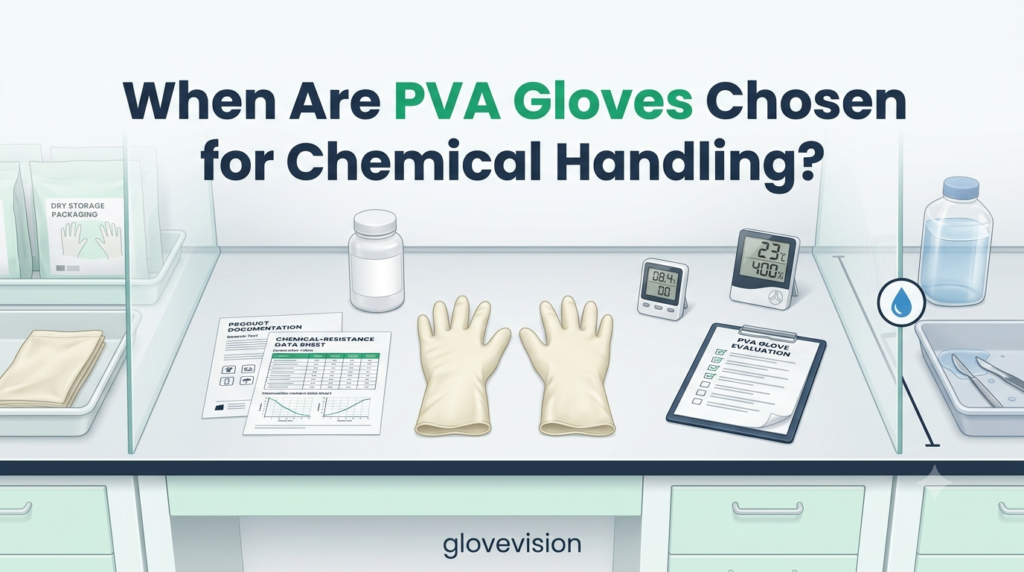
PVA Gloves for Chemical Handling: Selection Limits When Are PVA Gloves Chosen for Chemical Handling? PVA gloves for chemical handling are chosen only when an exact product has relevant evidence for the chemical, task, and moisture conditions. PVA Gloves may be worth investigating for selected nonaqueous chemical exposures, but the material name cannot approve the […]
When Do Specialized Lab Glove Materials Become Necessary?
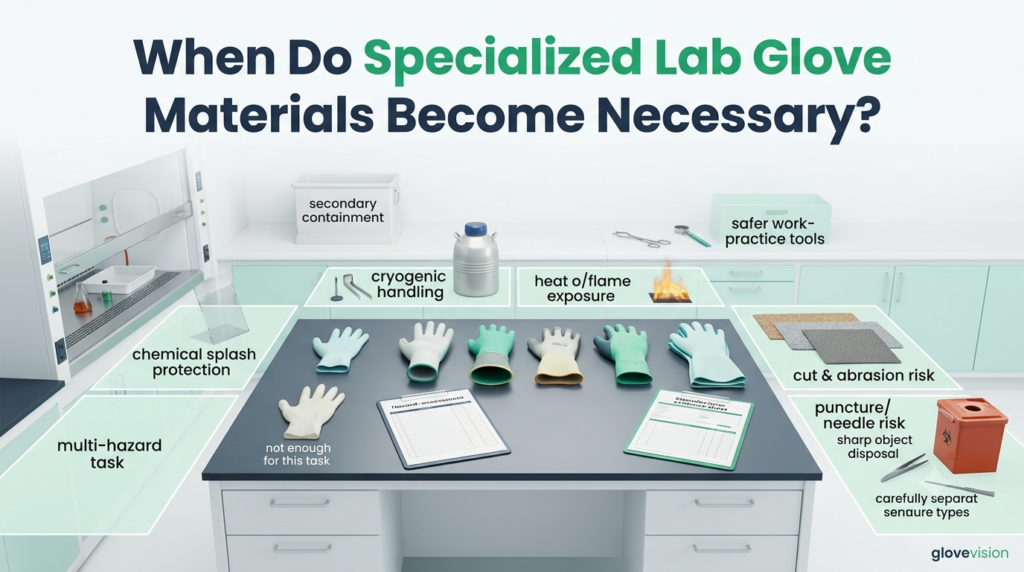
Specialized Lab Glove Materials: When Are They Needed? When Do Specialized Lab Glove Materials Become Necessary? Specialized lab glove materials become necessary when the exact glove routinely approved for a task lacks sufficient documented protection, coverage, construction, or usability for the identified hazards. The final selection is an exact Specialized Lab Glove, not a material […]
Which Materials Suit Different Lab Chemical Families?
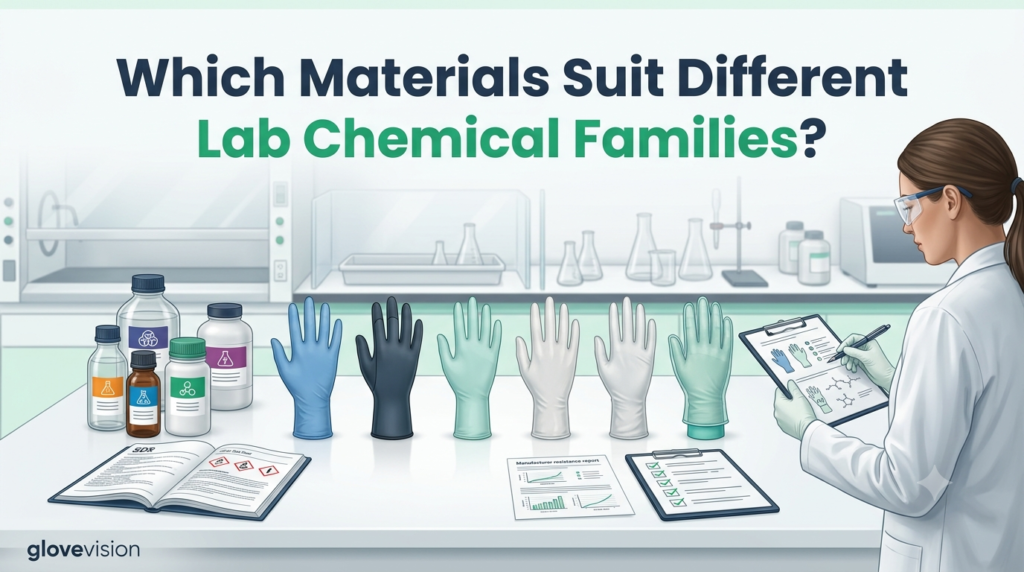
Lab Glove Materials for Chemical Families: Selection Guide Which Materials Suit Different Lab Chemical Families? No lab glove material can be assigned reliably to an entire chemical family. Lab glove materials for chemical families can organize early research, but members of one family may behave differently, and finished products using the same material name may […]
Why Are Exam-Grade Gloves Limited After Chemical Splash?
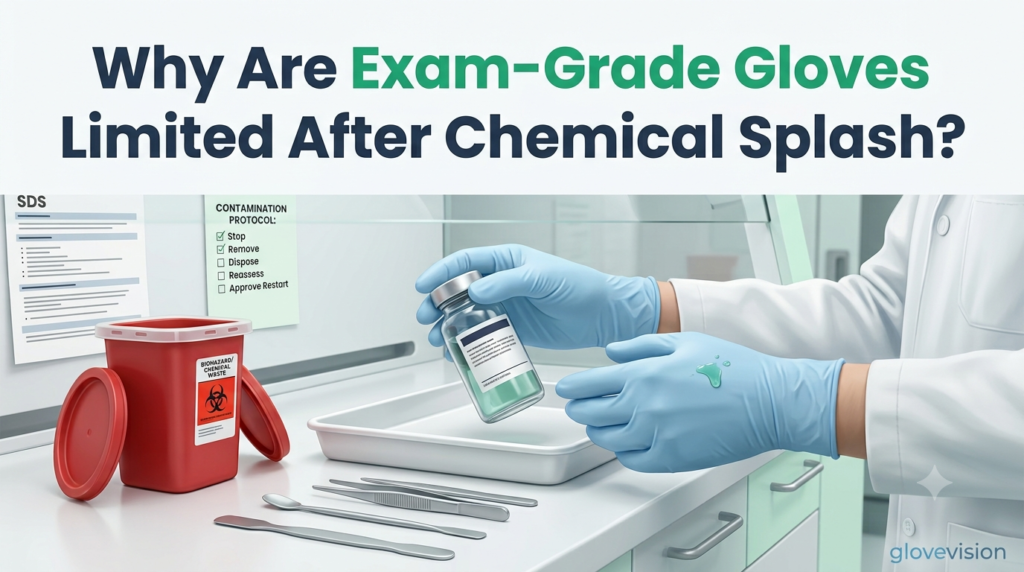
Exam-Grade Gloves After Chemical Splash: Limits & Response Why Are Exam-Grade Gloves Limited After Chemical Splash? Exam-grade gloves are limited after hazardous chemical splash because the glove exterior becomes contaminated and continued protection cannot be confirmed from appearance alone. Exam-grade gloves after chemical splash should be removed and reassessed because workers do not need proof […]
What Separates Incidental From Extended Chemical Contact?
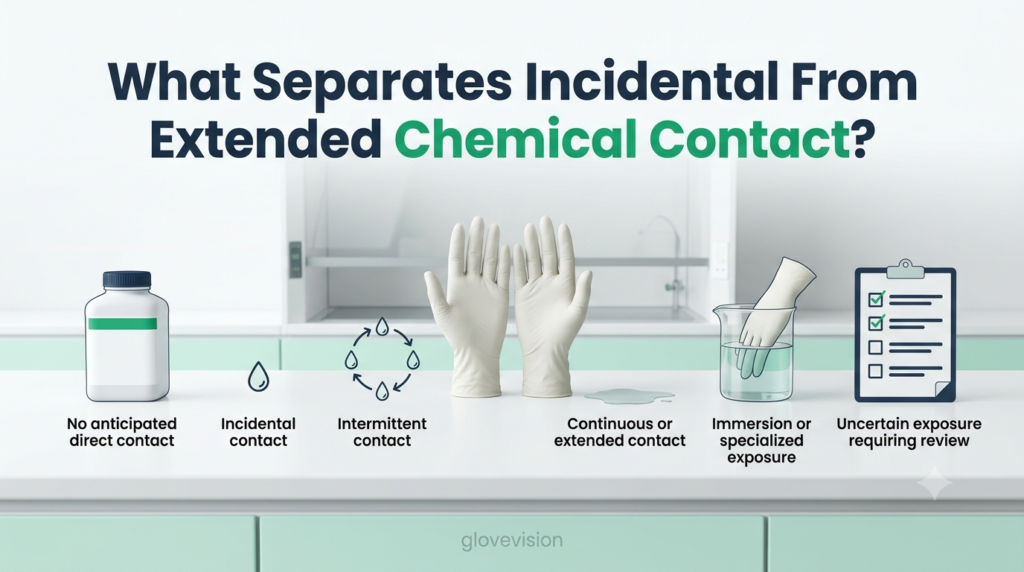
Incidental vs Extended Chemical Contact: Key Differences What Separates Incidental From Extended Chemical Contact? Incidental vs extended chemical contact is separated by contact pattern, repetition, persistence, and task context—not by one universal time cutoff. Incidental contact is brief, limited, and not intended to continue, while extended contact involves sustained or persistent exposure; intermittent and immersion […]
How Do Lab Gloves Match Chemical Contact Duration?
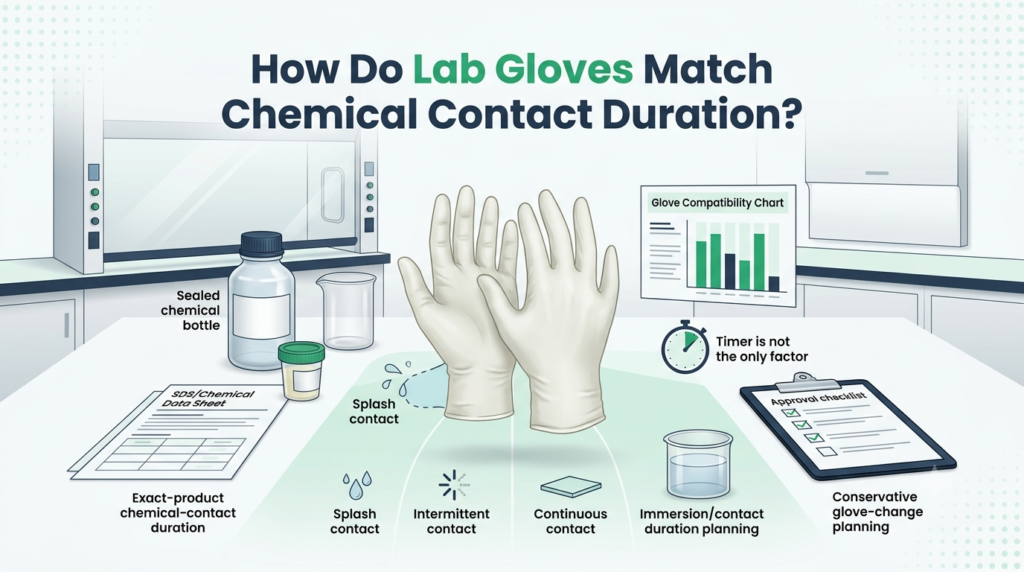
How Do Lab Gloves Match Chemical Contact Duration? How Do Lab Gloves Match Chemical Contact Duration? Chemical-handling lab gloves match chemical contact duration only when the expected exposure mode and task conditions are compared with resistance data for the exact chemical and exact glove product. A defensible decision must also consider permeation rate, cumulative permeation, […]
Where Does Glove Choice Change Between Service and Processing?
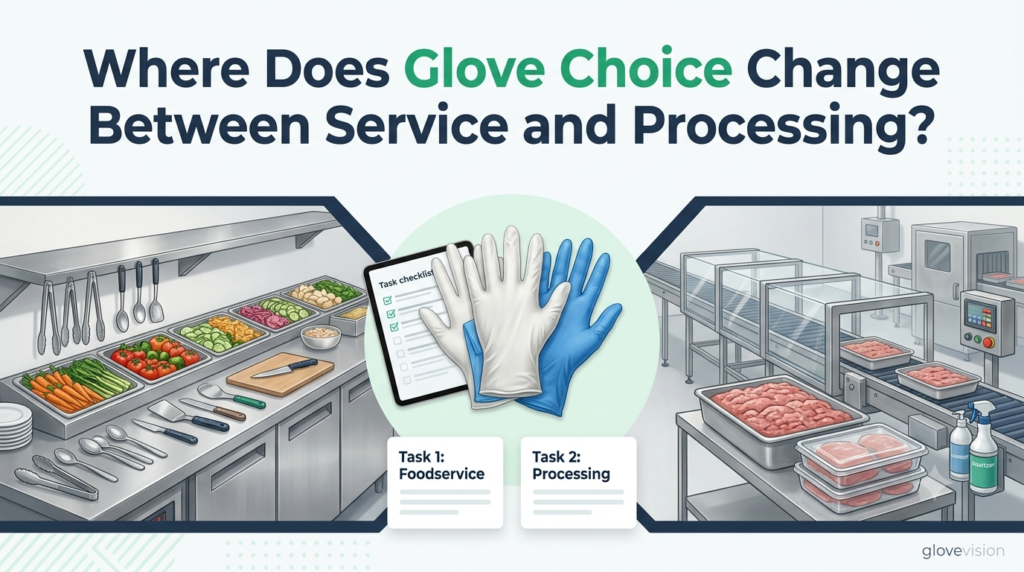
Where Does Glove Choice Change Between Service and Processing? Where Does Glove Choice Change Between Service and Processing? Food-handling glove selection changes between foodservice and food manufacturing or processing only when the actual task, food contact, sanitation system, equipment interaction, exposure pattern, worker requirement, or hazard-control need changes. A demanding foodservice task may require controls […]
Why Are Thin Food-Service Gloves Poor for Heavy Exposure?
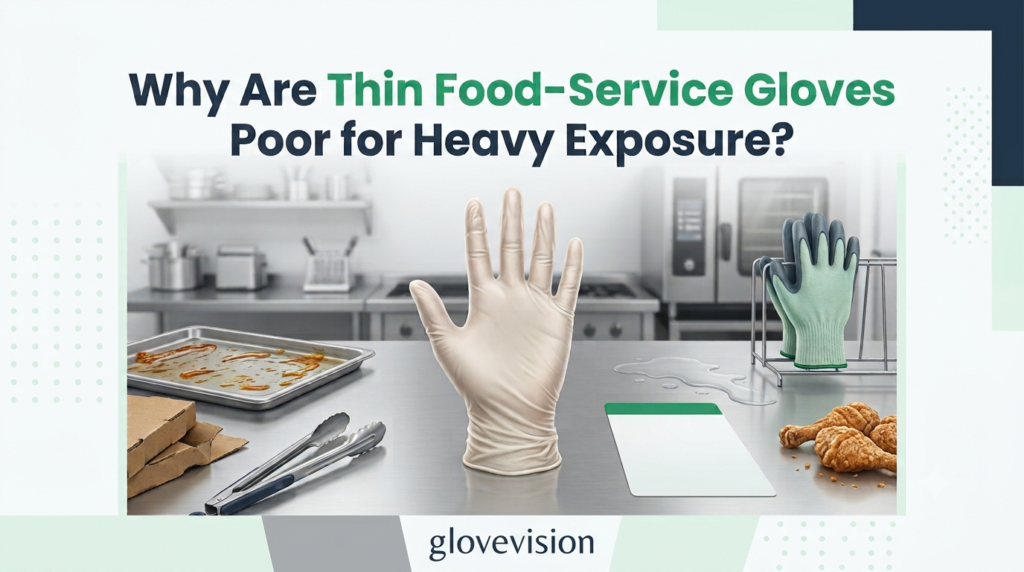
Why Are Thin Food-Service Gloves Poor for Heavy Exposure? Why Are Thin Food-Service Gloves Poor for Heavy Exposure? Thin food-service gloves can be poor choices for heavy exposure when the task’s mechanical demands, food-contact conditions, temperature, moisture, or required hazard protection exceed the capabilities documented for the exact product. Thin does not automatically mean unsafe, […]