
What Short-Use Limits Define Food Handling Gloves?
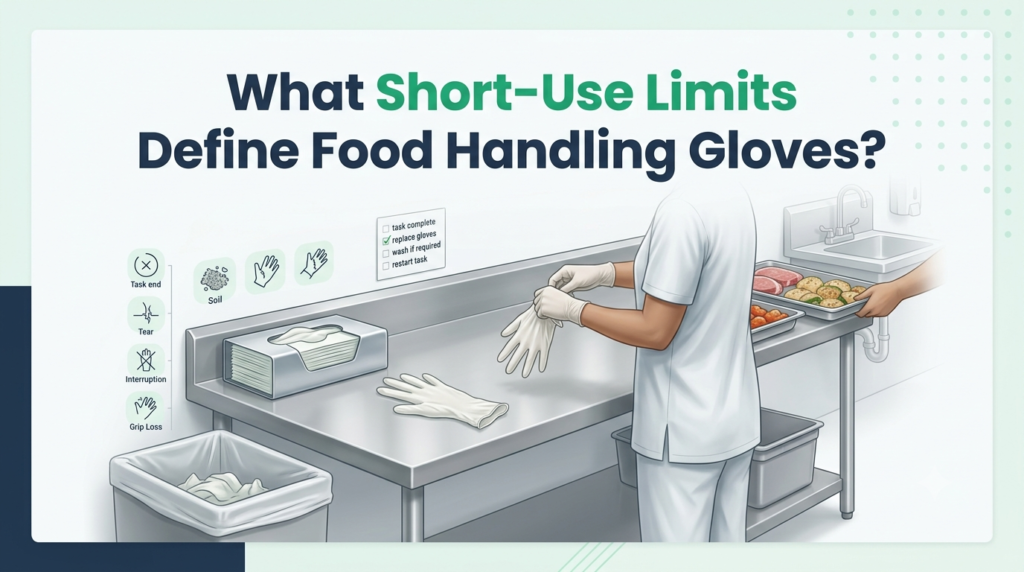
What Short-Use Limits Define Food Handling Gloves? What Short-Use Limits Define Food Handling Gloves? Single-use food-handling gloves do not have one universal safe wear time. The primary limit is the controlled task for which the gloves were donned, and the pair must be replaced when that task ends or when hygiene, integrity, fit, grip, or […]
How can vinyl composition affect fatty-food handling?
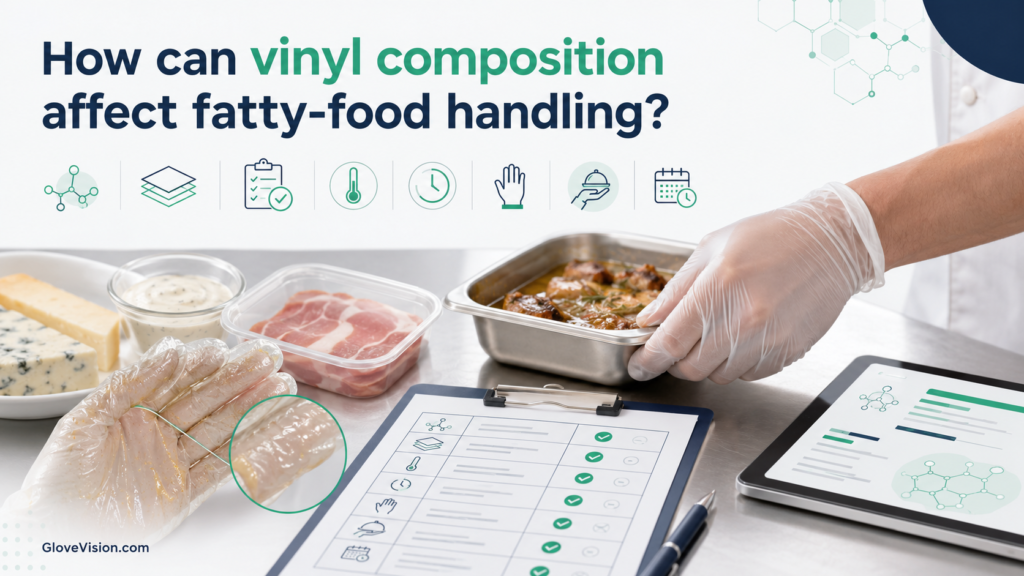
How can vinyl composition affect fatty-food handling? How can vinyl composition affect fatty-food handling? Vinyl composition can affect fatty-food handling because flexibility, additive migration, fit, grip, and durability depend on the exact PVC formulation, plasticizer system, finished-product construction, and documented conditions of use. Vinyl is a broad material label, so kitchens should not treat every […]
Why does thick nitrile suit raw meat handling?
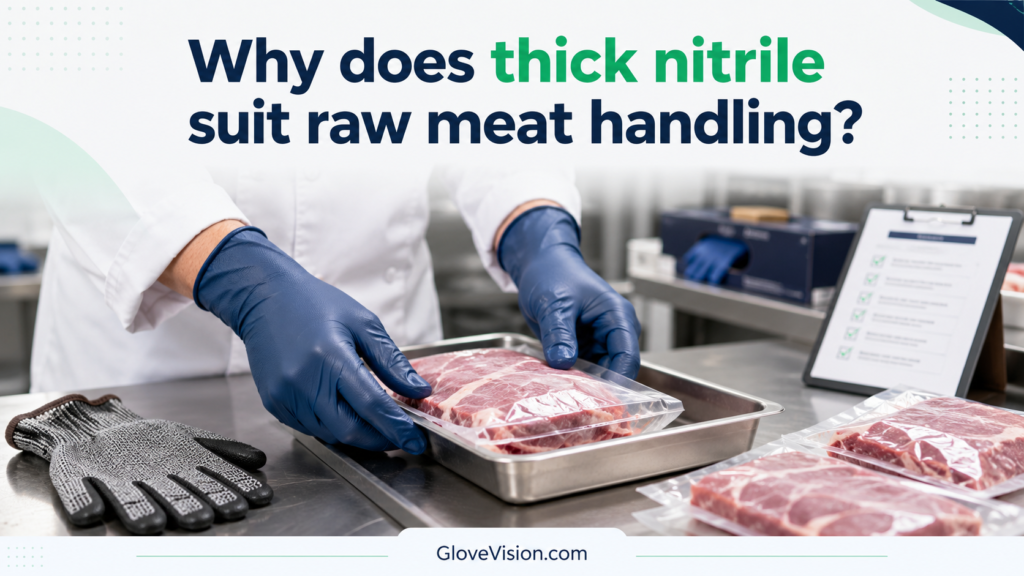
Why does thick nitrile suit raw meat handling? Why does thick nitrile suit raw meat handling? Thick nitrile may suit raw-meat handling because an appropriately designed glove can provide more material against incidental wear while maintaining stable coverage, controlled grip, fit, and dexterity during repetitive manual tasks. Thickness is only one variable, so the exact […]
Why are powdered gloves unsuitable for many kitchens?

Why are powdered gloves unsuitable for many kitchens? Why are powdered gloves unsuitable for many kitchens? Powdered gloves may be unsuitable for many kitchens because released powder can create avoidable particulate residue, powdered natural-rubber-latex products can increase latex-protein exposure, and powder status does not prove that the glove is suitable for the intended food or […]
Which material risks matter in food-contact gloves?
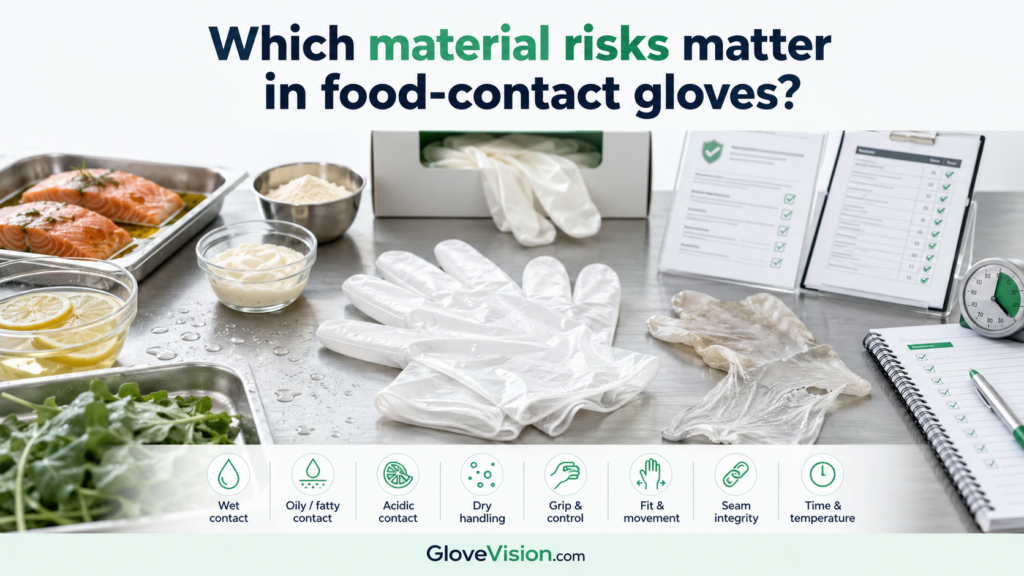
Which material risks matter in food-contact gloves? Which material risks matter in food-contact gloves? The material risks that matter most in food-contact gloves are formulation uncertainty, incomplete documentation, incompatible food-contact conditions, physical task mismatch, and degradation during use. A polymer name alone does not establish food compatibility, migration performance, temperature suitability, contact-duration suitability, fit, grip, […]
Where Do Glove Changes Matter Most in Food Prep?
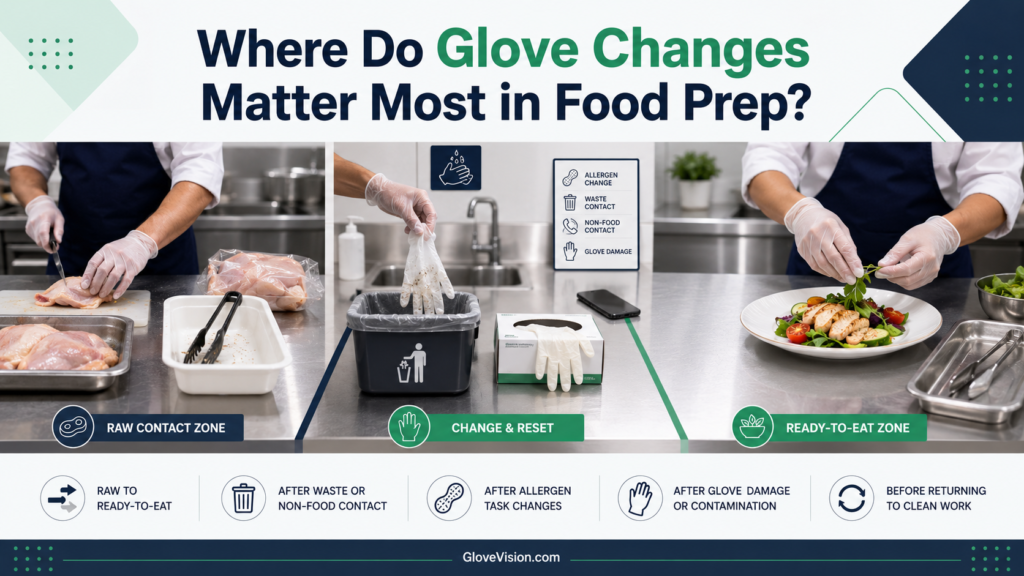
Where Do Glove Changes Matter Most in Food Prep? Where Do Glove Changes Matter Most in Food Prep? Glove changes matter most when a worker crosses a task, contamination, allergen, non-food-contact, interruption, or glove-integrity boundary. At that point, the current glove pair may no longer match the next task, elapsed time is not the only […]
How Does Reduced Tactile Feedback Affect Food Handling?
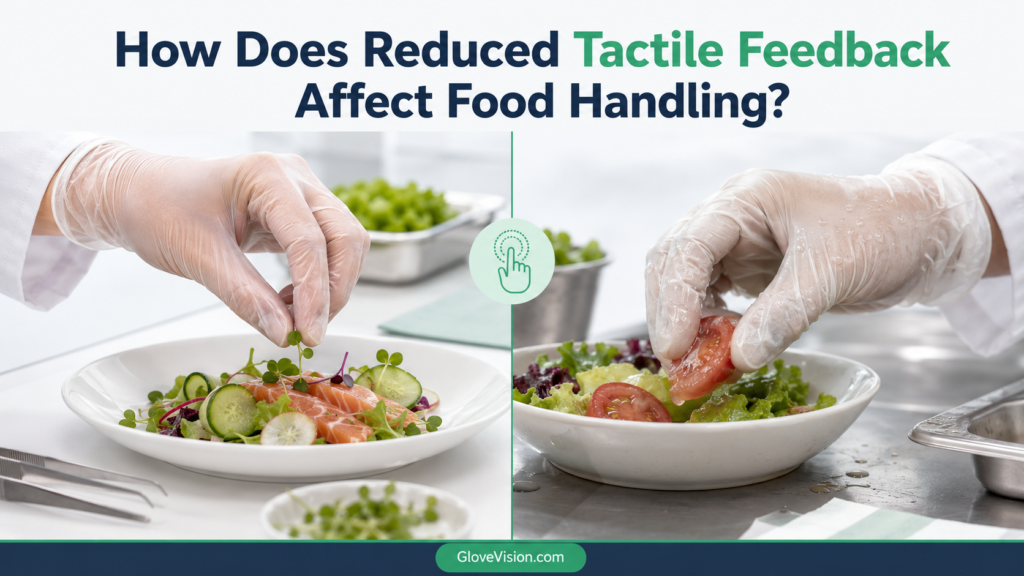
How Does Reduced Tactile Feedback Affect Food Handling? How Does Reduced Tactile Feedback Affect Food Handling? Reduced tactile feedback may affect food handling by making pressure, texture, slip, object movement, or grip stability more difficult to judge during some tasks. The effect depends on the exact glove, fit, flexibility, surface grip, thickness, moisture, task condition, […]
Why must food gloves match clean and contaminated tasks?
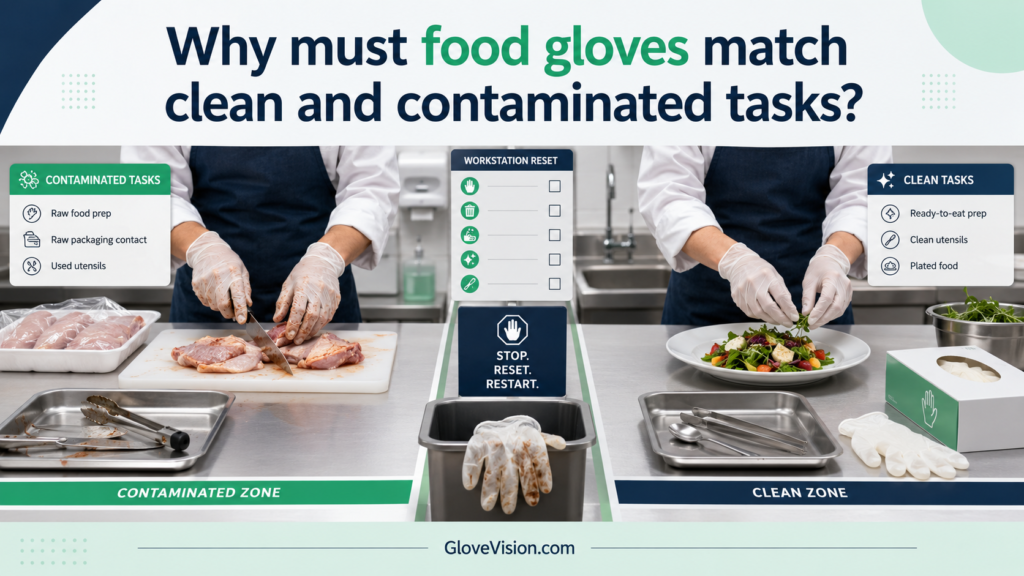
Why must food gloves match clean and contaminated tasks? Why must food gloves match clean and contaminated tasks? Food gloves must match clean and contaminated tasks because every food, tool, surface, allergen, chemical, and non-food contact changes the status of the glove surface. Workers should verify the current task, what the gloves touched, whether the […]
How do food gloves support task-change discipline?

How do food gloves support task-change discipline? How do food gloves support task-change discipline? Food gloves support task-change discipline by making hand-contact boundaries visible and reminding workers that one glove pair belongs to one controlled food-handling task. Workers should notice what the gloves touched, whether the task changed, whether contamination occurred, whether the gloves remain […]
How does layered protection support electrical work?
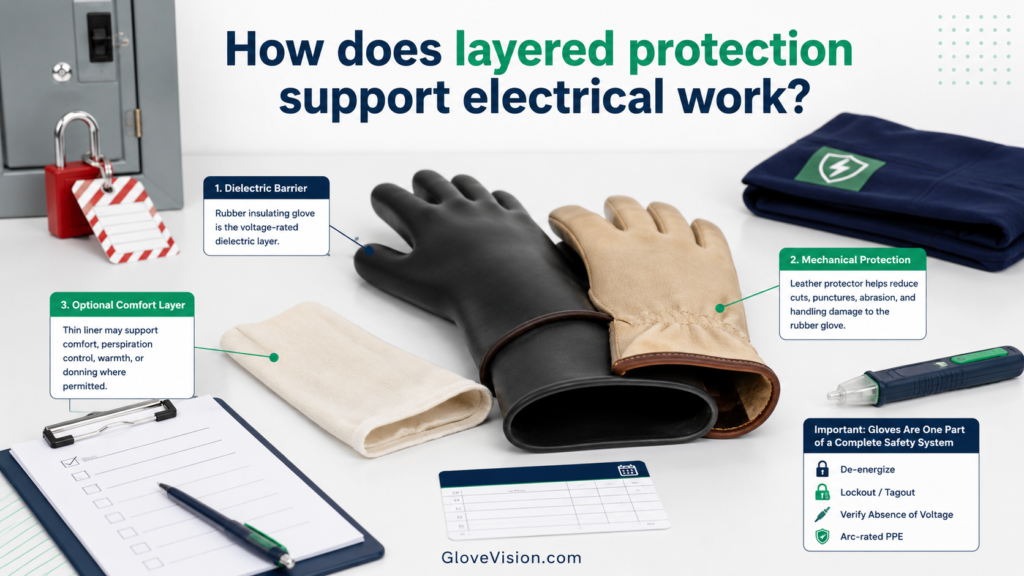
How does layered protection support electrical work? How does layered protection support electrical work? Layered protection supports electrical work by combining a voltage-rated rubber insulating glove with a compatible mechanical protector and, where permitted, an optional comfort liner. The rubber provides the dielectric barrier, the leather helps shield the rubber, and the liner may support […]