
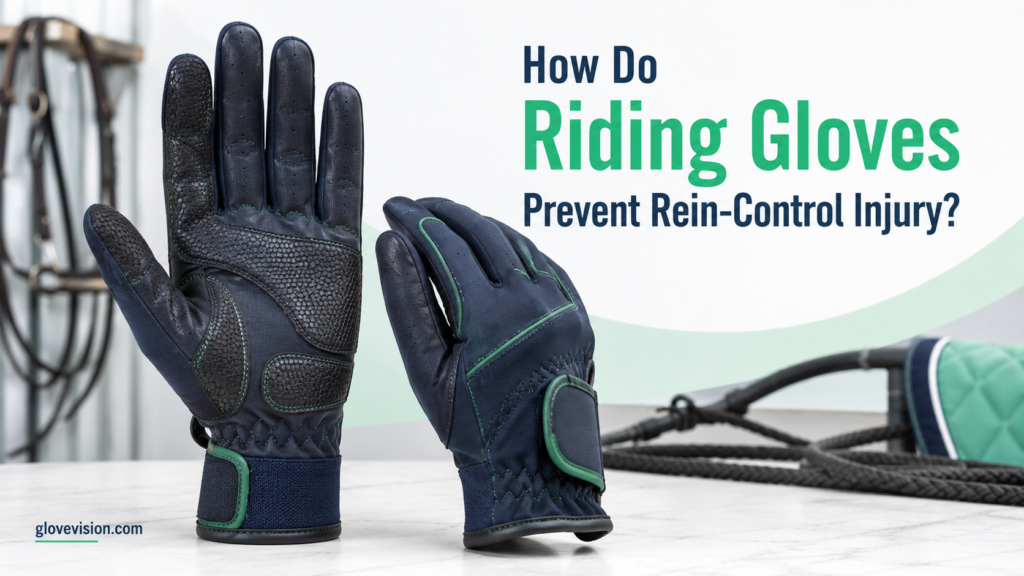
How Do Riding Gloves Prevent Rein-Control Injury?
Riding Gloves can help reduce selected rein-related hand-injury risks by limiting direct skin friction, stabilizing the hand-to-rein interface, distributing localized pressure, and helping the rider maintain rein contact without excessive gripping.
They cannot prevent every injury or safely resist severe traction. Protection depends on glove fit, palm material, rein type, moisture, reinforcement, finger mobility, release function, riding conditions, and safe rein handling.
Educational and safety notice: Riding Gloves cannot prevent falls, severe traction injuries, fractures, or every loss-of-control event. Never wrap reins, lead ropes, or lunge lines around the fingers, thumb, hand, or wrist. Seek appropriate assessment for persistent pain, numbness, tingling, swelling, weakness, or reduced hand movement.
What Rein-Related Hand Hazards Can Riding Gloves Help Manage?
Riding Gloves help reduce selected rein-control injury risks by placing a protective, friction-managing layer between the skin and reins, reinforcing high-wear contact zones, and reducing direct exposure to repeated shear and localized pressure.
How Can Reins Cause Friction and Skin Shear?
Repeated rein movement, contact pressure, long-duration riding, moisture, and repeated hand repositioning can create shear within the skin–glove–rein interface. Friction-blister research identifies repetitive shear deformation as the key mechanism, although that evidence comes from feet rather than equestrian gloves and should be transferred only at the mechanism level. [Blister]
For a direct comparison with unprotected contact, see bare-hand riding risks.
How Can Rein Pressure Create Localized Hand Discomfort?
Pressure can concentrate at the base of the fingers, thumb-index web, palm creases, little-finger side, raised seams, or reinforcement edges. Rein thickness, grip force, fit, seam placement, reinforcement geometry, and duration all change the pattern.
How Can Rein Slippage Affect Hand Safety?
Slippage can trigger sudden grip correction, excessive squeezing, rein-length inconsistency, fatigue, and additional skin shear. Palm material, rein surface, wetness, contamination, glove fit, internal hand movement, and worn reinforcement all matter.
How Can Sudden Rein Traction Injure the Hand?
Severe traction is a different problem from surface friction. A retrospective equestrian hand-injury study found many serious injuries from traction through bridles or lead ropes, including fractures, tendon, nerve, and avulsion injuries. The same study supports avoiding loops around fingers or thumbs; ordinary Riding Gloves should not be presented as reliable protection against those loads. [Hand]
Where Does Protection From Riding Gloves End?
Riding Gloves may reduce skin exposure and selected friction or pressure problems, but they cannot guarantee prevention of fractures, dislocations, tendon or nerve injury, crush injury, avulsion, falls, or loss-of-control events. The same boundary applies across broader sports glove grip and hand-protection demands.
| Rein-Related Hazard | Possible Riding Gloves Contribution | Critical Limitation |
|---|---|---|
| Repeated skin friction | Separates skin from the rein surface | Cannot eliminate all shear |
| Rein slippage | May improve friction consistency | No glove is slip-proof |
| Localized pressure | Reinforcement may spread contact | Raised edges can create pressure |
| Moisture | May manage perspiration or wetness | Saturation can change friction |
| Grip fatigue | Stable friction may reduce squeezing | Poor fit can increase effort |
| Sudden traction | Limited surface protection | Cannot prevent severe entanglement injury |
How Do Riding Gloves Balance Rein Friction, Pressure, Feel, and Safe Release?
Riding Gloves work best when friction is predictable enough to support rein contact but not so aggressive that adjustment or deliberate release becomes difficult.
How Does Palm Material Affect Riding Gloves Rein Grip?
Natural leather, synthetic leather, technical textiles, grip prints, and mixed palms can behave differently across dry, wet, contaminated, and worn conditions. Material name alone does not establish friction performance. Related palm friction and breathability principles are useful only as a general interface comparison.
Why Is Stable Friction More Useful Than Maximum Friction?
Too little friction can permit slippage and encourage harder squeezing; excessive friction can resist adjustment, impede release, and make the glove–rein interface unpredictable. General protective-glove research also shows that glove construction can change grip and dexterity, supporting the need to balance protection with hand performance rather than maximize one property. [Grip]
How Do Reinforcements and Seams Affect Riding Gloves?
Reinforcement at the thumb-index web, base of the fingers, rein channels, palm heel, or little-finger side can reduce direct abrasion and extend durability. Poor placement can add bulk, pressure edges, stiffness, or snagging, while raised or damaged seams can interfere with finger flexion and release.
How Do Thickness and Tactile Feedback Interact?
Lower-bulk construction may preserve more direct rein feel, while thicker construction may add cushioning. Excess bulk can increase effective grip diameter and reduce tactile feedback. Sports-glove research found that fit and glove dimensions can materially affect grip strength and dexterity, but it does not establish equestrian performance by itself. [Fit]
A limited cross-sport comparison of glove fit and tactile control may help explain the same fit-versus-feedback principle without transferring golf outcomes to rein control.
Why Must Riding Gloves Permit Deliberate Rein Release?
Fingers and thumbs must open normally, grip prints must allow intentional movement, and no loose tab, seam, or reinforcement should catch the rein. No glove makes a rein wrapped around the hand safe.
Which Riding Gloves Match Different Disciplines and Conditions?
Choose Riding Gloves by the real interface: discipline, rein material, weather, duration, required feedback, fit, and current product condition.
Which Riding Gloves Suit Everyday Schooling?
Prioritize secure fit, rein-area durability, predictable friction, finger mobility, breathability, practical care, and repeat-use comfort.
Which Riding Gloves Suit Competition?
Check the current rules for the exact discipline and event, then verify anatomical fit, rein feel, closure security, weather suitability, and product condition. FEI publishes discipline-specific rule resources; one framework should not be generalized to every organization or country. [FEI]
Which Riding Gloves Suit Wet Conditions?
Check product-documented wet friction, palm stability, internal hand stability, rein material, contamination, and drying requirements. Waterproof construction does not automatically guarantee predictable wet-rein friction.
Which Riding Gloves Suit Cold or Long-Duration Riding?
Cold-weather gloves must balance insulation and wind protection against finger mobility, rein feel, grip diameter, and moisture management. Longer rides increase the importance of seam placement, pressure distribution, breathability, and reinforcement durability.
| Riding Context | Primary Requirement | Features to Evaluate | Main Warning |
|---|---|---|---|
| Everyday schooling | Durability and stable friction | Reinforcement, fit, care | Worn palms alter friction |
| Competition | Precision and compliance | Close fit, rein feel, rules | Appearance does not prove function |
| Wet weather | Predictable friction | Wet behavior, palm stability | No glove is slip-proof |
| Cold weather | Warmth plus control | Insulation, flexibility, moisture | Bulk may reduce rein feel |
| Long duration | Pressure and moisture management | Seams, breathability, reinforcement | Hot spots may develop gradually |
| Highly textured reins | Controlled adjustment | Palm–rein compatibility | Excess friction may hinder release |
How Should Properly Fitted Riding Gloves Be Function-Checked?
Properly fitted Riding Gloves should remain stable on the hand while preserving finger and thumb movement, a smooth palm, usable rein feedback, controlled adjustment, and deliberate release.
How Should Riding Gloves Fit the Fingers, Palm, Thumb, and Wrist?
Fingers should align naturally, excess fingertip material should remain limited, the palm should stay substantially smooth, the thumb should move freely, and the cuff should be secure without restricting the wrist. uvex’s manufacturer guidance similarly emphasizes full finger placement, secure wrist fit, and checking for pressure points; those instructions should remain product-specific rather than universal measurements. [uvex Fit]
How Should Riding Gloves Be Checked With the Intended Reins?
In a safe controlled setting, verify predictable dry friction, relevant damp-condition behavior where practical, controlled rein adjustment, tactile feedback, no palm bunching, no internal slipping, and no reinforcement-edge pressure. Do not perform unsafe traction tests.
How Should Riding Gloves Be Checked for Deliberate Rein Release?
Confirm that the fingers and thumb open normally, rein length can be adjusted, reins can be deliberately released, grip prints do not bind unpredictably, and closures, tabs, seams, or reinforcement edges do not catch.
Which Function-Check Problems Require Rejection?
Reject or reassess a glove if friction is unpredictable, the palm bunches, the hand moves internally, reinforcement creates pressure, finger or thumb movement is restricted, feedback is inadequate, adjustment is difficult, or release is impeded.
How Should Problematic or Worn Riding Gloves Be Diagnosed and Finally Evaluated?
Diagnose the actual cause—fit, rein surface, moisture, contamination, wear, seam placement, stiffness, or unresolved hand symptoms—before changing glove construction.
Why Do Reins Slip Through Riding Gloves?
Possible causes include low-friction or worn palms, wetness, dirt, treatment residue, incorrect size, internal hand movement, or glove–rein mismatch. Correct the verified cause rather than automatically choosing a more aggressive grip surface.
Why Do Riding Gloves Cause Blisters, Hot Spots, or Fatigue?
Check fit, folds, seams, reinforcement edges, moisture, repeated movement, stiffness, rein damage, insufficient or excessive friction, excessive thickness, restricted motion, and cold-stiffened materials. Persistent symptoms should not be managed through glove selection alone.
Why Can Riding Gloves Make Rein Release Difficult?
Excessively aggressive grip material, sticky contamination, loose reinforcement, raised seams, incorrect fit, catching closures, material deterioration, or entanglement can all interfere. Stop using Riding Gloves when controlled adjustment or deliberate release cannot be performed reliably.
How Can Moisture, Care, and Wear Change Riding Gloves?
Moisture can change palm friction, stiffness, grip prints, reinforcement bonding, lining movement, fit, and closure performance. Follow the exact glove’s care label. uvex, for example, tells users to follow the instructions inside each glove and provides product-specific washing and air-drying guidance rather than a universal method. [uvex Care]
General glove moisture exposure principles can explain why wetness changes materials, but household-glove evidence does not establish equestrian rein performance.
When Should Riding Gloves Be Replaced?
Replace or reassess when palm friction becomes unpredictably slippery or excessively grippy, reinforcement separates, holes expose skin, seams create pressure or snagging, grip prints peel, closures fail, fit becomes unstable, moisture damage changes behavior, or release can no longer be verified.
| Symptom | Possible Cause | Check | Decision |
|---|---|---|---|
| Reins slip | Worn, wet, contaminated, or unsuitable palm | Palm–rein interface | Clean as directed, dry, change, or replace |
| Palm blister / hot spot | Seam, fold, moisture, repeated movement | Exact pressure zone | Resize or change construction |
| Hand fatigue | Friction or mobility problem | Grip effort and movement | Change fit or palm construction |
| Poor rein feel | Excess bulk or loose fit | Controlled rein check | Select more stable / lower-bulk glove |
| Release is difficult | Excess friction or snag point | Deliberate-release check | Stop use and change glove |
| Glove rotates | Oversizing or weak closure | Complete hand fit | Resize |
| Persistent numbness / pain | Compression or unresolved condition | Stop and reassess | Seek appropriate assessment |
Conclusion
Riding Gloves may reduce selected rein-control injury risks by managing skin friction, stabilizing rein contact, reinforcing high-wear areas, and preserving usable hand feedback, but they cannot prevent every hand injury or make severe rein traction safe.
The best Riding Gloves provide stable—not excessive—friction, protect actual rein-contact zones, preserve finger and thumb movement, fit without bunching or pressure, allow controlled adjustment and immediate deliberate release, and remain predictable in the rider’s real rein, weather, and wear conditions.
Frequently Asked Questions
Do Riding Gloves Prevent Rein Burns?
They may reduce direct skin friction and shear, but they cannot guarantee prevention when reins slide forcefully, gloves are wet or damaged, fit is unstable, or loading exceeds the glove’s protective capability.
Should Riding Gloves Have Maximum Palm Grip?
No. Riding Gloves should provide predictable friction while still allowing controlled rein adjustment and immediate deliberate release.
Are Leather Riding Gloves Better for Rein Control?
Not universally. Performance depends on the exact leather, thickness, treatment, moisture condition, fit, seam construction, rein material, and current glove condition.
Can Riding Gloves Prevent Fingers From Being Injured by Tangled Reins?
No. Riding Gloves cannot safely protect fingers or hands trapped in reins under severe traction. Reins, lead ropes, and lunge lines must never be wrapped around the fingers, thumb, hand, or wrist.
When Should Riding Gloves Be Replaced?
Replace Riding Gloves when palms become unpredictably slippery or excessively grippy, reinforcement separates, seams snag or irritate, closures fail, holes expose the skin, fit becomes unstable, or deliberate rein release can no longer be verified.