
What Separates Incidental From Extended Chemical Contact?
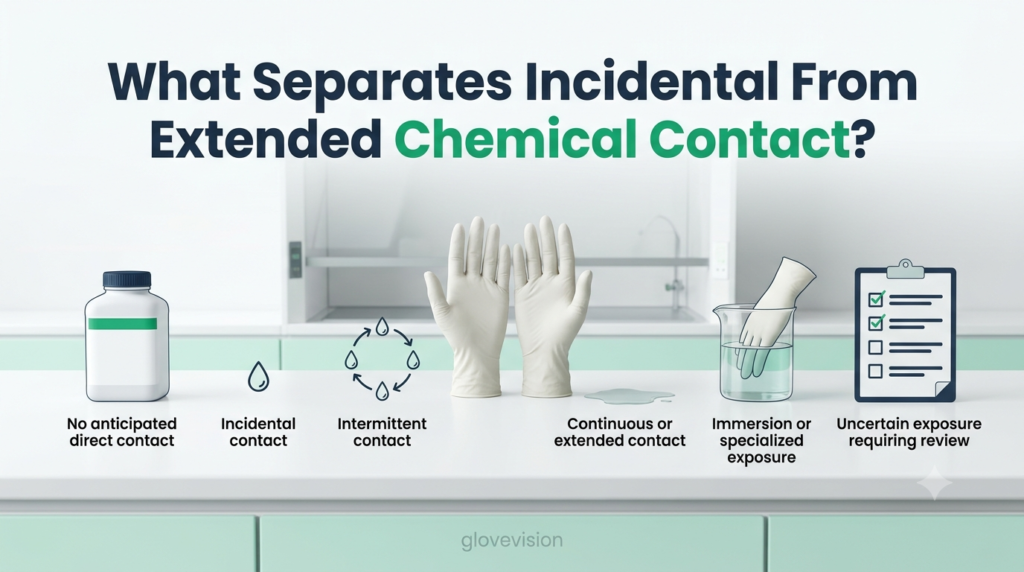
Incidental vs Extended Chemical Contact: Key Differences What Separates Incidental From Extended Chemical Contact? Incidental vs extended chemical contact is separated by contact pattern, repetition, persistence, and task context—not by one universal time cutoff. Incidental contact is brief, limited, and not intended to continue, while extended contact involves sustained or persistent exposure; intermittent and immersion […]
How Do Lab Gloves Match Chemical Contact Duration?
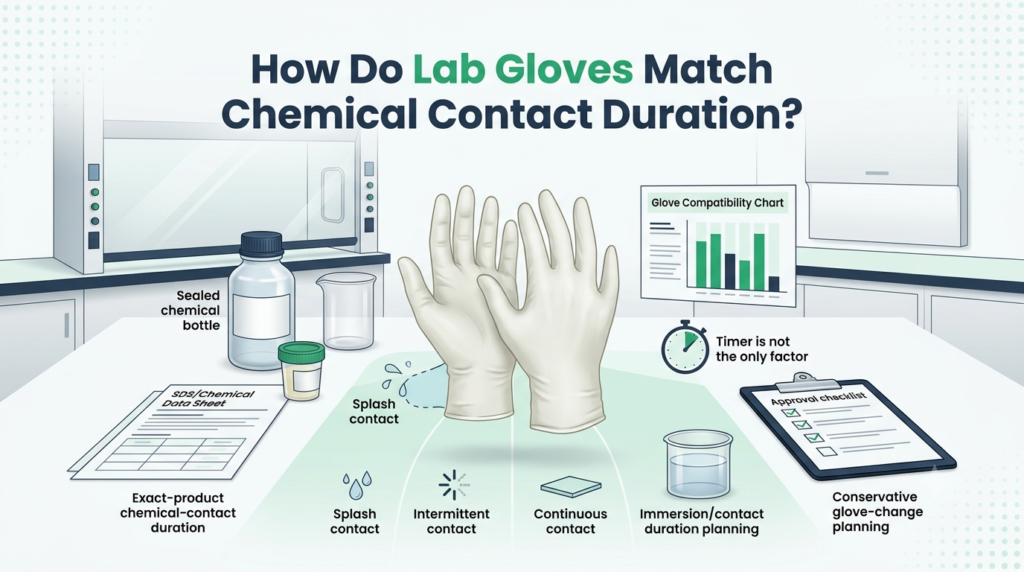
How Do Lab Gloves Match Chemical Contact Duration? How Do Lab Gloves Match Chemical Contact Duration? Chemical-handling lab gloves match chemical contact duration only when the expected exposure mode and task conditions are compared with resistance data for the exact chemical and exact glove product. A defensible decision must also consider permeation rate, cumulative permeation, […]
Where Does Glove Choice Change Between Service and Processing?
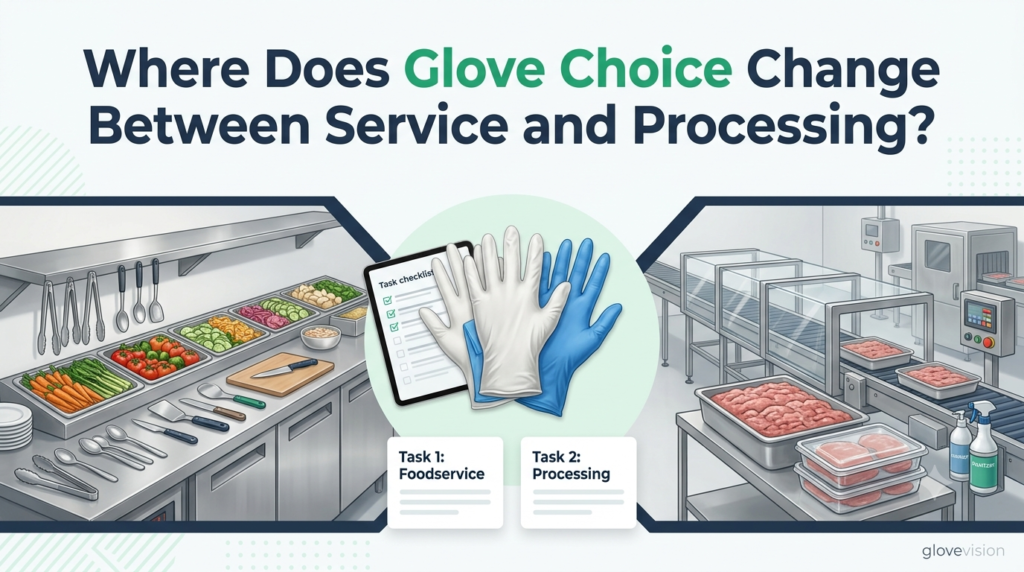
Where Does Glove Choice Change Between Service and Processing? Where Does Glove Choice Change Between Service and Processing? Food-handling glove selection changes between foodservice and food manufacturing or processing only when the actual task, food contact, sanitation system, equipment interaction, exposure pattern, worker requirement, or hazard-control need changes. A demanding foodservice task may require controls […]
Why Are Thin Food-Service Gloves Poor for Heavy Exposure?
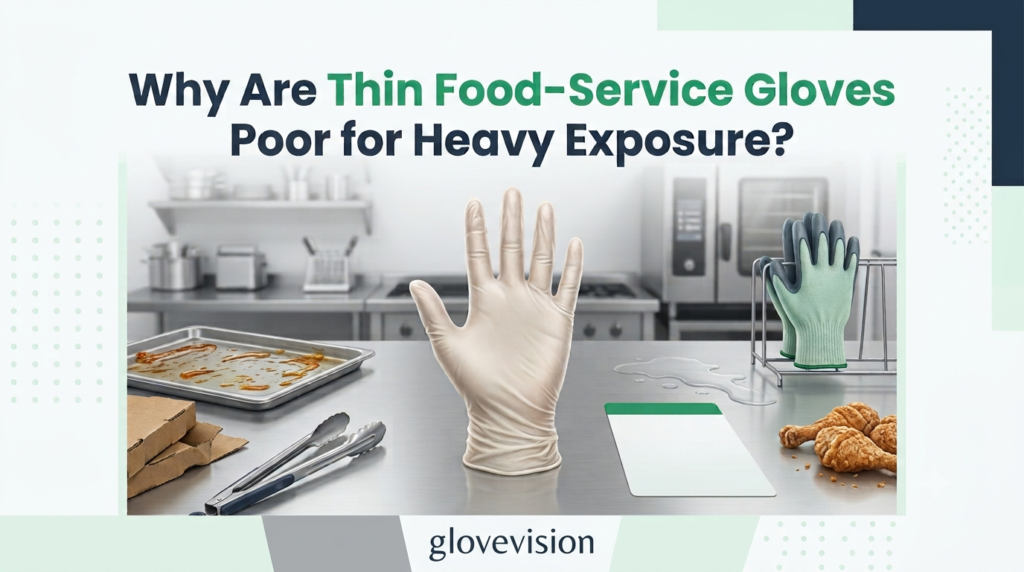
Why Are Thin Food-Service Gloves Poor for Heavy Exposure? Why Are Thin Food-Service Gloves Poor for Heavy Exposure? Thin food-service gloves can be poor choices for heavy exposure when the task’s mechanical demands, food-contact conditions, temperature, moisture, or required hazard protection exceed the capabilities documented for the exact product. Thin does not automatically mean unsafe, […]
What Short-Use Limits Define Food Handling Gloves?
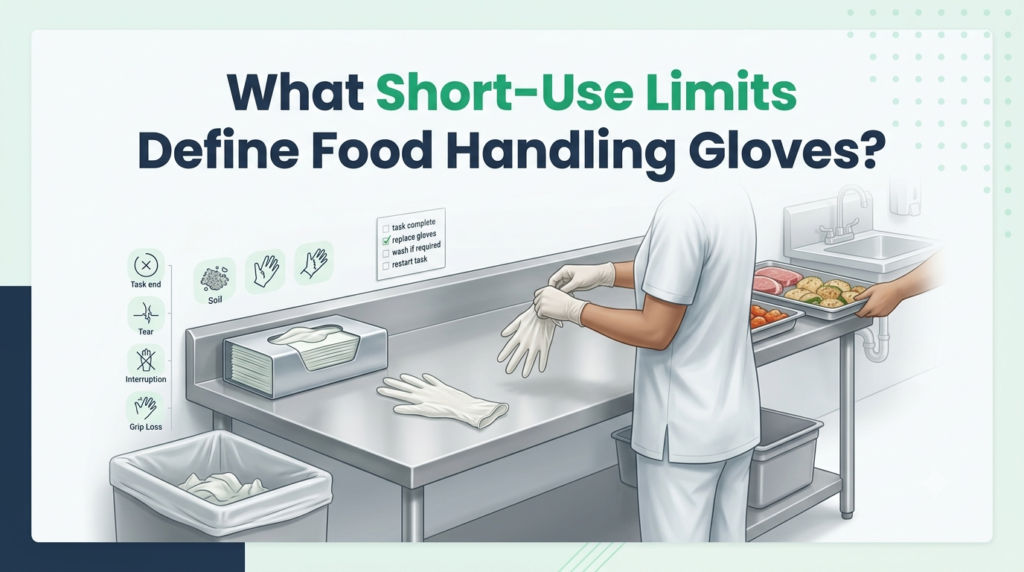
What Short-Use Limits Define Food Handling Gloves? What Short-Use Limits Define Food Handling Gloves? Single-use food-handling gloves do not have one universal safe wear time. The primary limit is the controlled task for which the gloves were donned, and the pair must be replaced when that task ends or when hygiene, integrity, fit, grip, or […]
How can vinyl composition affect fatty-food handling?
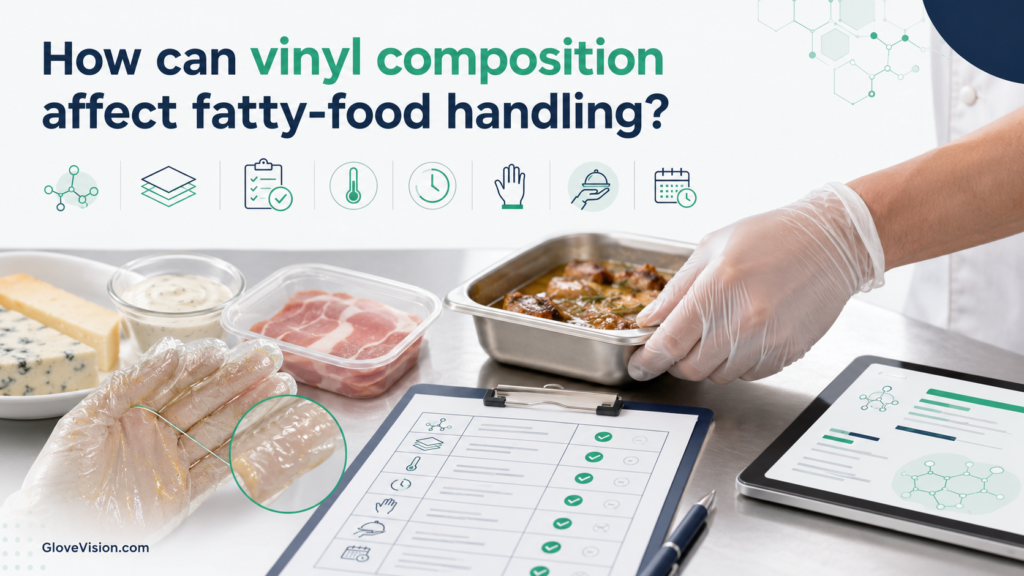
How can vinyl composition affect fatty-food handling? How can vinyl composition affect fatty-food handling? Vinyl composition can affect fatty-food handling because flexibility, additive migration, fit, grip, and durability depend on the exact PVC formulation, plasticizer system, finished-product construction, and documented conditions of use. Vinyl is a broad material label, so kitchens should not treat every […]